Selling gold for cash should put money in your pocket—not leave you wondering if you just got taken advantage of. With a few practical steps before and during your visit to a buyer, you can greatly reduce the chances of being lowballed and walk away with a fair payout.
TL;DR – Quick Checklist Before You Sell Gold for Cash
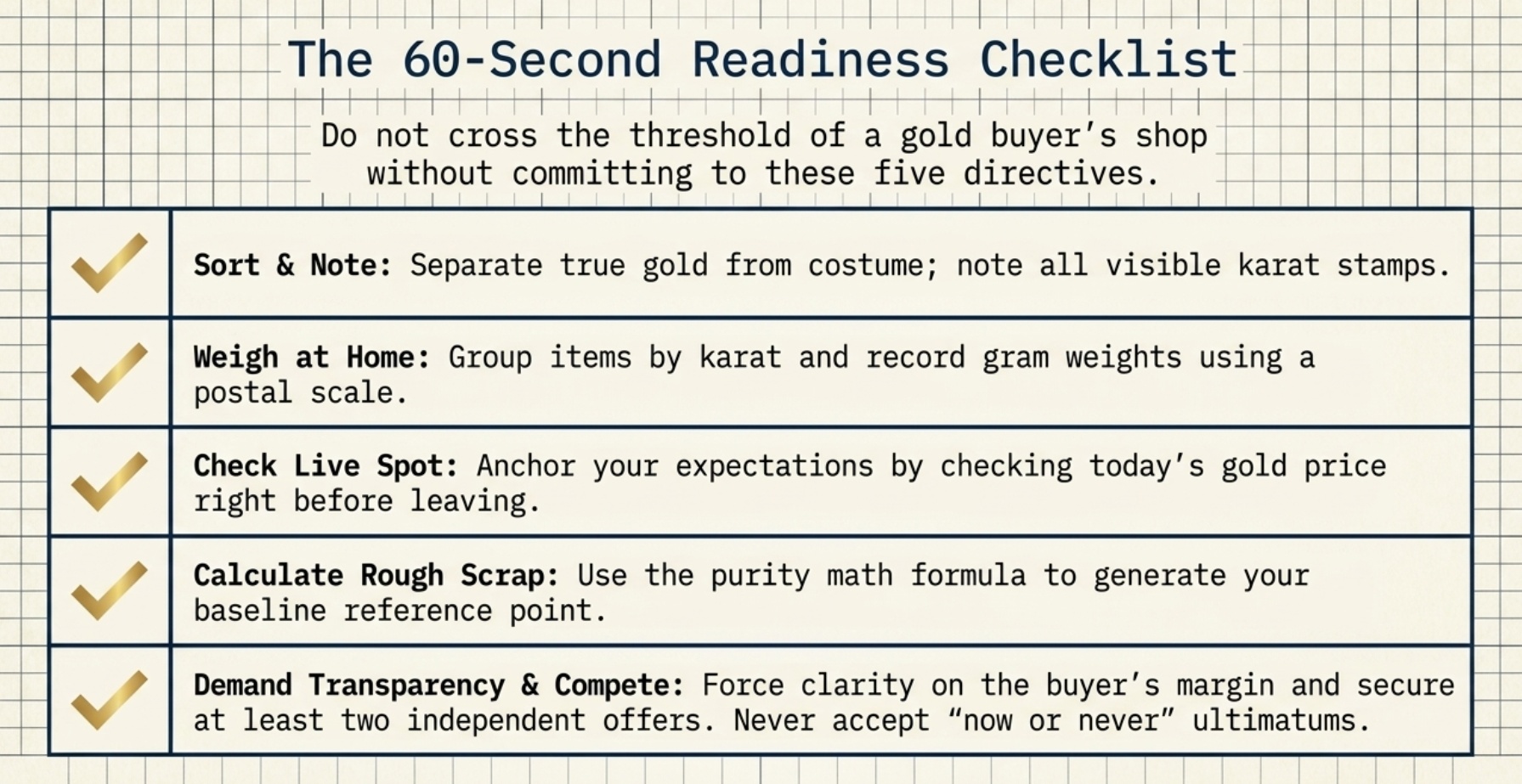
Before you head to a local shop, keep this 60‑second checklist in mind:
- Sort your items at home, separate real gold from costume pieces, and note karat stamps where you can.
- Weigh your gold yourself, write down each pile’s weight and karat, and bring those notes with you.
- Look up today’s gold price on a reliable site right before you leave the house so you know the current market.
- Use that spot price to estimate a rough scrap gold value so you have a reference point for any offer and payout.
- Get at least two or three independent offers and never accept high‑pressure “now or never” deals—comparison shopping is one of the best protections against being lowballed.
What Stays Constant vs What Changes When You Sell Gold
Gold selling has a few constants and many moving parts:
- What stays constant
Gold has historically acted as a long‑term store of value and a hedge against inflation and currency risk.
Buyers always base offers on underlying spot price minus costs, gold buyer margin, and risk; your payout will never be 100% of melt value. - What changes over time
Scrap gold value and typical payout percentages for different karats move with spot price, local competition, and refining costs.
The spread between scrap gold value and the final offer can widen or narrow depending on volatility and how aggressively buyers price their gold buyer margin.
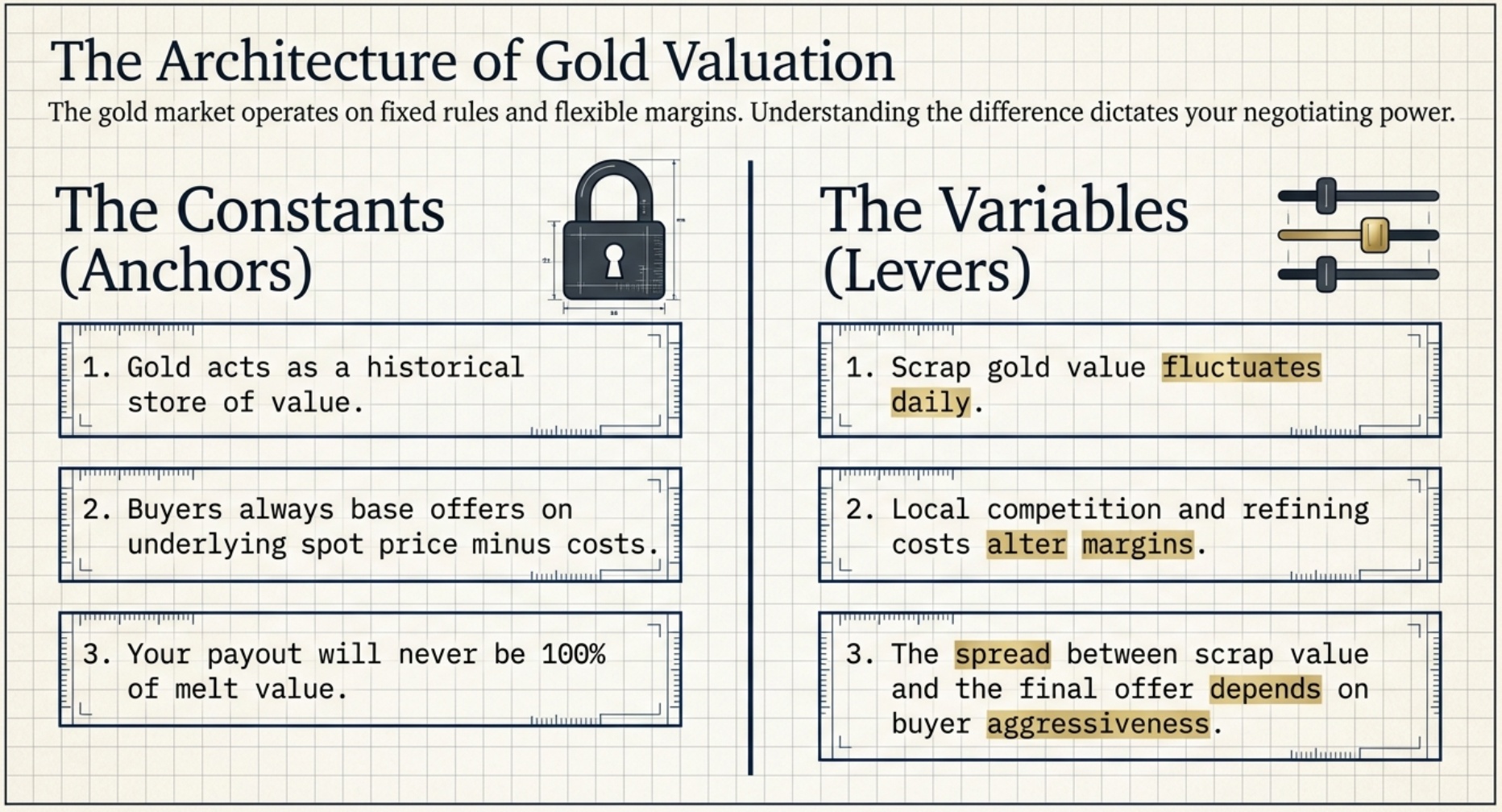
Keeping this in mind helps you judge whether a quote is “in the ballpark” or clearly a lowball attempt.
Step 1 – Gather and Sort Your Gold at Home
Your first line of defense against lowball offers is knowing what you actually have before anyone else touches it.
- Separate obvious costume or plated items from pieces that are likely real gold, such as marked rings, chains, and earrings.
- Look for karat markings (10K, 14K, 18K, 22K, 24K, or stamps like 417, 585, 750) and set aside branded, designer, or antique pieces that might be worth more than their scrap gold value alone.
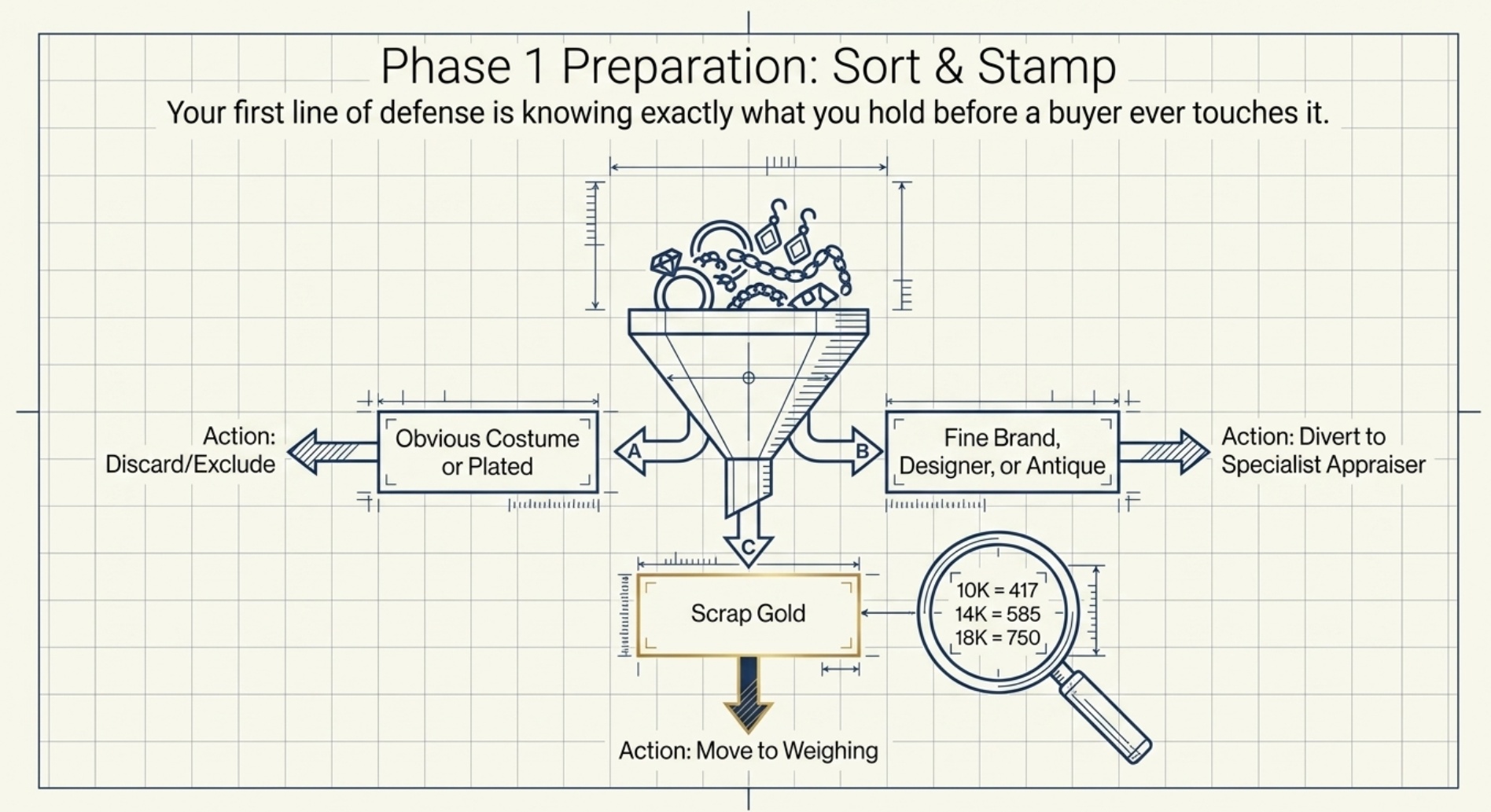
If something looks like fine jewelry from a well‑known brand, you may want a jewelry appraisal or specialist opinion, not just a scrap‑only quote.
Step 2 – Check Karat Stamps and Weigh Your Gold
You do not need lab equipment—just basic information and a simple scale.
- Check karat stamps: Higher karat means more pure gold per gram, so a 14K ring is not worth the same per gram as a 10K chain.
- Weigh at home: Use a small kitchen or postal scale to weigh gold in grams, grouping by karat (for example, “14K pile: 18 grams”). Write these numbers down so you can compare them to the shop’s scale later.
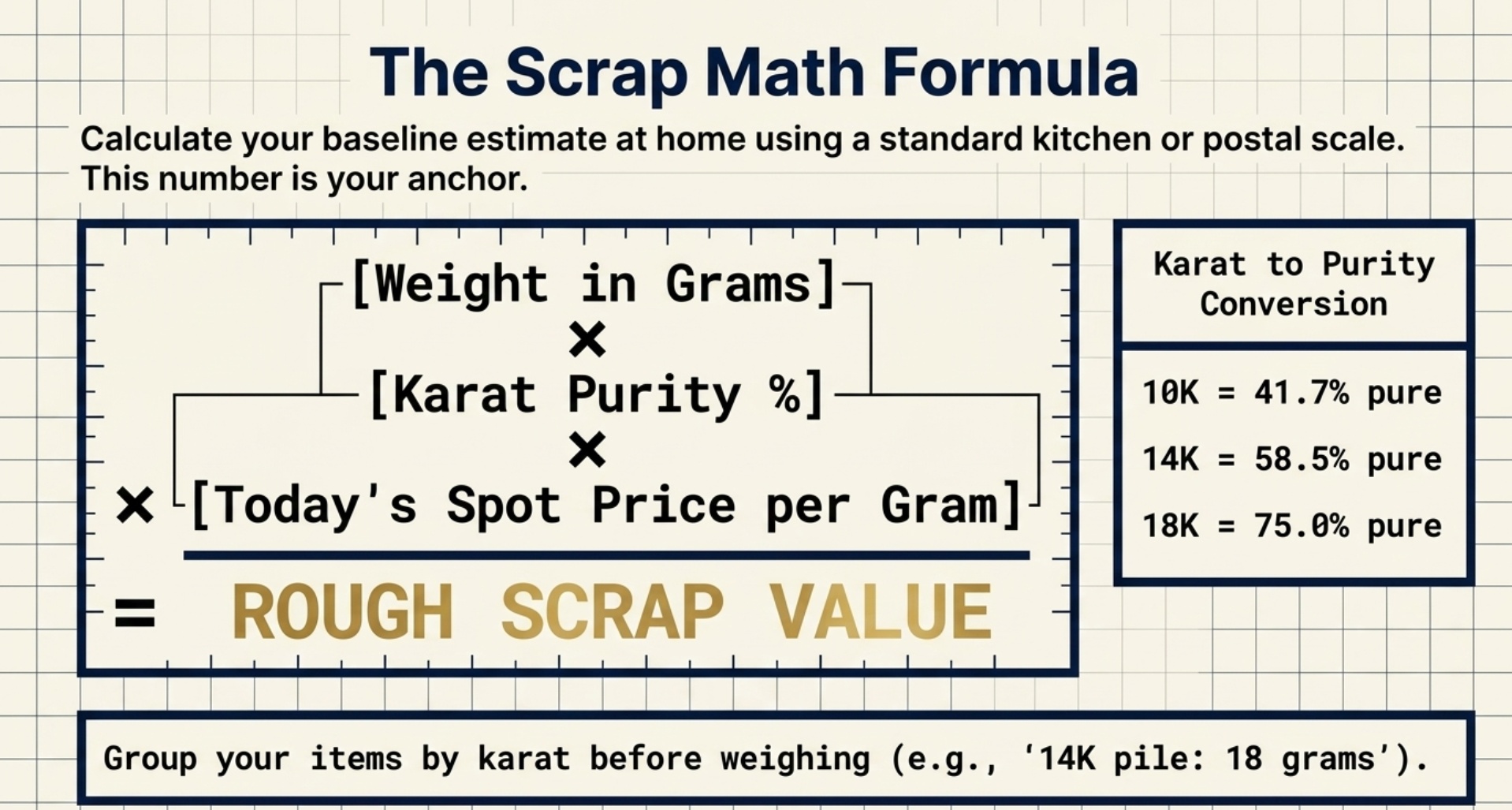
When you arrive, your own numbers let you challenge unexplained differences in weight or purity that would reduce your payout.
Step 3 – Why It’s Important to Know Today’s Gold Price Before Visiting a Buyer
Walking into a shop without knowing today’s gold price is like selling your car without any idea of what cars cost.
- Gold prices move constantly, and buyers base offers on the current spot price, then subtract refining, overhead, and their gold buyer margin.
- Check a reputable financial site, bullion dealer, or your own live price page for today’s gold price per ounce and per gram, and note that number before you leave home.
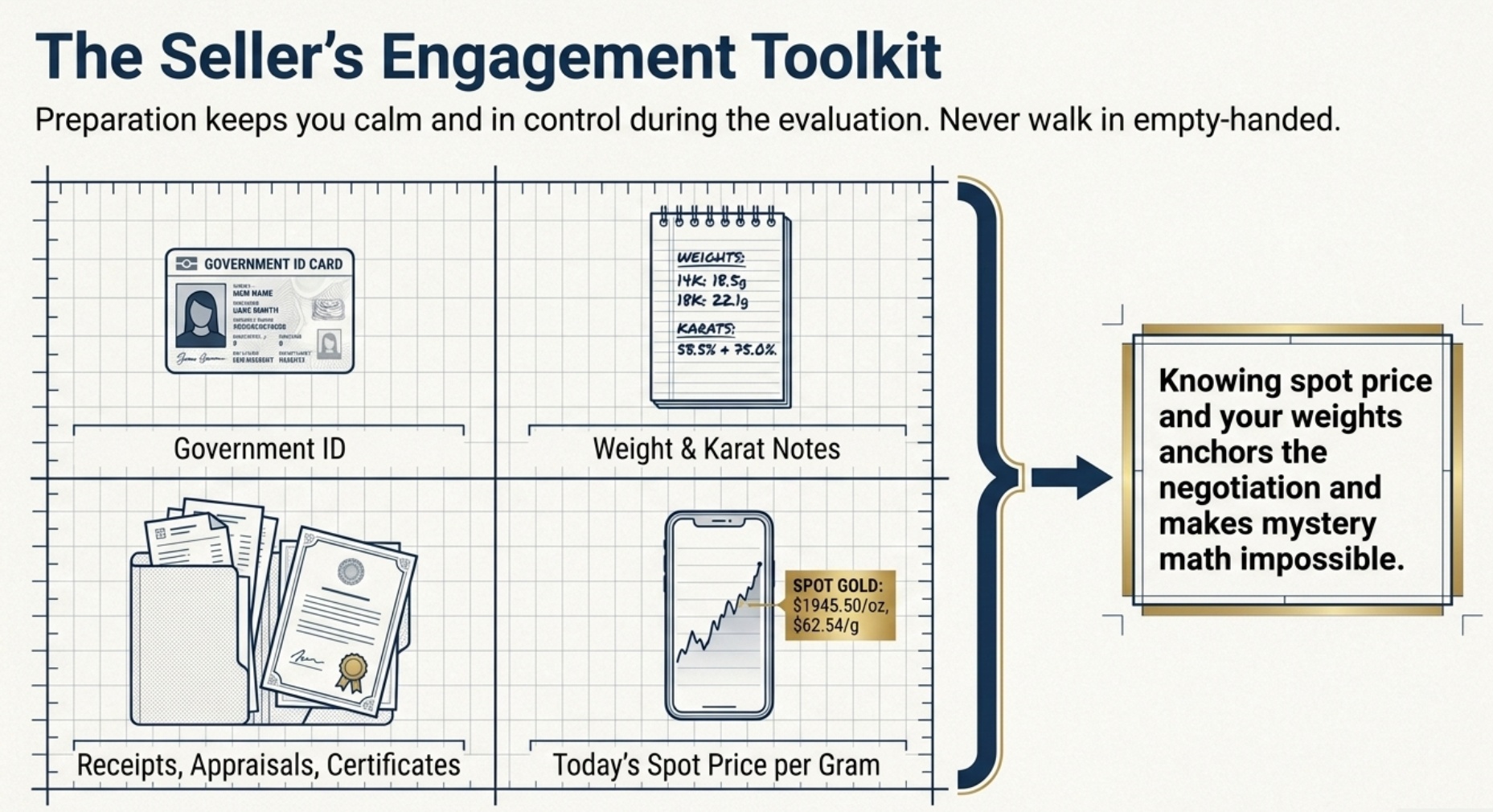
Knowing spot anchors the negotiation and makes “mystery math” much harder for a buyer to use against you.
Step 4 – Estimate a Rough Scrap Gold Value So You Have a Reference
You do not need precision, but knowing your rough scrap gold value is a powerful reality check.
A simple approach:
- Use the karat stamp to estimate purity (for example, 10K ≈ 41.7%, 14K ≈ 58.5%, 18K ≈ 75% pure gold).
- Multiply your weight in grams by that purity and today’s price per gram of pure gold to get an approximate scrap gold value for each pile.
Buyers will pay less than 100% of that number to cover costs and profit, but now you can see if their payout is in a reasonable band or clearly out of line.
Step 5 – How Much Do Gold Buyers Pay (Percentages)?
There is no single universal percentage, but understanding typical ranges helps you judge any quote.
- Many retail buyers target a payout that is some fraction of scrap gold value, after factoring in refining fees, overhead, and gold buyer margin.
- Well‑run businesses usually aim for a payout that is competitive enough to win repeat sellers while still leaving a reasonable margin; extremely low percentages can be a sign of opportunistic lowballing.
When you ask, “What percentage of today’s scrap gold value are you paying me?”, you force the buyer to expose their gold buyer margin instead of hiding it in vague numbers.
Step 6 – Understand What a “Fair” Cash Offer Typically Looks Like
The key to checking if a cash offer for your gold jewelry is fair is seeing how it lines up with your rough melt estimate and typical payout behavior in your area.
- A fair offer will reference a recent spot price, realistic purity, and transparent deductions; the buyer should be able to show you how they arrive at your final payout step‑by‑step.
- If an offer comes in drastically below what other reputable buyers are paying, or far below common payout ranges for scrap gold value, that is a strong sign you are being lowballed.
Step 7 – Research Where to Sell Gold Jewelry for a Fair Price
Not all buyers are created equal, and some profit from confusion more than transparency.
Before you decide where to sell gold jewelry for a fair price:
- Check reviews, ratings, and complaints for local jewelers, pawn shops, cash‑for‑gold outlets, and specialist gold buyers, looking for patterns about honesty, clarity, and payout levels.
- Confirm licensing and tenure; reputable buyers tend to publicize their credentials and clearly describe how they evaluate and price gold.
Step 8 – What to Bring and What to Expect at the Shop
Preparation helps you stay calm and in control during the evaluation.
Bring:
- A government ID, your weight/karat notes, and any receipts, appraisals, or certificates.
- Your own rough scrap gold value estimate so you can sanity‑check any payout discussed.
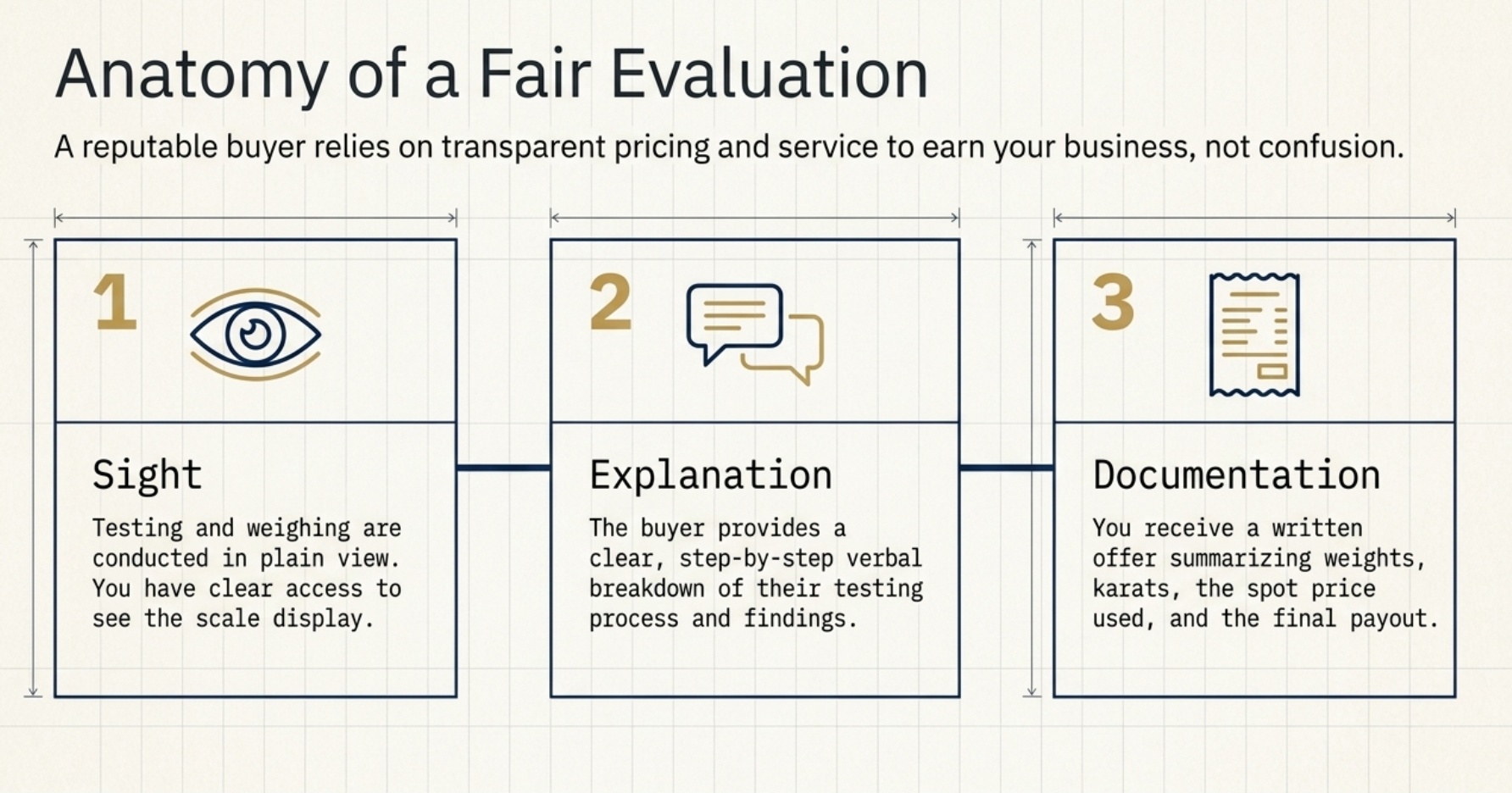
At a reputable buyer, you should see:
- Testing and weighing done in front of you, with a clear explanation of each step and access to the scale display.
- A written offer summarizing weights, karats, spot price used, and final payout, so you can easily compare it to other offers.
Step 9 – How to Check If a Cash Offer for Your Gold Jewelry Is Fair
When the number is on the table, do this quick fairness check.
- Confirm their weights and purity match or reasonably explain any differences from your notes.
- Ask what spot price they are using and what percentage of scrap gold value they are paying you after their gold buyer margin.
- Compare their payout with your rough melt estimate and any other quotes you have; if it is an extreme outlier on the low side, treat it as a lowball.
Step 10 – How Getting More Than One Offer Protects You from Being Lowballed
Getting more than one offer is one of the simplest, most effective ways to avoid being lowballed.
- Aim for at least two or three independent quotes from reputable buyers using the same items and the same spot‑price day if possible.
- When you compare payouts side‑by‑side, honest offers typically cluster in a reasonable range; any outlier that is far below the others is likely a lowball attempt.
Fair buyers know they are competing; they rely on transparent pricing and service, not confusion, to earn your business.
Step 11 – Red Flags and When to Walk Away
Knowing when not to sell is just as valuable as knowing when to accept an offer.
Watch for:
- Vague or evasive answers about spot price, payout percentages, or gold buyer margin.
- Testing or weighing done out of your sight, or refusal to let you see the scale or testing equipment.
- Pressure tactics like “this price is only good for the next 5 minutes” or attempts to make you feel foolish for wanting more offers.
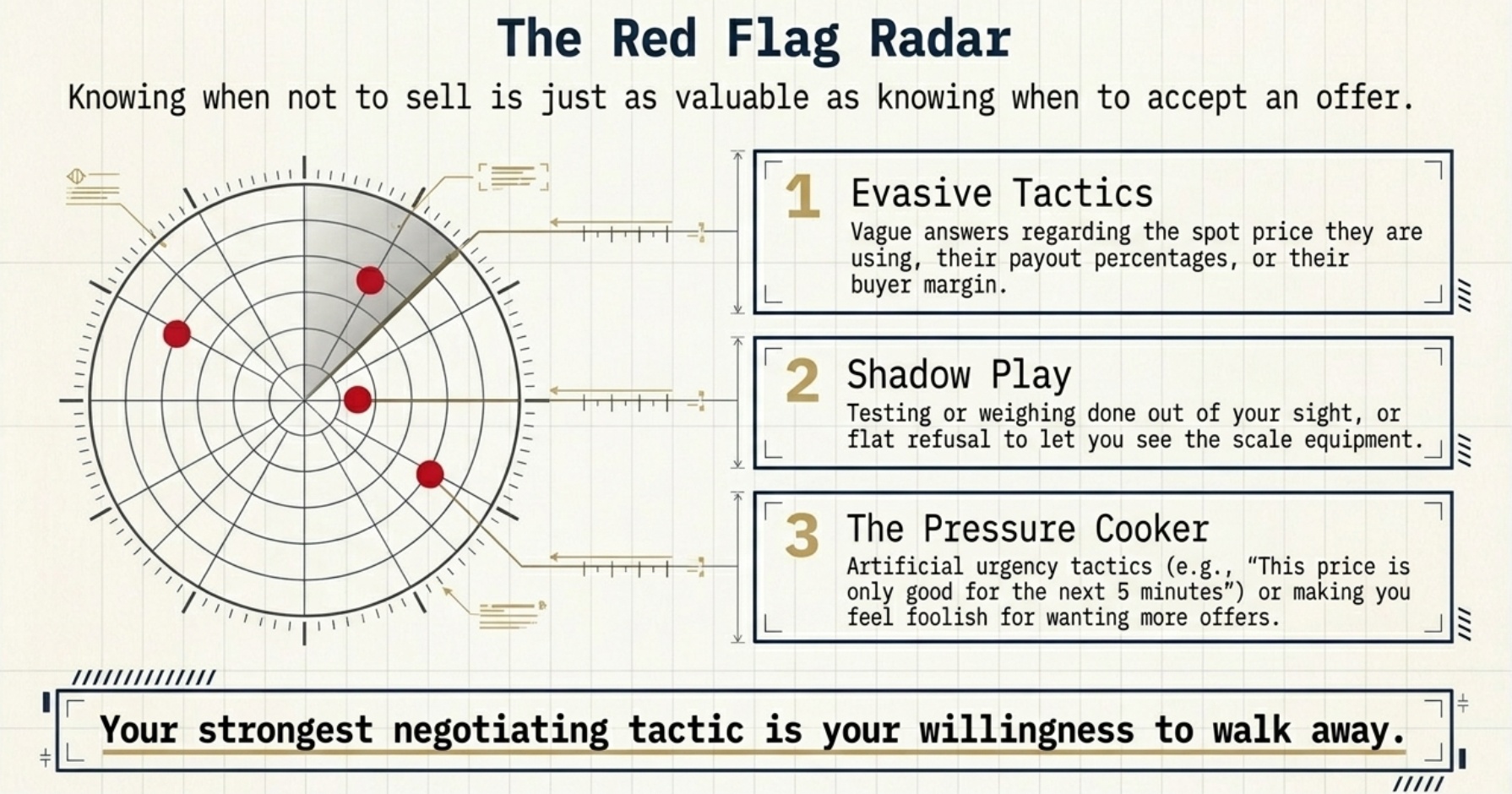
You can always walk away, get another quote, and come back later if the first buyer truly was fair.
Bonus – How to Tell in 10 Seconds If You’re Being Lowballed
If you only have a few seconds to decide whether an offer feels wrong, run this quick test:
- Ask what spot price they are using, what karat/purity they assigned your items, and roughly what percentage of scrap gold value they are paying.
- If they will not answer clearly—or if their payout is far below other offers you have for the same gold—you can safely treat it as a lowball and walk away.
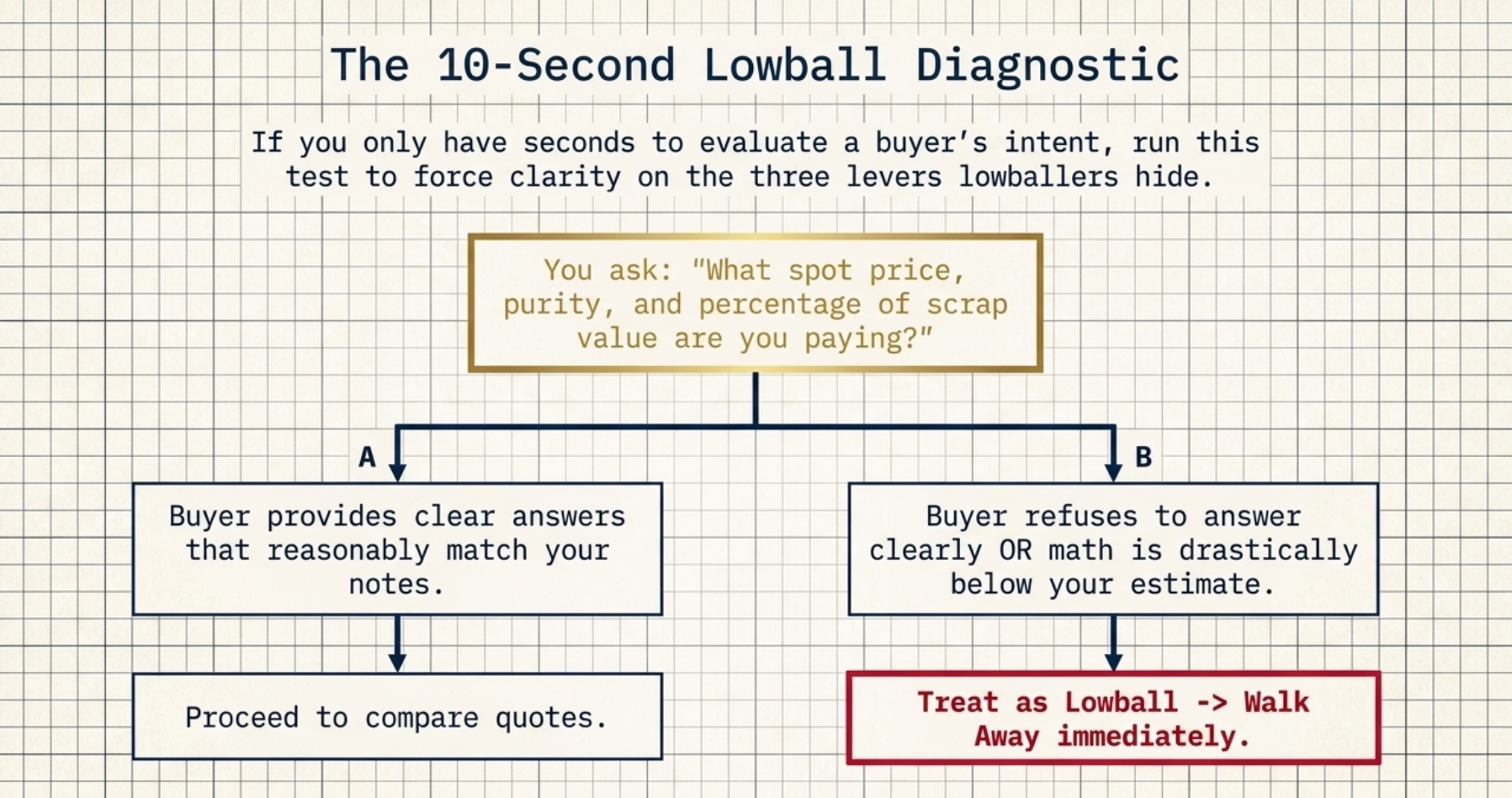
This 10‑second check forces clarity on spot, purity, and margin, which are the three levers lowballers try to hide.
Bonus – Selling Gold Safely Online vs at a Local Shop
You can apply the same principles whether you sell locally or through a reputable online buyer.
- Local shops: Offer same‑day cash and in‑person testing; ideal if you want immediate payout and like seeing the process.
- Online/mail‑in buyers: Often provide detailed written breakdowns of scrap gold value, gold buyer margin, and final payout, but require careful attention to shipping, insurance, and return policies.
In both cases, research, transparency, and multiple offers are your best tools against lowball quotes.
Frequently Asked Questions
1. What practical steps should I follow before I sell gold for cash at a local shop?
Sort your items by type and karat, weigh them, check today’s gold price, and estimate a rough scrap gold value before you leave home. Then research reputable buyers and plan to get at least two or three offers so you can compare payouts.
2. How can I check if a cash offer for my gold jewelry is fair?
Compare the buyer’s weights and karat ratings to your notes, confirm the spot price they used, and ask what percentage of scrap gold value they are paying. If their payout is much lower than your estimate and other quotes, you are likely being lowballed.
3. Why is it important to know today’s gold price before visiting a gold buyer?
Today’s gold price is the starting point for every offer, and not knowing it makes it easier for buyers to underpay you. Checking spot first anchors your expectations and allows you to challenge any clearly outdated or inaccurate pricing.
4. What percentage of my gold’s value should I expect to get when selling?
There is no fixed global percentage, but fair buyers typically offer a reasonable share of scrap gold value after accounting for refining costs and gold buyer margin. If their payout is far below what other reputable buyers are offering, treat it as a red flag.
5. How can getting more than one offer protect me from being lowballed?
Multiple offers reveal the real market range for your items and make it easy to spot unrealistic lowball bids. When payouts from two or three reputable buyers are similar, you can accept with confidence and ignore outliers.
6. What are the biggest mistakes to avoid when selling gold for cash?
Avoid selling without checking spot price, not weighing or sorting your gold, accepting the first offer without comparison, and ignoring red flags like vague explanations or pressure tactics. These mistakes can significantly reduce your payout compared with what a fair buyer would pay.
7. How do I know if a gold buyer or pawn shop is reputable?
Look for clear licensing, consistent positive reviews, a transparent testing and weighing process you can watch, and straightforward answers about spot price, payout percentages, and fees. If a buyer hides their process or will not explain their numbers, find another offer.
If you are preparing to sell, check today’s gold price, use this checklist to estimate your scrap gold value and expected payout, then request a no‑obligation quote from us alongside any local shop offers so you can compare and avoid lowball bids.