TL;DR - Small Gold Coins vs 1 oz
- In most market conditions, 1/10 oz and 1/4 oz gold coins carry higher percentage premiums than 1 oz coins, but they let you start with a smaller budget and sell in smaller chunks.
- Fractional gold coins are bullion coins that contain less than 1 troy ounce of gold but follow the same purity and design standards as their full‑ounce versions.
- Small gold coins are typically worth the extra cost when they help you begin sooner, buy consistently, or build a highly flexible “emergency” portion of your stack.
- For long‑term stacking focused on ounces, 1 oz coins generally remain the most efficient core holding, with fractionals playing a supporting role.
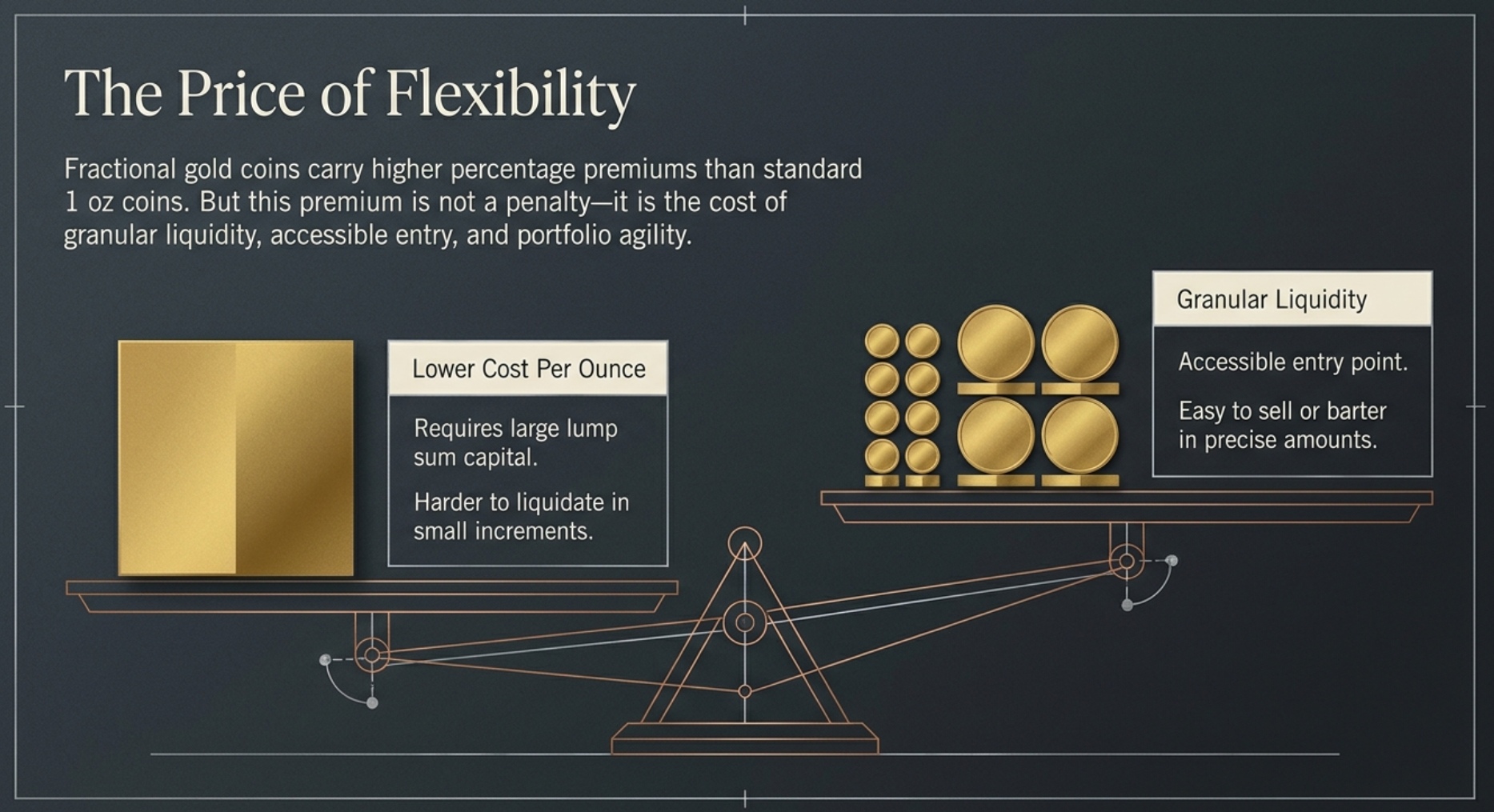
- What stays constant in gold investing is gold’s role as a long‑term store of value; what changes are premiums, the gold bid‑ask spread, and which coin sizes are most cost‑effective at any given time.
What Stays Constant vs What Changes in Gold Investing
Gold investing has a few constants and a lot of moving parts:
- What stays constant
Gold historically acts as a long‑term store of value and hedge against inflation and currency risk.
Physical coins and bars always trade around the underlying spot price of gold plus or minus a premium and a bid‑ask spread.
Recognizable, bullion‑grade products from major mints and refiners typically remain easier to sell gold coins and bars back into the market than obscure or niche pieces. - What changes over time
Premium levels on 1/10 oz, 1/4 oz, and 1 oz coins can vary with demand, mint production, and overall market conditions.
The gold bid‑ask spread (the gap between dealer buy price and sell price) widens or narrows depending on volatility and liquidity.
Different sizes may be more or less available at various times, affecting which format is the best deal for your next purchase.
Keeping this framework in mind helps you judge whether small gold coins are worth paying extra for in the current environment rather than in the abstract.
Quick Answer – When Are Small Gold Coins Worth Paying Extra For?
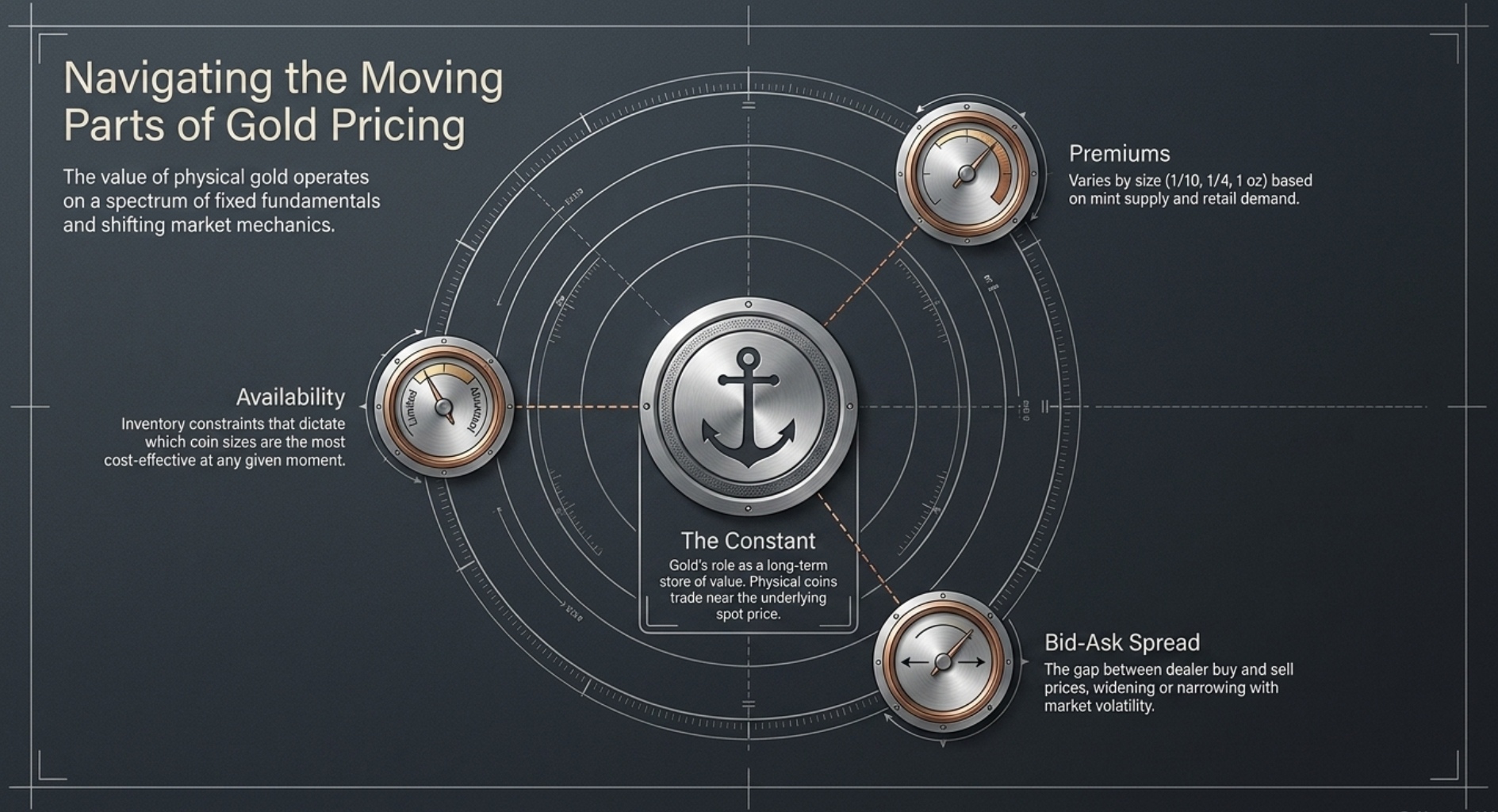
Small 1/10 oz and 1/4 oz gold coins are typically worth paying extra for when they help you start sooner, buy on a realistic budget, or keep your stack flexible for smaller future sales. They are generally not ideal as the only format if you already have the budget for 1 oz coins and your main objective is maximizing ounces per dollar over the long term.
Best choice depends on:
- Scenario 1 – Smaller, steady budget: Fractional coins often work best if you can put aside a few hundred dollars at a time and want to stay consistently in the market.
- Scenario 2 – Larger lump sums: 1 oz coins usually make more sense when you are investing higher amounts in one go and want the most gold for your money.
- Scenario 3 – Emergency and flexibility focus: A mix of 1 oz coins plus some 1/10 oz and 1/4 oz coins tends to work well if you want both efficiency and highly divisible pieces you can sell gradually.
What Are Fractional Gold Coins and How Do 1/10 oz and 1/4 oz Work?
Fractional gold coins are bullion coins that contain less than 1 troy ounce of gold but follow the same purity and design standards as their full‑ounce versions.
In most market conditions:
- 1/10 oz and 1/4 oz coins in major programs carry the same fineness as the 1 oz flagships (for example, fractional sovereign coins mirror the standard bullion purity of the series).
- They are issued by the same government mints and enjoy the same legal‑tender and authenticity assurances, just scaled down in weight and face value.
Typical Prices and Premium Ranges for 1/10 oz and 1/4 oz
Across dealer data and industry guides, you typically see this pattern:
- 1 oz coins: often around a mid‑single‑digit to low‑double‑digit percent above spot in normal market conditions.
- 1/4 oz coins: commonly around a high‑single‑digit to mid‑teens percent above spot.
- 1/10 oz coins: often around a mid‑teens to around twenty‑percent‑plus band above spot.
Exact percentages move with demand, product, and mint supply, but the directional rule of thumb holds: smaller coins usually mean higher percentage premiums per ounce.
Why Fractional Gold Coins Have Higher Premiums
The reasons are mostly structural:
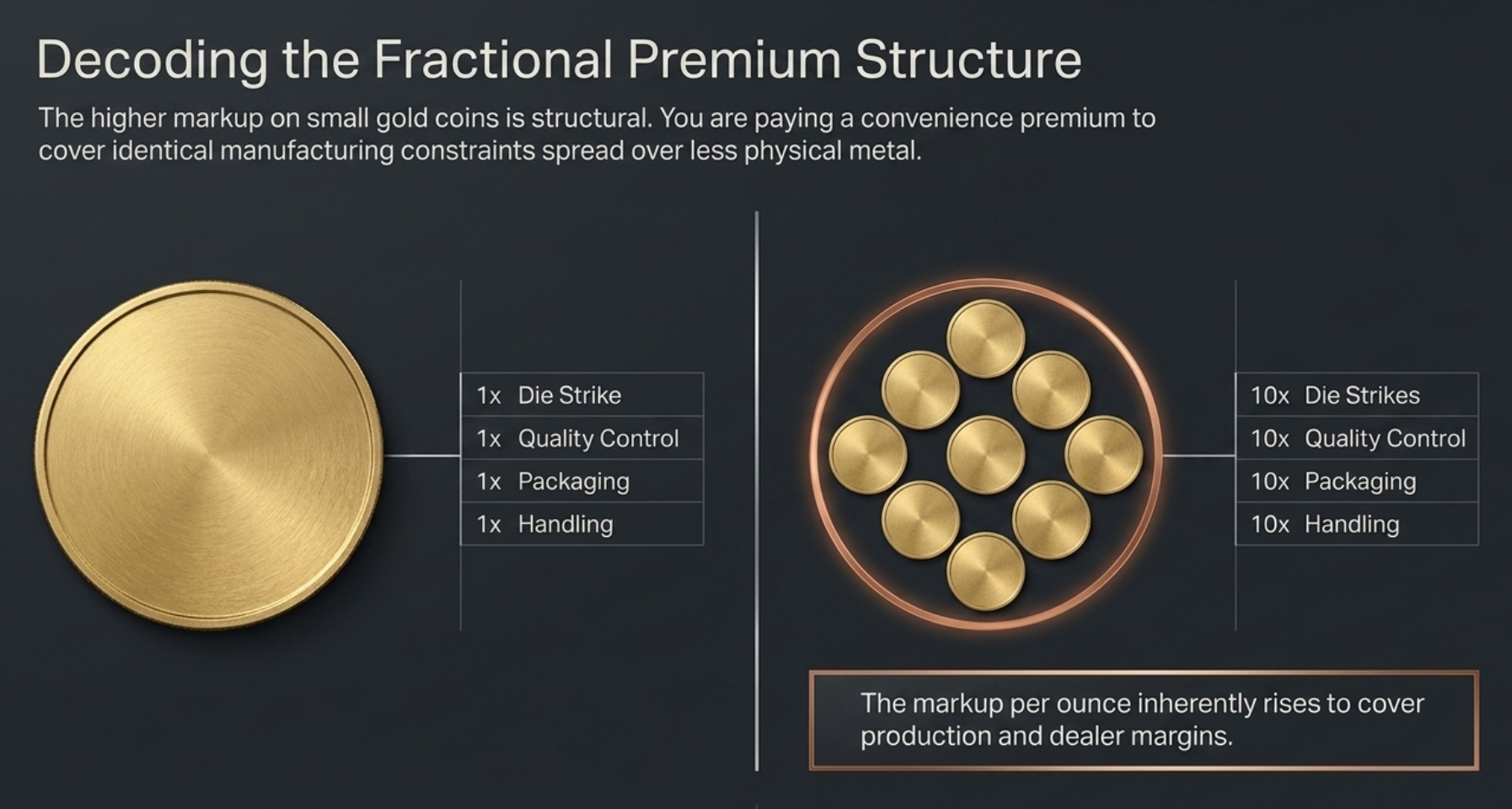
- Each coin—regardless of size—has similar design work, die use, quality control, packaging, shipping, and handling.
- Those costs are spread over less gold in a fractional coin, so the markup per ounce tends to be higher to cover production and dealer margin.
You are paying a convenience and flexibility premium, not getting lower‑quality metal.
Pros and Cons of Buying Fractional Gold Coins Instead of 1 oz Coins
If you are weighing the pros and cons of buying fractional gold coins instead of 1 oz coins, it helps to look beyond the sticker price and think about how you actually buy and sell gold coins over time.
Pros – Affordability, Flexibility, and Liquidity
- Affordability and access
In most market conditions, 1/10 oz coins sit at a price point many everyday savers can realistically reach in a single month, with 1/4 oz coins bridging the gap toward 1 oz coins.
This lets you steadily build exposure instead of waiting months or years for a single large purchase. - Flexibility and liquidity
It is usually easier to sell one or two smaller coins than to sell a full ounce when you only need modest cash.
Fractional coins often attract strong demand on the secondary market from other budget‑constrained buyers, which can support day‑to‑day liquidity.
For investors who value option‑rich, granular selling opportunities, these positives can more than offset the higher premium.
Cons – Higher Cost per Ounce and Slower Ounce Accumulation
- Higher cost per ounce
Historically, the combined impact of higher fractional premiums and the gold bid‑ask spread means you end up with fewer ounces for the same total dollars than if you had focused on 1 oz coins.
In many dealer examples, the equivalent per‑ounce cost of building an ounce out of 1/10 oz coins sits noticeably above the cost of buying one 1 oz coin in a single shot. - Slower ounce accumulation
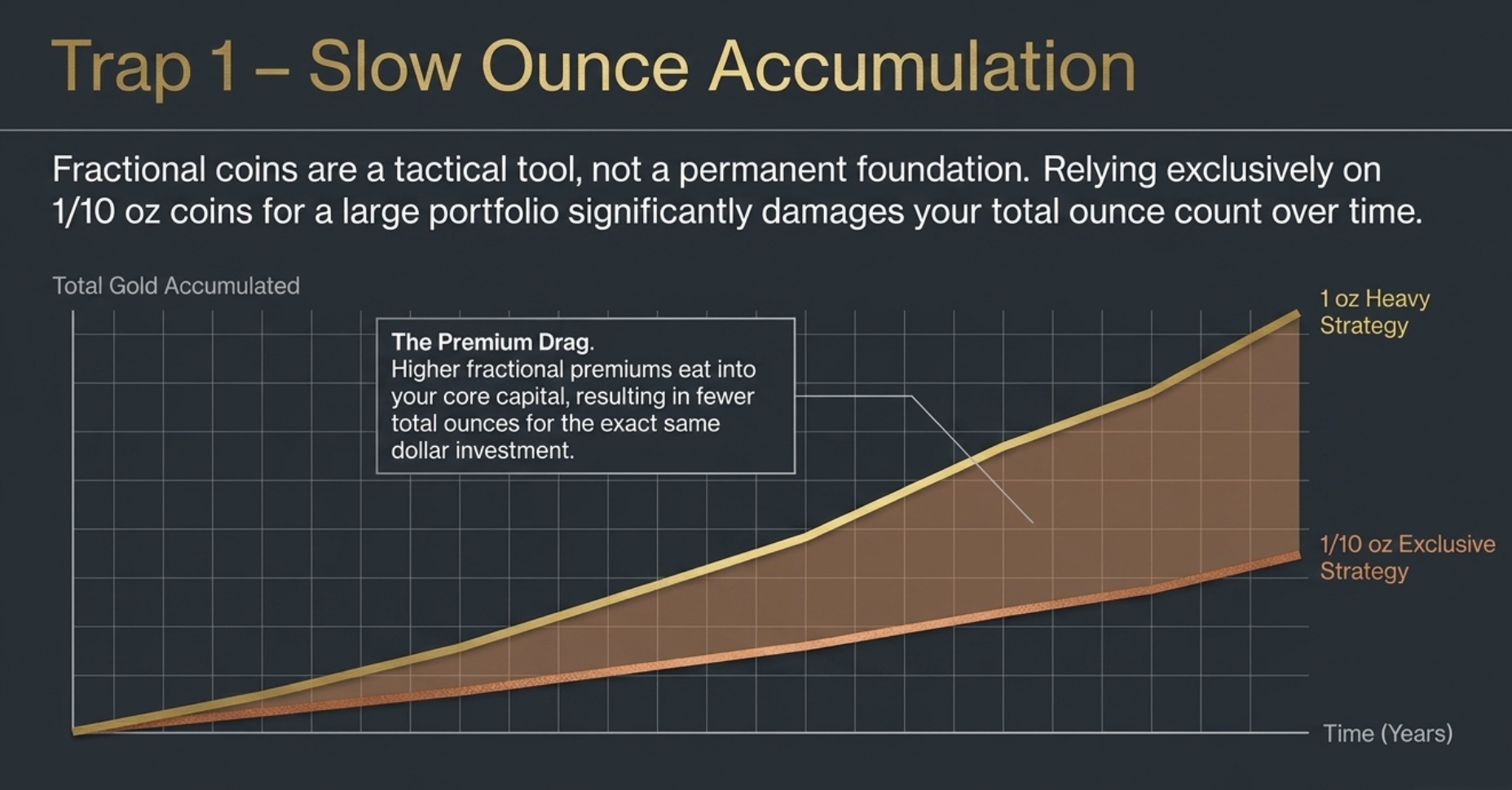
Over years, purely fractional stacking usually leaves you with less total gold than a 1 oz‑heavy strategy, all else equal.
If your number‑one priority is raw ounces over the long term, these drawbacks are significant.
When Pros Outweigh Cons (and When They Don’t)
Fractionals tend to be worth it when:
- Your budget is constrained but steady.
- You want a very flexible emergency fund.
- You are prioritizing learning, comfort, and psychological momentum.
They tend to be less compelling when:
- You regularly move larger lump sums into gold.
- You already hold some smaller pieces and now want to build a core stack as efficiently as possible.
1/10 oz vs 1/4 oz vs 1 oz: Price, Premium, and Liquidity
To judge whether small 1/10 oz and 1/4 oz gold coins are worth paying extra for, compare them directly to a standard 1 oz coin on three fronts: typical price band, premium behavior, and liquidity.
Snapshot Table – 1/10 oz vs 1/4 oz vs 1 oz
(Illustrative, conceptual ranges; refer users to your live pricing for exact numbers.)
| Coin size | Typical price band (relative) | Typical premium behavior (relative) | Typical liquidity behavior (relative) |
|---|---|---|---|
| 1/10 oz | Lowest absolute price per coin | Highest percentage premium per ounce in most market conditions | High retail liquidity; easy to sell small amounts to a wide range of buyers |
| 1/4 oz | Mid‑range price per coin | Mid‑range percentage premium per ounce; usually between 1/10 oz and 1 oz | Strong liquidity; attractive to buyers who want more than 1/10 oz but less than 1 oz |
| 1 oz | Highest price per coin | Typically lowest percentage premium per ounce over time | Very strong liquidity as the standard bullion size; often key reference for dealer bids |
In plain language:
- 1/10 oz = most affordable, most expensive per ounce, most granular to sell.
- 1/4 oz = middle ground on both cost and flexibility.
- 1 oz = least affordable per coin, best value per ounce, anchor size for many stacks.
When It Makes Sense to Choose Smaller Gold Coins for Your Budget
Smaller gold coins usually make sense when they turn your budget and intentions into an actual, repeatable plan rather than a someday wish.
Scenario 1 – Tight Monthly Budget, But Strong Commitment
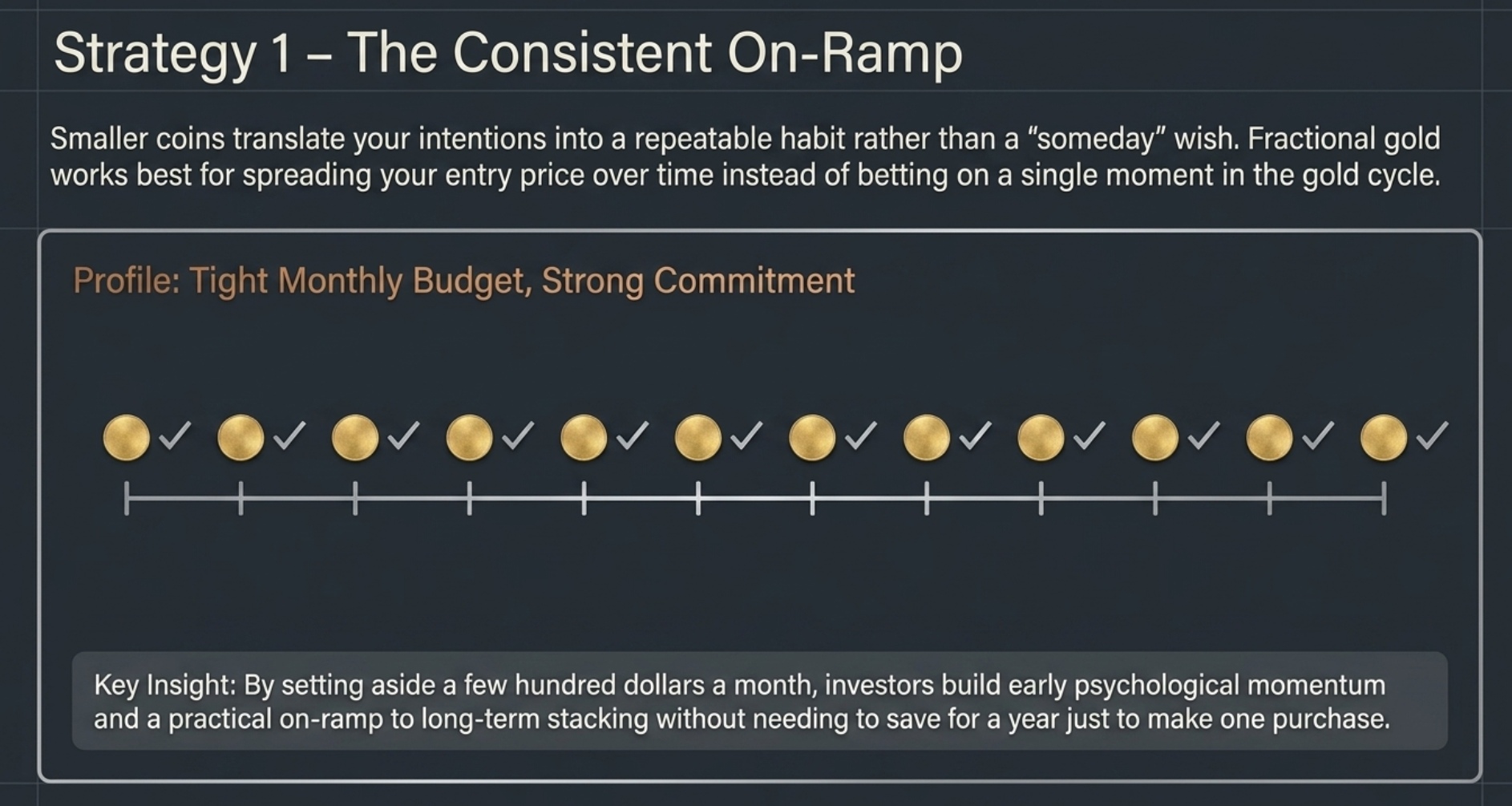
If you can set aside a few hundred dollars a month:
- In many market conditions, that puts 1/10 oz coins in reach consistently and 1/4 oz coins in reach periodically.
- By buying regularly, you spread your entry price over time instead of betting everything on a single moment in the gold price cycle.
For this profile, fractional gold often functions as a practical “on‑ramp” to stacking.
Scenario 2 – Building an Emergency Gold Reserve
If your goal is flexibility in a crisis:
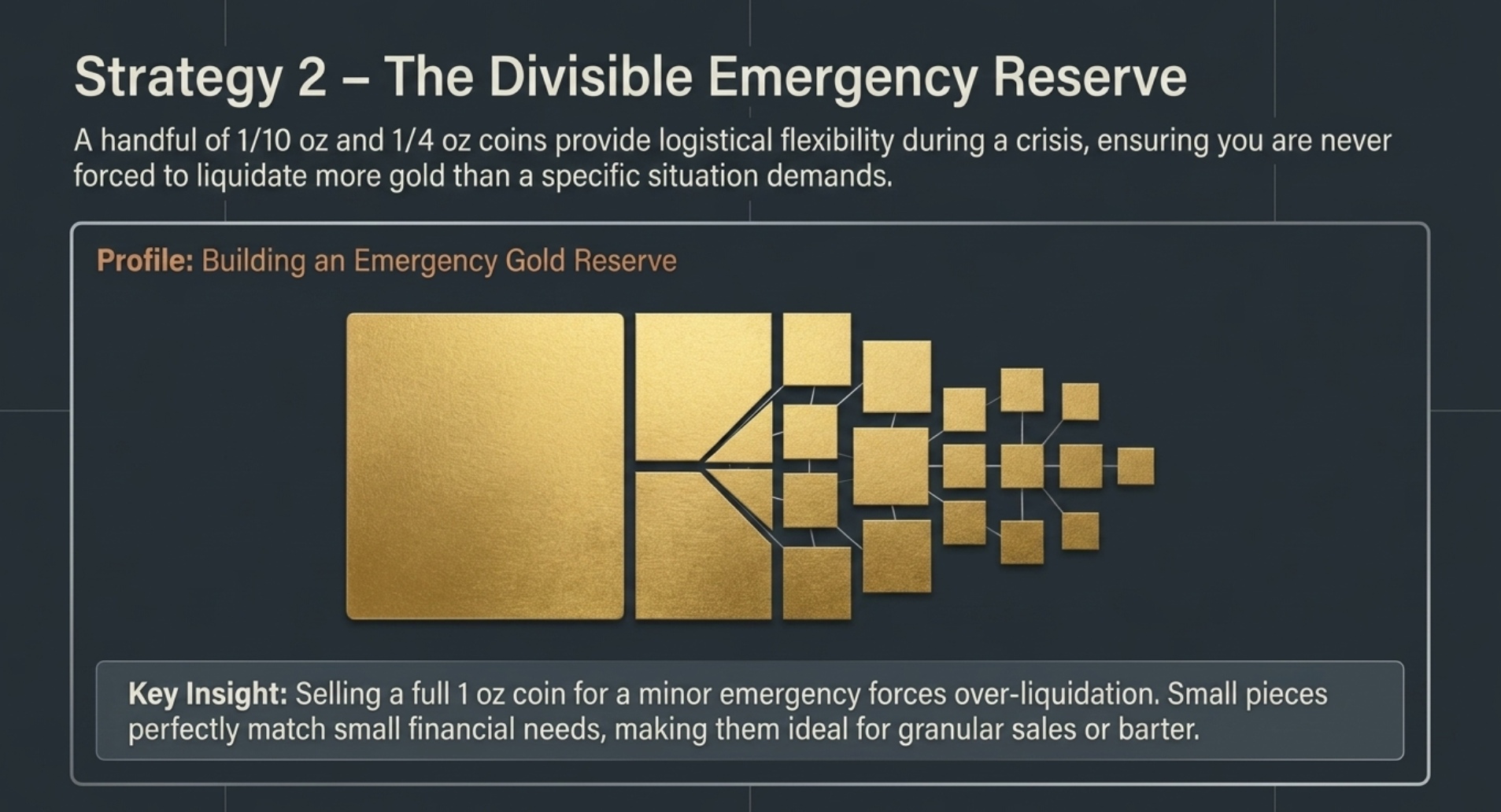
- A handful of 1/10 oz and 1/4 oz coins can be easier to sell or barter in small increments than larger units.
- You are less likely to be forced into selling more gold than you want at once.
Here, the benefit is not just financial but also logistical: small pieces are easier to match to small needs.
Scenario 3 – Gifts, Education, and “Learning Capital”
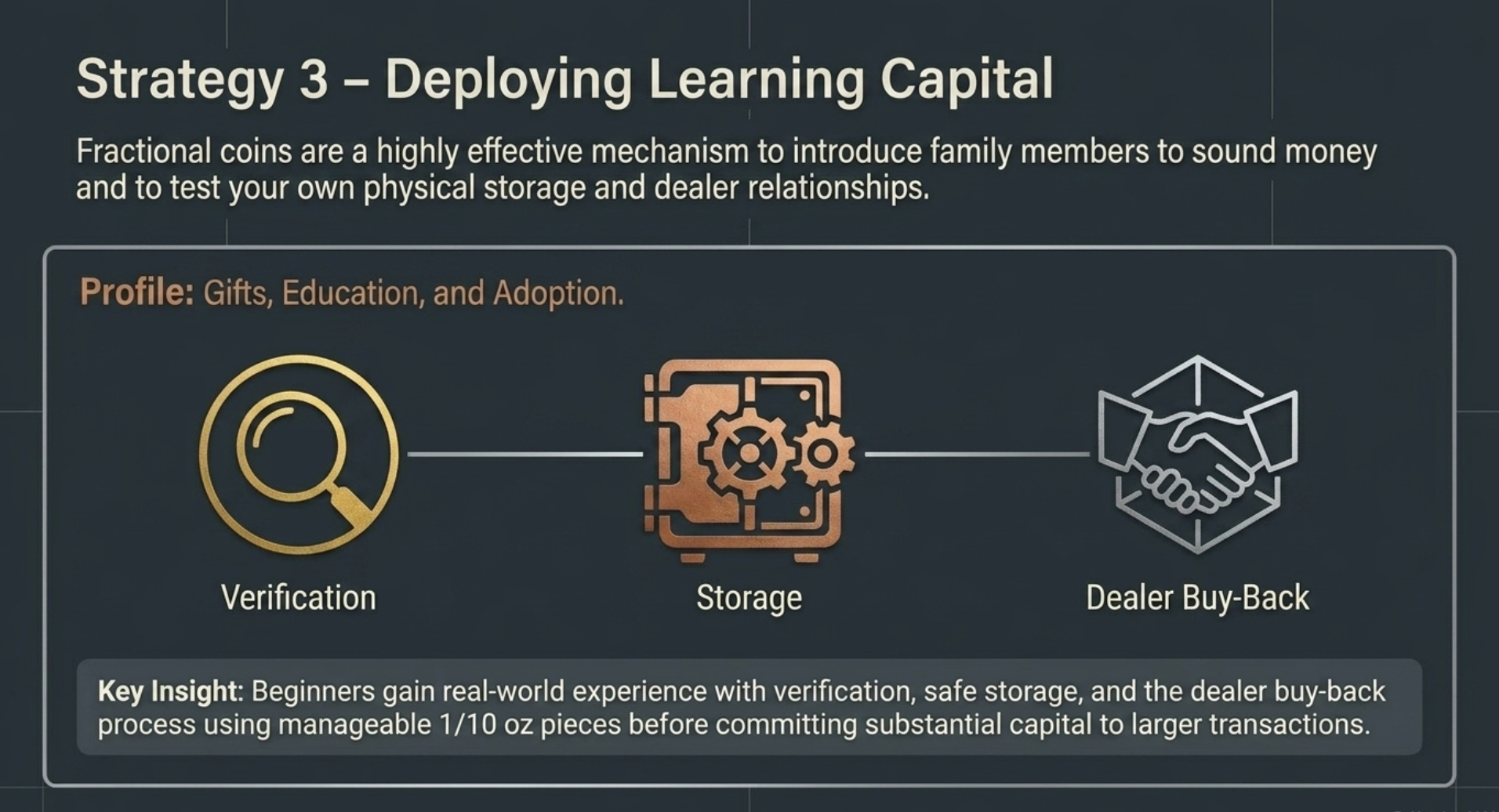
If you are thinking about education and adoption:
- Fractional coins are a popular way to introduce family members to gold without large sums.
- Beginners often find it easier to gain real‑world experience with storage, verification, and the process to sell gold coins back using small, manageable pieces before scaling up.
How Beginners Can Start Investing with Small Denomination Gold Coins
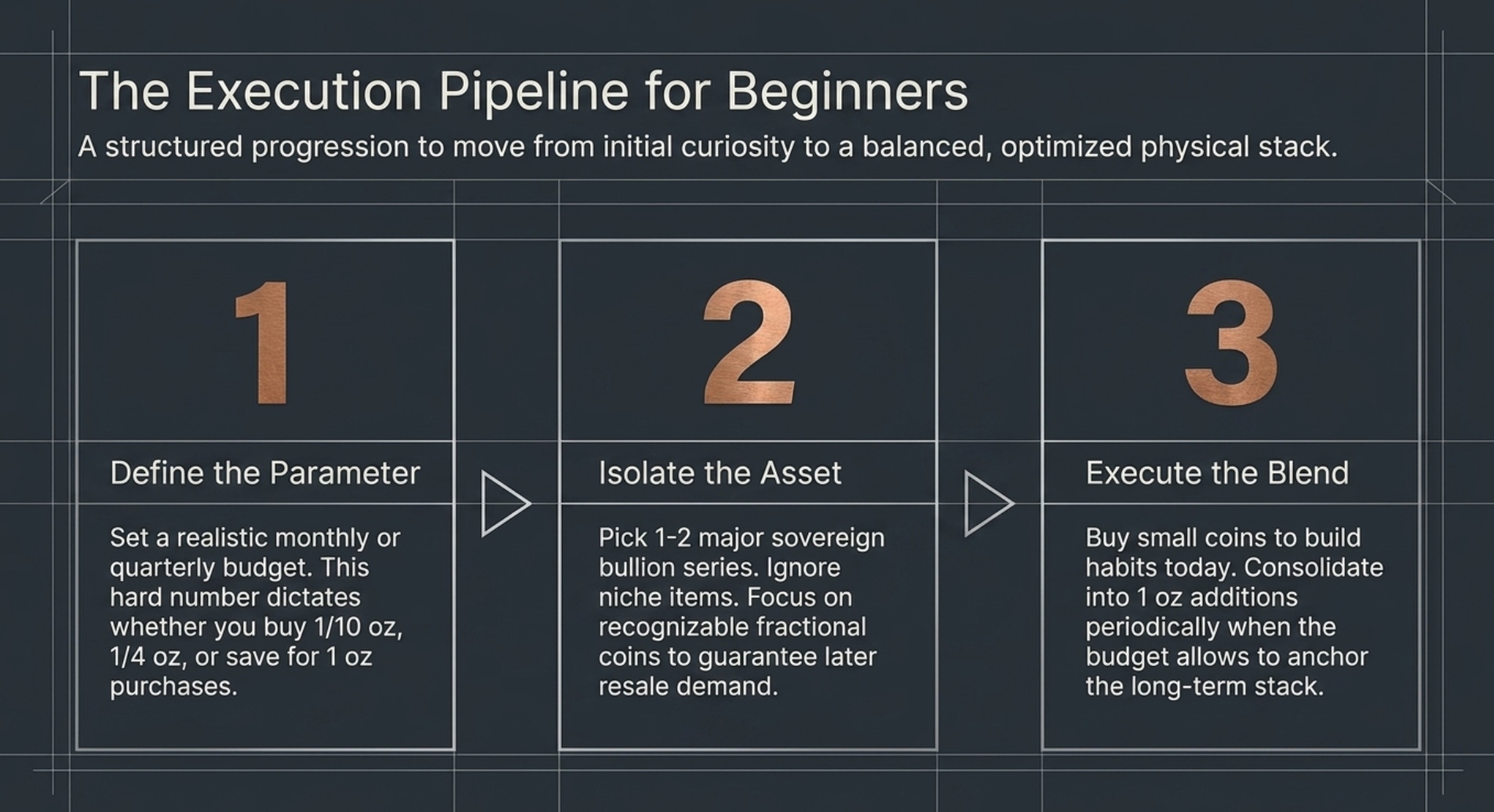
For beginners asking how to start investing with small denomination gold coins, a straightforward 3‑step process keeps things manageable.
Step 1 – Set a Realistic Monthly or Quarterly Budget
Define what you can commit comfortably:
- Many new investors start with a fixed monthly amount that fits easily into their broader financial plan.
- This budget will naturally guide whether you focus on 1/10 oz, 1/4 oz, or occasional 1 oz purchases.
Step 2 – Pick 1–2 Trusted Fractional Gold Coin Types
Simplify your early decisions:
- Focus on 1–2 mainstream bullion series in fractional form (for example, 1/10 oz and 1/4 oz versions of a major sovereign coin).
- Avoid niche or heavily marketed “collectible” fractionals until you have a firm grasp of premiums and resale dynamics.
This makes it easier to understand dealer pricing and the bid‑ask spread when you eventually sell.
Step 3 – Combine Fractional Coins with a 1 oz Goal
Blend “start now” with “optimize later”:
- Use small coins to build habits and exposure today.
- Periodically aim to consolidate into or add 1 oz coins when your budget allows, so your long‑term stack leans toward the most efficient size while retaining fractional flexibility.
Common Mistakes to Avoid with 1/10 oz and 1/4 oz Gold Coins
The most common pitfalls with small gold coins involve overuse, chasing the wrong kind of premium, and ignoring the realities of the gold bid‑ask spread when you sell.
Going All‑In on 1/10 oz and Ignoring 1 oz Coins
If you are building a substantial stack:
- Relying almost entirely on 1/10 oz coins typically raises your average cost per ounce noticeably over time.
- A more balanced approach—fractionals for flexibility, 1 oz coins for core value—usually works better for serious long‑term goals.
Think of 1/10 oz more as a tool, less as the permanent foundation.
Confusing Collectible Fractionals with Bullion
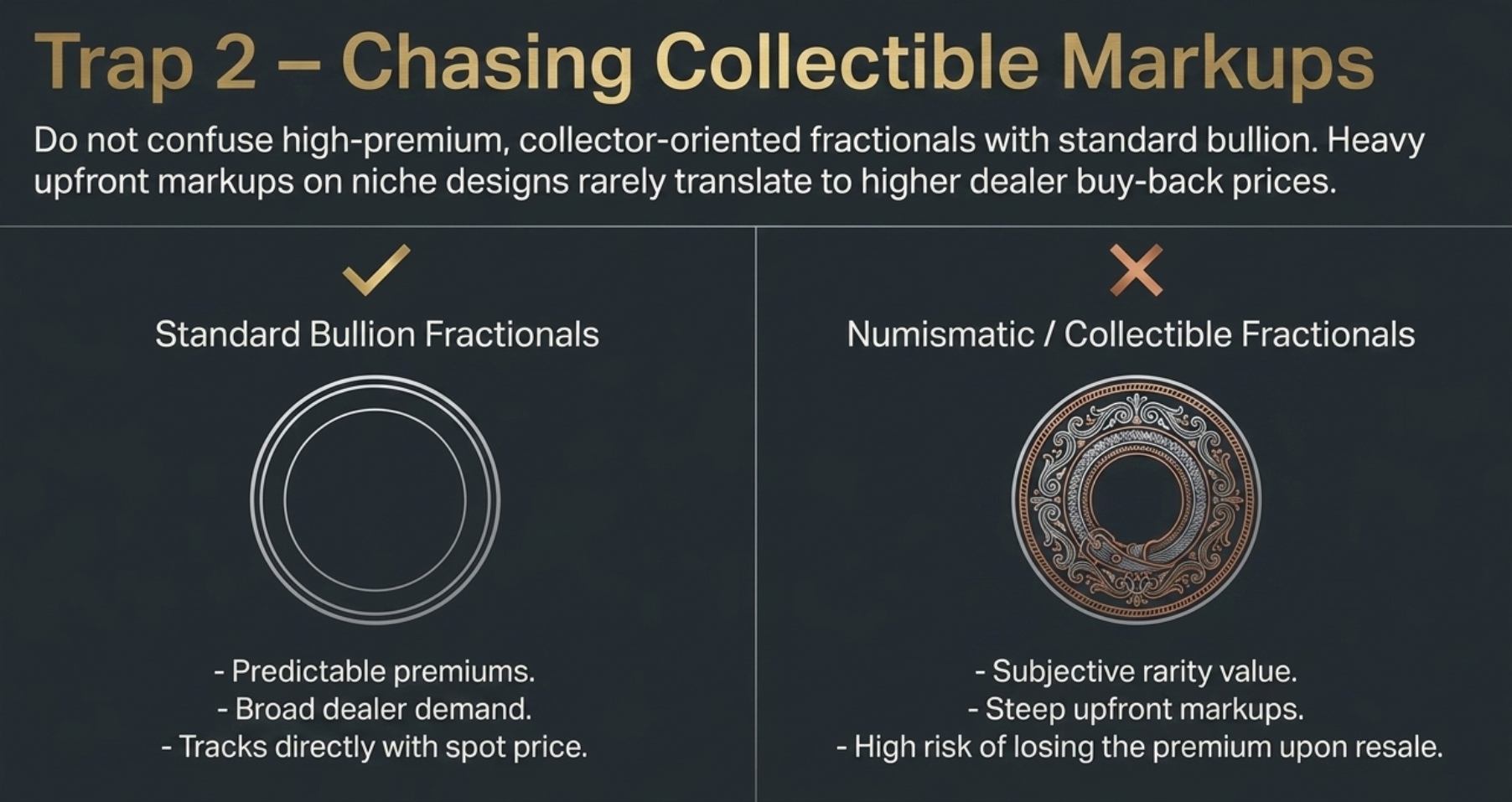
Another frequent error is treating high‑premium, collectible fractionals as though they were standard bullion:
- Collector‑oriented coins often carry very high markups that may not be reflected in dealer buy‑back prices later.
- For most beginners, straightforward bullion fractionals from major mints offer a better risk‑reward profile.
Leave numismatic experiments until after your core bullion base is secure.
Ignoring Buy‑Back Prices, Spreads, and How to Sell Gold Coins
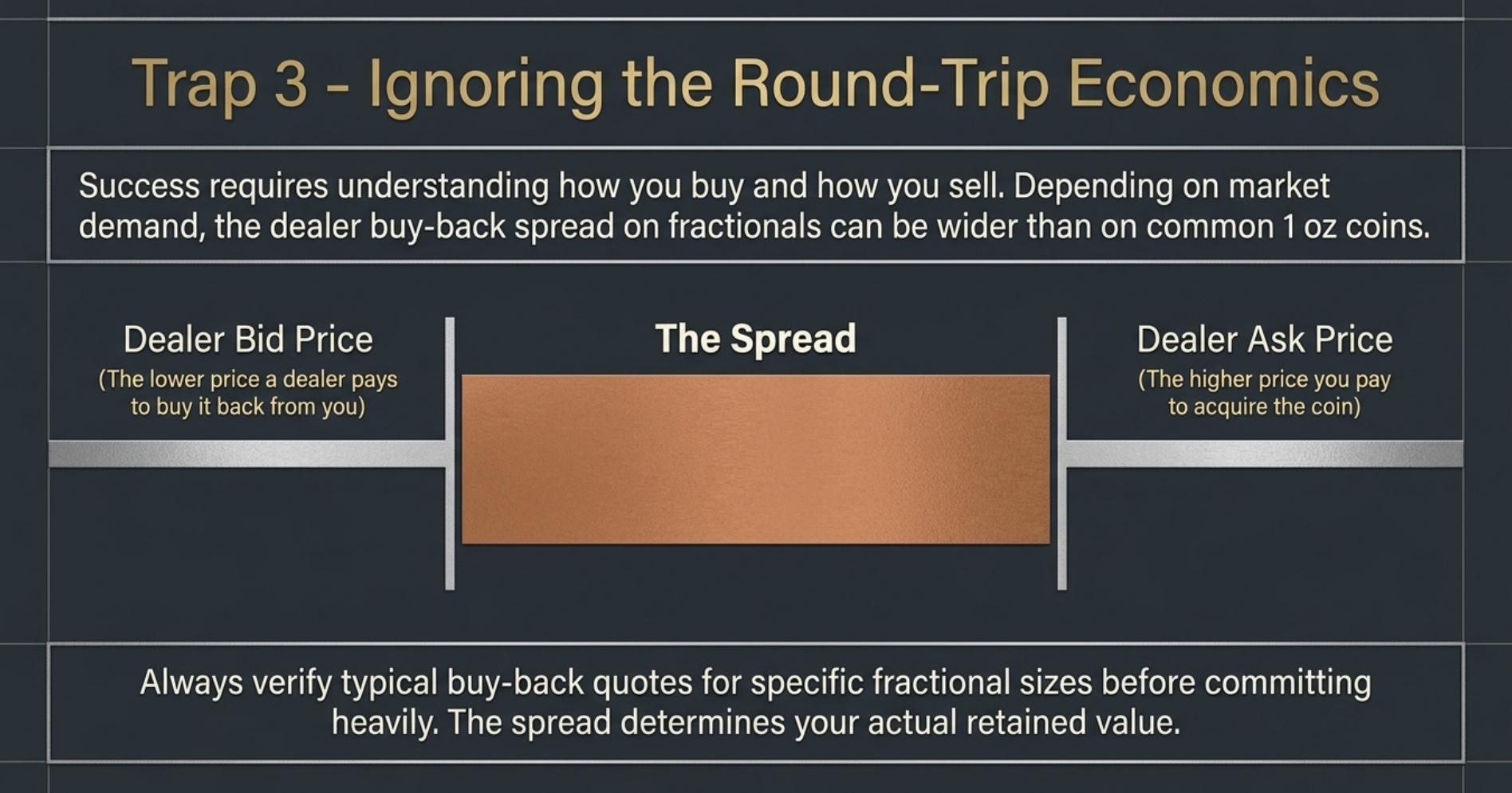
Finally, you need to understand not just how to buy, but how to sell gold coins:
- The gold bid‑ask spread—what dealers charge vs what they pay—can be wider on some fractional products than on common 1 oz coins, depending on demand.
- Before committing heavily to any size, check typical dealer buy‑back quotes and spreads so you know your likely round‑trip economics.
Quick Checklist – Are Small Gold Coins Worth the Premium for You?
Ask yourself:
- Will you realistically be able to buy 1 oz coins often, or would that mean long gaps with no exposure to gold?
- Do you care more about total ounces per dollar, or about flexibility and the ability to sell in small, precise amounts later?
- Are you choosing widely recognized bullion fractionals with historically reasonable premiums and solid resale demand?
- Do you have a plan to integrate 1 oz coins over time, so fractionals are a complement rather than your entire stack?
- Have you checked both the purchase premiums and the typical dealer bid levels (gold bid‑ask spread) for the sizes you are considering?
If your answers lean toward budget‑friendly entry, flexibility, and starting now, small 1/10 oz and 1/4 oz gold coins are typically worth some extra premium. If they lean toward large, long‑term positions and strict cost efficiency, 1 oz coins will usually serve better as your main focus.
Frequently Asked Questions
Are small 1/10 oz and 1/4 oz gold coins worth paying extra for?
Small 1/10 oz and 1/4 oz gold coins are generally worth paying extra for when they allow you to invest on your real‑world budget and build a flexible, divisible stack. If you can already buy 1 oz coins comfortably and mainly care about the lowest cost per ounce, then fractional premiums usually make less sense.
What are the pros and cons of buying fractional gold coins instead of 1 oz coins?
The main pros are easier entry for smaller budgets, more flexibility when you sell in small amounts, and strong demand from other budget‑conscious buyers. The main cons are higher percentage premiums, higher per‑ounce costs over time, and potentially wider bid‑ask spreads compared with common 1 oz bullion coins.
Why do 1/10 oz and 1/4 oz gold coins have higher premiums?
These coins typically have higher premiums because production, handling, and distribution costs are similar to 1 oz coins but are spread over less gold. Dealers also need to price in the additional effort of moving more individual pieces, so the markup per ounce is higher even though the underlying gold quality is the same.
When does it make sense to choose smaller gold coins for your budget?
It makes sense to choose smaller gold coins when saving for a 1 oz coin would keep you out of the market for a long time, when you want a very flexible emergency reserve, or when you are just starting and want to build habits with manageable purchases. In those cases, fractional gold can bridge the gap between “wanting to invest” and actually owning metal.
Are fractional gold coins a good way for beginners to start investing in gold?
Fractional gold coins are often a practical way for beginners to start, because they lower the dollar barrier to entry and allow new investors to learn the basics of buying, storing, and eventually selling gold coins. Over time, many beginners transition toward a mix that still includes some fractionals but leans more on 1 oz coins for long‑term efficiency.
Is it better to save for a 1 oz gold coin or buy smaller coins sooner?
If you are confident you will save and follow through, waiting for a 1 oz coin generally gives you a better price per ounce. If, in reality, long saving periods mean you never act or miss multiple buying opportunities, buying smaller coins sooner can be the better choice for your behavior, even if the per‑ounce cost is higher.
How many small gold coins should be in a long‑term stack versus 1 oz coins?
There is no fixed formula, but many long‑term stackers treat fractional coins as a minority share and 1 oz coins as the core. A common approach is to hold a base of 1 oz bullion coins, then keep perhaps 10–30% of the overall gold position in 1/10 oz and 1/4 oz coins to handle smaller, more tactical sales or gifts.
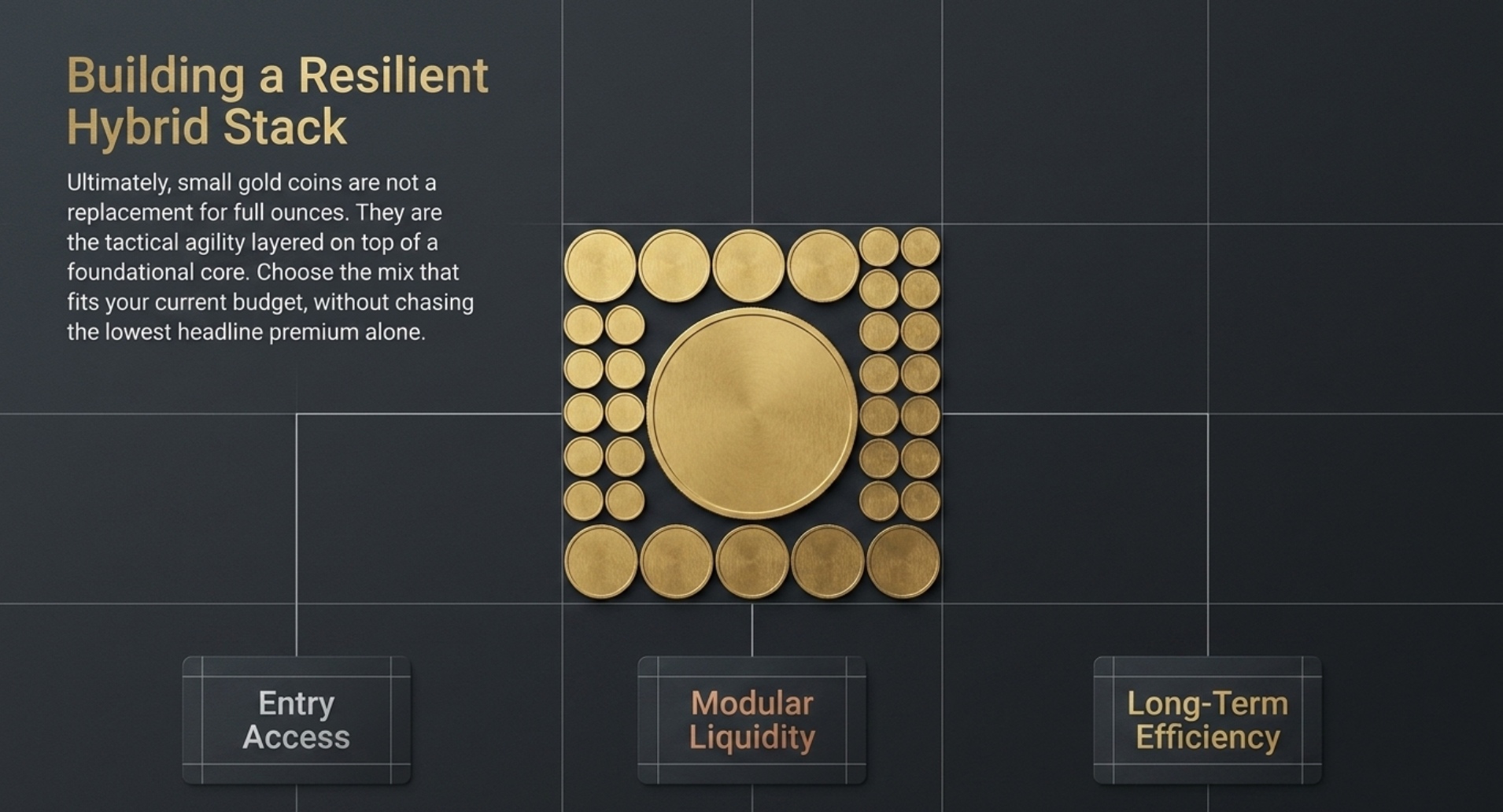
If you are ready to act, compare live prices on our 1/10 oz, 1/4 oz, and 1 oz gold coins, then choose the mix that fits your budget, your need for flexibility, and your long‑term plan—instead of chasing the lowest headline premium alone.