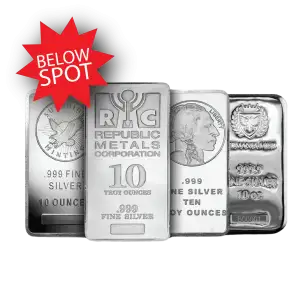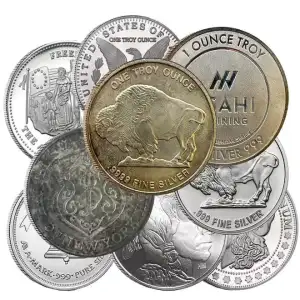
If you are serious about building a long‑term gold stack, you will eventually ask the key question: should I buy gold bars or gold coins to build a long term stack? Both formats are excellent ways to hold physical gold, but they behave differently when it comes to cost, flexibility, storage, and resale.
Quick Answer – Bars vs Coins for a Long‑Term Gold Stack
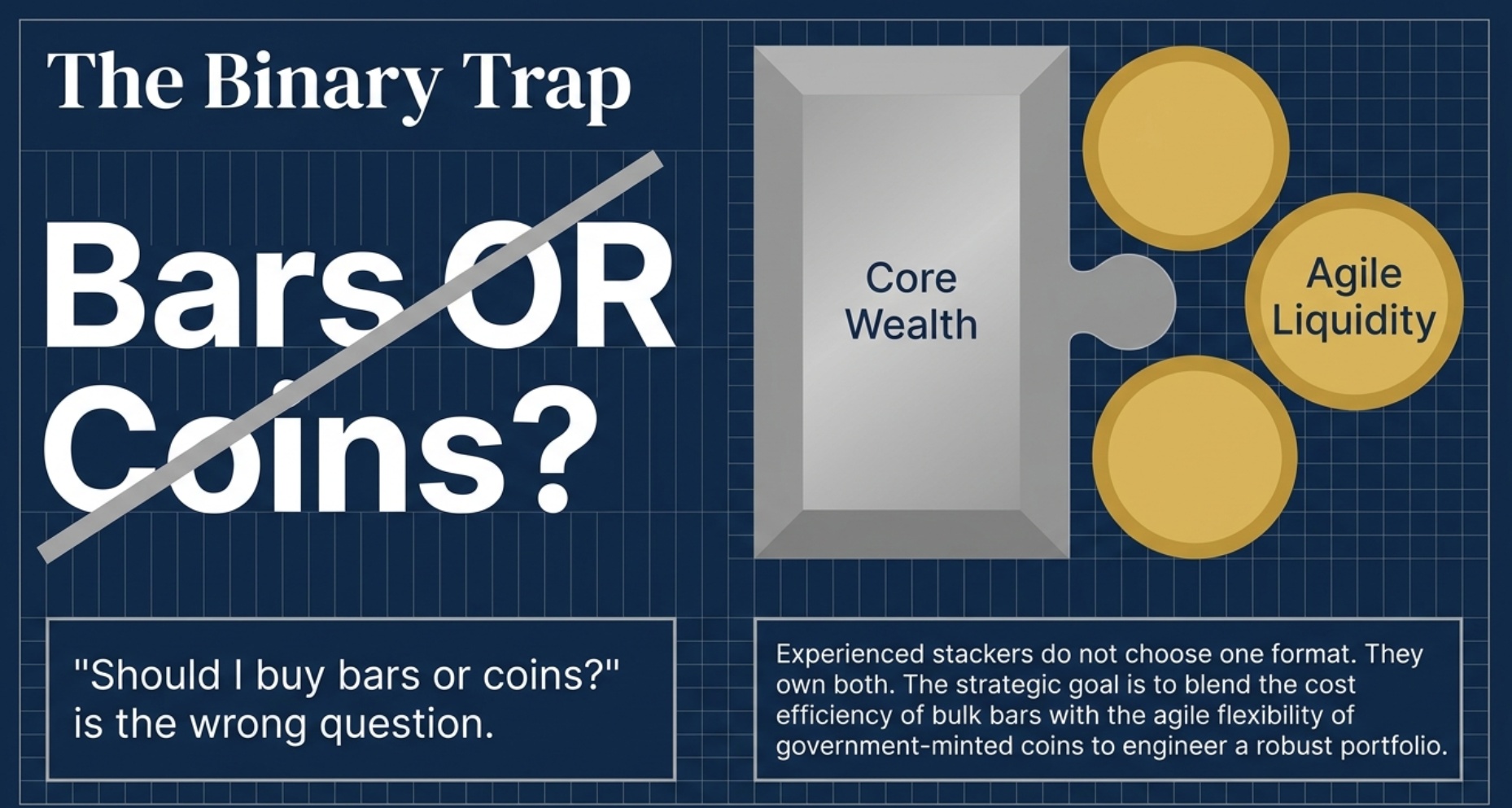
For most investors, gold bars win on cost per ounce, while gold coins win on flexibility, recognizability, and ease of selling in smaller chunks. That is why many experienced stackers end up owning both instead of trying to choose only one format for their entire long‑term stack.
A simple starting rule of thumb often looks like this:
- Under roughly 10,000 USD: mostly 1 oz and fractional coins for maximum flexibility.
- Around 10,000–50,000 USD: a mix of 1 oz coins and 10 oz bars to balance premiums and liquidity.
- Above 50,000–100,000 USD: heavier tilt toward bars (including kilo bars), while maintaining some coins for liquidity and smaller resales.
Advantages of Gold Bars Compared to Government‑Minted Coins
Gold bars usually offer lower premiums and more efficient bulk storage, which is why they are the go‑to choice for scaling a larger long‑term stack.
Lower Premiums and More Gold per Dollar
When you compare gold bars vs gold coins for long term investment, bars typically have the edge on raw value per ounce:
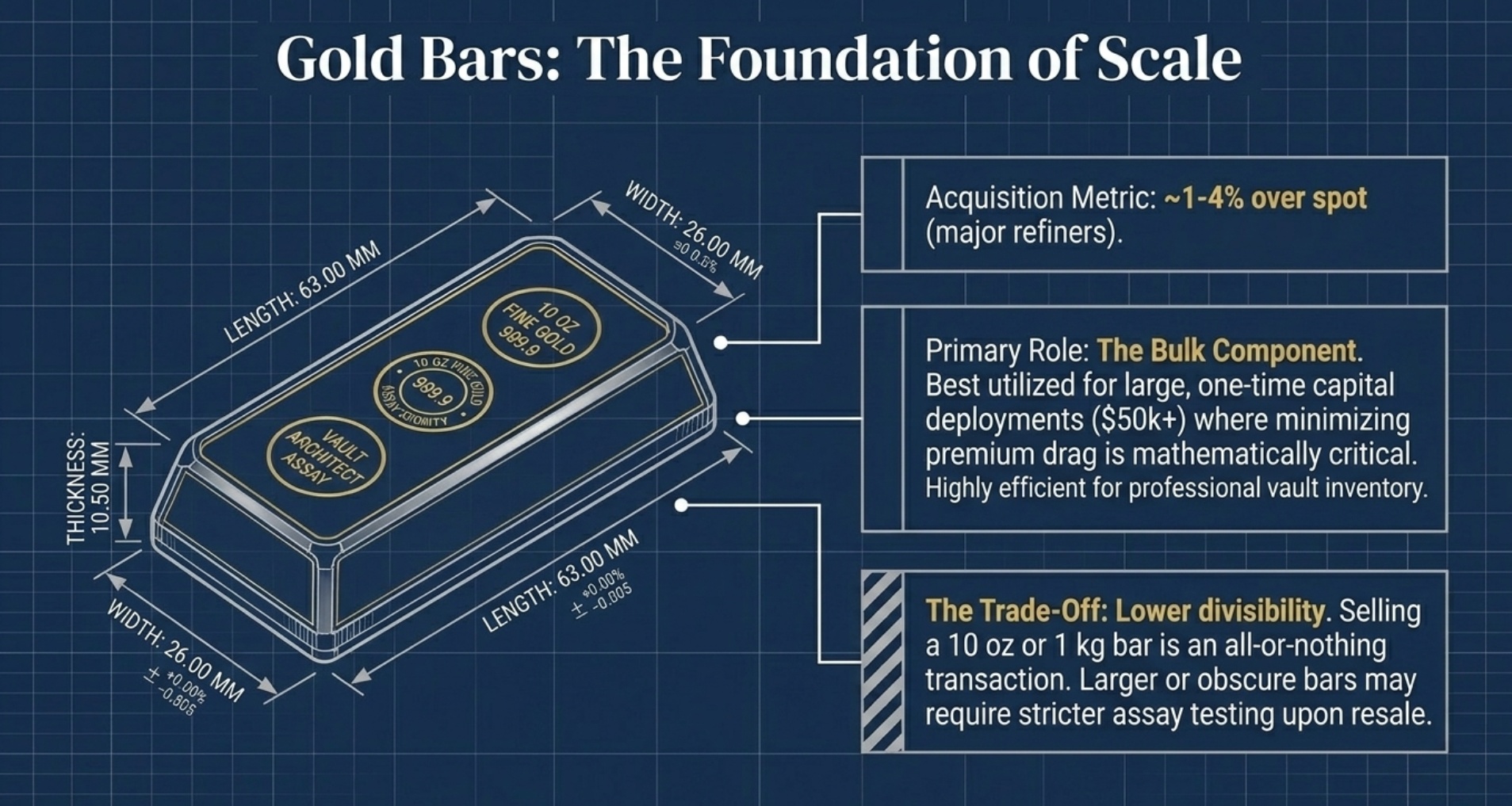
- Many 10 oz and 1 kg bars from major refiners trade around 1–4% above spot, while popular government coins often trade 5–7% above spot in normal markets.
- On a larger position, that 2–3 percentage point difference adds up quickly—saving hundreds of dollars at 25,000 USD and thousands at 100,000 USD or more.
If your priority is the most ounces for your money and you plan to hold for years, the advantages of gold bars compared to government minted coins are hard to ignore.
Efficient for Larger Investments and Vault Storage
Gold bars also shine when it comes to storage and logistics:
- Rectangular bars stack neatly and are easy to inventory and store in safes or professional vaults, especially in 10 oz and kilo sizes.
- For investors building a sizable long‑term stack—particularly in vault storage—bars often become the “bulk” component of the position.
That is why you often see serious stackers and institutional buyers leaning heavily toward bars once their allocation crosses certain thresholds.
When Gold Bars Make the Most Sense
Bars tend to be the best fit when:
- You are committing a larger one‑time amount (for example, 25,000 USD or more).
- You are comfortable holding fewer, larger pieces instead of dozens of small coins.
- You are using a professional vault or secure storage designed to handle heavier bars.
The main trade‑off is that some larger bars might require more extensive testing or assay at resale, especially if they come from less familiar brands or have spent time outside recognized storage networks.
Why Some Investors Prefer Gold Coins Even If Premiums Are Higher
Many investors still prefer gold coins even if premiums are higher because they value liquidity, recognizability, and flexibility more than the last few percentage points of premium savings.
Recognizability, Trust, and Ease of Resale
Government‑minted coins—such as American Gold Eagles, Maple Leafs, or Krugerrands—are instantly recognizable to dealers and other investors worldwide.
This has several practical benefits:
- Coins are often easier to sell quickly, with less need for additional testing or documentation, especially in the retail market.
- Established designs and mint reputations can make buyers more comfortable paying fair premiums on the secondary market.
So even though gold bars may be cheaper per ounce, many investors accept coin premiums because they expect smoother, more competitive resale terms later.
Fractional Flexibility and Smaller Trade Sizes
Gold coins—especially 1 oz and fractional issues—make it much easier to adjust your stack in small increments:
- If you hold only large bars, selling a small amount of gold can be awkward; you may not want to part with an entire 10 oz or kilo bar for a modest cash need.
- With coins, you can sell one or two pieces at a time, which is why gold coins vs bars for stacking often favor coins for people who value optionality.

That flexibility explains why some investors prefer gold coins even if premiums are higher: they see those premiums as insurance for future flexibility.
Tax and Regulatory Considerations (High‑Level)
In some jurisdictions, specific coins may have tax advantages over bars, different reporting thresholds, or special treatment as legal tender. While this is highly country‑specific and requires professional advice, it is another reason coins can be attractive for some investors.
Head‑to‑Head: Gold Bars vs Gold Coins for Long‑Term Stacking
Looking at gold bars vs gold coins side by side helps clarify which format is better for different roles within your stack.
Bars vs Coins Snapshot Table
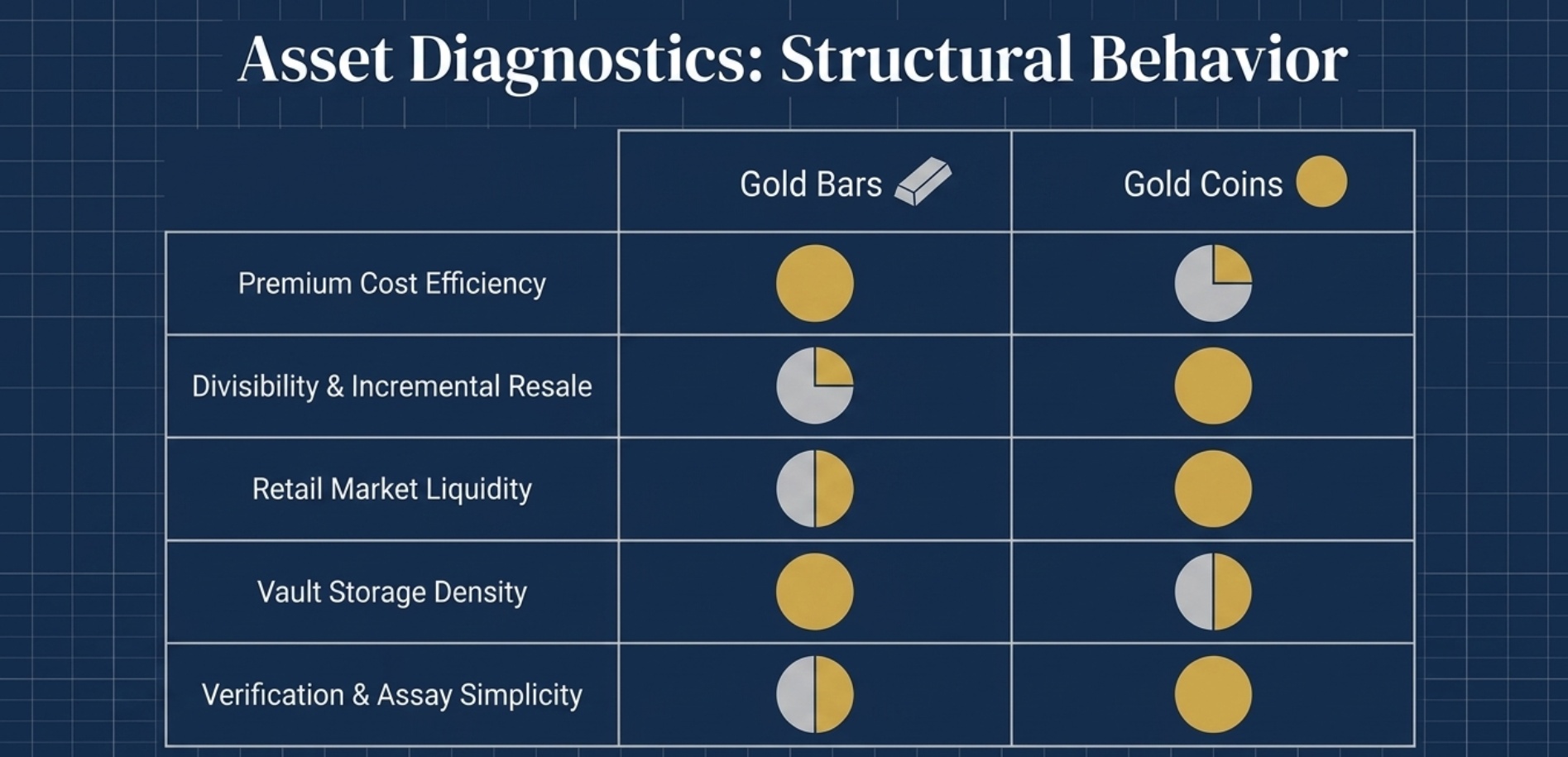
| Attribute | Gold Bars | Gold Coins |
|---|---|---|
| Typical premiums | Lower (often ~1–4% over spot for larger bars) | Higher (often ~5–7% over spot for popular coins) |
| Liquidity/resale | Excellent in larger, professional trades; may require more testing for retail | Very strong in retail markets; quick recognition and resale |
| Divisibility | Less divisible (10 oz, kilo bars) | Highly divisible (1 oz and fractional coins) |
| Storage convenience | Very efficient in vaults and safes | Slightly bulkier per ounce but still easy to store |
| Counterfeit/assay risk | Larger bars may need more checks at resale | Coins from major mints often easier to verify |
| Typical use | Bulk, long‑term core stack for larger allocations | Liquidity sleeve and flexible, smaller trade sizes |
Example: How Format Affects a 25,000 USD and 100,000 USD Stack
To see how this plays out in practice, consider these simplified examples (ignoring daily price moves):
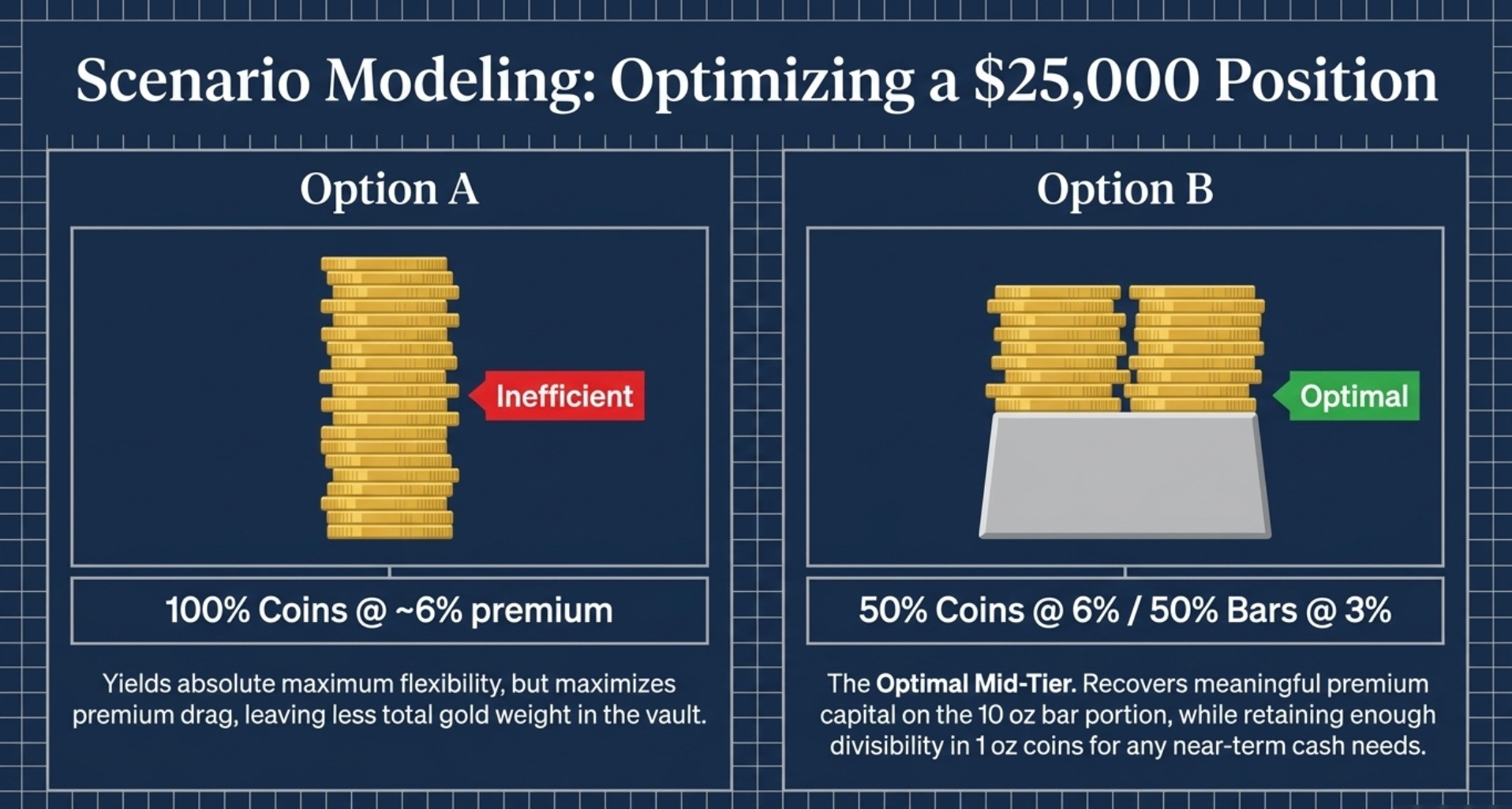
- 25,000 USD stack
Option A: 100% in 1 oz coins at, say, 6% over spot.
Option B: 50% in coins at 6% over spot, 50% in bars at 3% over spot.
Option B gives you similar liquidity but saves meaningful money in premiums on the bar portion.
- 100,000 USD stack
Option A: all in 1 oz coins at higher premiums.
Option B: majority in 10 oz or kilo bars at lower premiums, with 20–30% kept in coins for future small sales.
These rough numbers echo what experienced stackers and professional traders often recommend: lean more into bars as your stack grows, but always keep some coins for optionality.

How to Decide Between Bars and Coins When Buying Physical Gold
The best way to decide between bars and coins when buying physical gold is to align your choice with your budget, liquidity needs, storage plans, and exit strategy.
Question 1 – How Much Are You Investing Right Now?
Your investment size is a major driver of format:
- Under about 10,000–15,000 USD: many investors go mostly or entirely with coins for simplicity and flexibility.
- Around 10,000–50,000 USD: a mixed approach (for example, 50–60% coins, 40–50% 10 oz bars) balances liquidity and lower premiums.
- Above 50,000–100,000 USD: bar‑heavy allocations with a dedicated “liquidity sleeve” in coins become common.
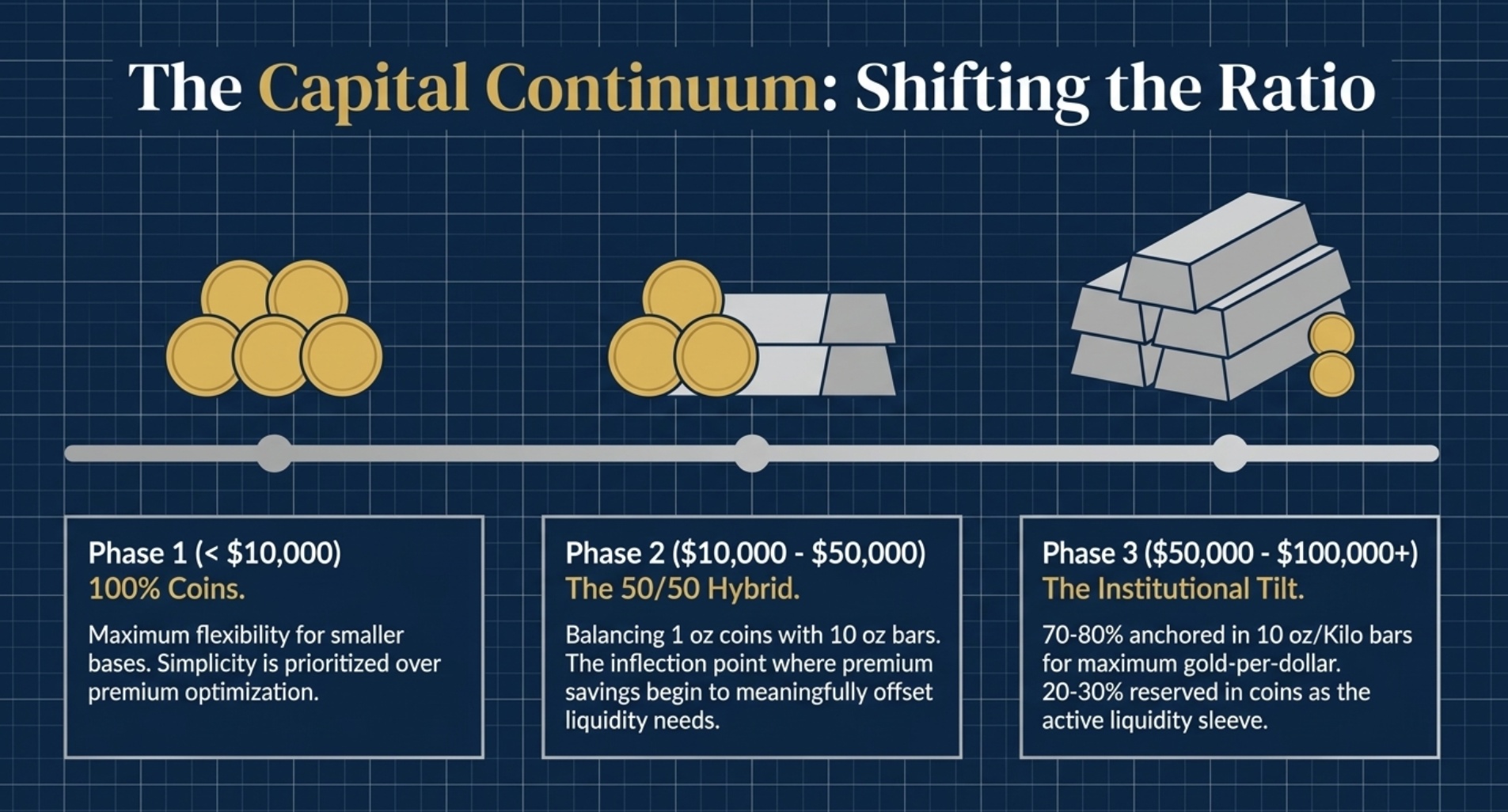
These are guidelines, not rigid rules, but they reflect how a lot of experienced stackers structure their holdings.
Question 2 – How Likely Are You to Sell in Small Chunks?
Think realistically about how you might use your stack:
- If you expect to sell off small amounts during retirement or emergencies, you will likely appreciate having more coins and smaller denominations.
- If your plan is to hold for decades and then rebalance or liquidate in larger blocks (or pass it on), larger bars become more appealing.
In other words, if flexibility is king for you, tilt toward coins; if bulk value is king, tilt toward bars.
Question 3 – Where Will You Store Your Gold Stack?
Storage environment also influences the choice between gold bars vs gold coins for long term investment:
- Home safes and small safe‑deposit boxes might naturally favor coins and a few mid‑size bars.
- Professional vaults handle large bars easily and may even be optimized for them, which is one reason traders and bigger investors gravitate to bars.
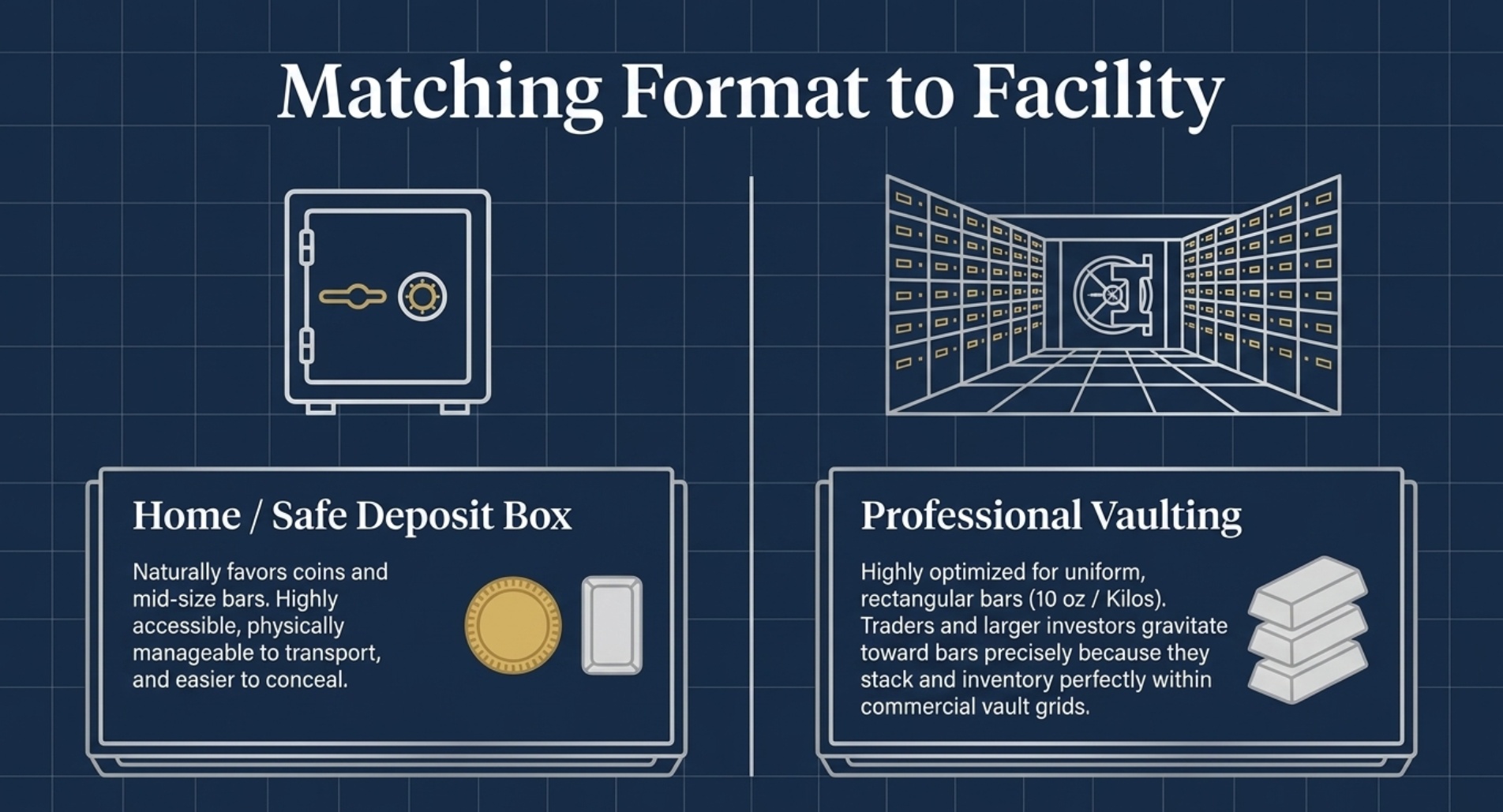
If you plan to use professional storage from day one, adding larger bars early may make good sense.
Question 4 – What Mix of Bars and Coins Fits Your Long‑Term Strategy?
Instead of treating this as “bars or coins,” treat it as “what mix of bars and coins should I hold?”:
- Some long‑term “wealth preservation” frameworks suggest something like 70–80% bars and 20–30% coins once your allocation is substantial.
- For smaller stacks or for investors with higher liquidity needs, a 50/50 or coin‑heavy mix can be more comfortable.
Your goal is to combine the cost efficiency of bars with the day‑to‑day flexibility of coins in whatever ratio matches your risk tolerance and use‑cases.
Common Mistakes to Avoid When Choosing Gold Bars vs Coins
The biggest mistakes are chasing the lowest possible premium without thinking about spread, liquidity, and how you will actually sell later.
Focusing Only on Premium, Not Spread and Exit
It is easy to get fixated on premium percentage:
- A slightly cheaper, less recognized bar might look attractive on the buy side.
- But if dealers pay noticeably less when you sell—or require costly assays—the round‑trip cost may be worse than with a more mainstream product.
Always think in terms of the full journey: what you pay today, and what you are likely to receive when you eventually sell.
Buying Only Large Bars with No Smaller, Liquid Pieces
Another common stacking error is going all‑in on large bars:
- This can leave you in a position where any sale is “all or nothing,” forcing you to part with more gold than you really want at once.
- Keeping a portion of your stack in 1 oz and fractional coins gives you a built‑in emergency and rebalancing tool.
In practice, even very bar‑heavy strategies usually reserve some share—often 10–30%—for coins.
Ignoring Counterfeit and Assay Considerations
Finally, do not ignore verification issues:
- Larger, higher‑value bars may attract more attention from counterfeiters and can require more sophisticated testing when they change hands.
- Sticking to well‑known refiners and buying from reputable dealers significantly reduces these risks for both bars and coins.
Quick Checklist: Choosing Gold Bars vs Coins for Your Next Purchase
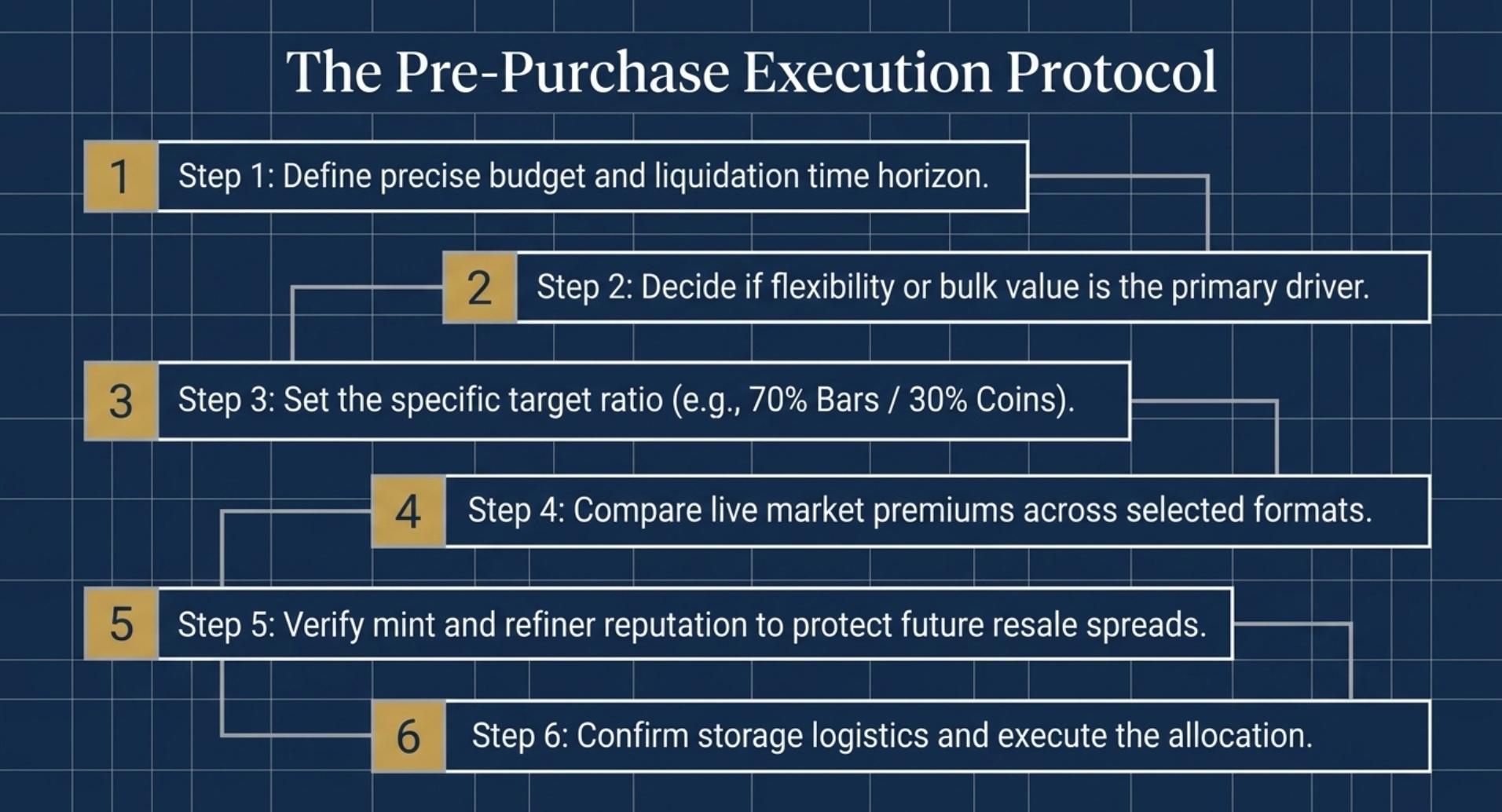
Use this 6‑step checklist before your next order:
- Define your budget and time horizon for this purchase.
- Decide how important small, flexible sales are to you vs bulk value.
- Choose a target bar‑to‑coin ratio that matches your situation (for example, 60/40 coins to bars for smaller stacks, 70/30 bars to coins for larger ones).
- Check live gold prices and compare current premiums for the specific bar and coin products you are considering.
- Stick to recognized government mints and reputable bar refiners, and buy from established dealers you trust.
- Confirm your storage plan and keep clear records of what you own and where it is held.
Frequently Asked Questions
1. Should I buy gold bars or gold coins to build a long‑term stack?
Most long‑term stackers benefit from owning both gold bars and gold coins, using bars for bulk value and coins for liquidity. Bars usually offer lower premiums per ounce, while coins provide more flexibility when selling in smaller amounts. Thinking in terms of a bar‑to‑coin mix, not a single “right answer,” makes the decision much easier.
2. What are the main advantages of gold bars compared to government‑minted coins?
The main advantages of gold bars compared to government minted coins are lower premiums and more efficient storage, especially in 10 oz and kilo sizes. Bars help you maximize ounces per dollar, which becomes increasingly important as your stack grows and your investment size increases.
3. Why do some investors prefer gold coins even if premiums are higher?
Some investors prefer gold coins even if premiums are higher because they value recognizability and flexibility more than the last few percent of savings. Government coins are widely trusted, easy to resell, and available in smaller units, which makes it simpler to sell a little at a time without breaking up large bars.
4. Are gold bars really cheaper than coins per ounce?
Yes, in most normal markets, standard investment‑grade gold bars are cheaper per ounce than comparable coins, often by 2–4 percentage points in premium. Over larger allocations—like 25,000 or 100,000 USD—that difference can translate into meaningful extra ounces or savings for the same budget.
5. What is the best mix of gold bars and coins for beginners?
For beginners with smaller budgets, a coin‑heavy mix—sometimes even 100% coins to start—is often the most practical. As your stack grows and you become more comfortable, you can gradually introduce bars, moving toward a more balanced or bar‑heavy allocation that still keeps some coins on hand for liquidity.
6. How do I decide between bars and coins when buying physical gold for the first time?
To decide between bars and coins when buying physical gold for the first time, start with your budget and how much flexibility you want. Many first‑time buyers choose 1 oz coins for simplicity and resale ease, then add bars on later purchases once they understand premiums, storage, and their long‑term plan.
7. Are larger gold bars harder to sell than 1 oz coins?
Larger gold bars can be somewhat harder to sell than 1 oz coins, especially in the retail market, because they require bigger tickets and may need more verification. That is why many investors keep at least part of their stack in 1 oz coins, even when they rely on bars for the bulk of their long‑term holdings.
If you are ready to build or rebalance your long‑term stack, start by comparing live prices on our gold bars and government‑minted gold coins, then choose the bar‑to‑coin mix that fits your goals, budget, and comfort level today—not just the lowest headline premium.