Getting a quote for your gold or silver can be stressful if you do not know whether the number in front of you is good, bad, or somewhere in between. This guide shows you how to evaluate a gold and silver offer using spot price, premiums, and typical payouts so you can recognize a fair price and feel confident before you say yes or no.
For a step‑by‑step look at selling, you can also read our guide on how to sell gold and silver for the best price.
Why You Need a Framework to Evaluate Gold and Silver Offers
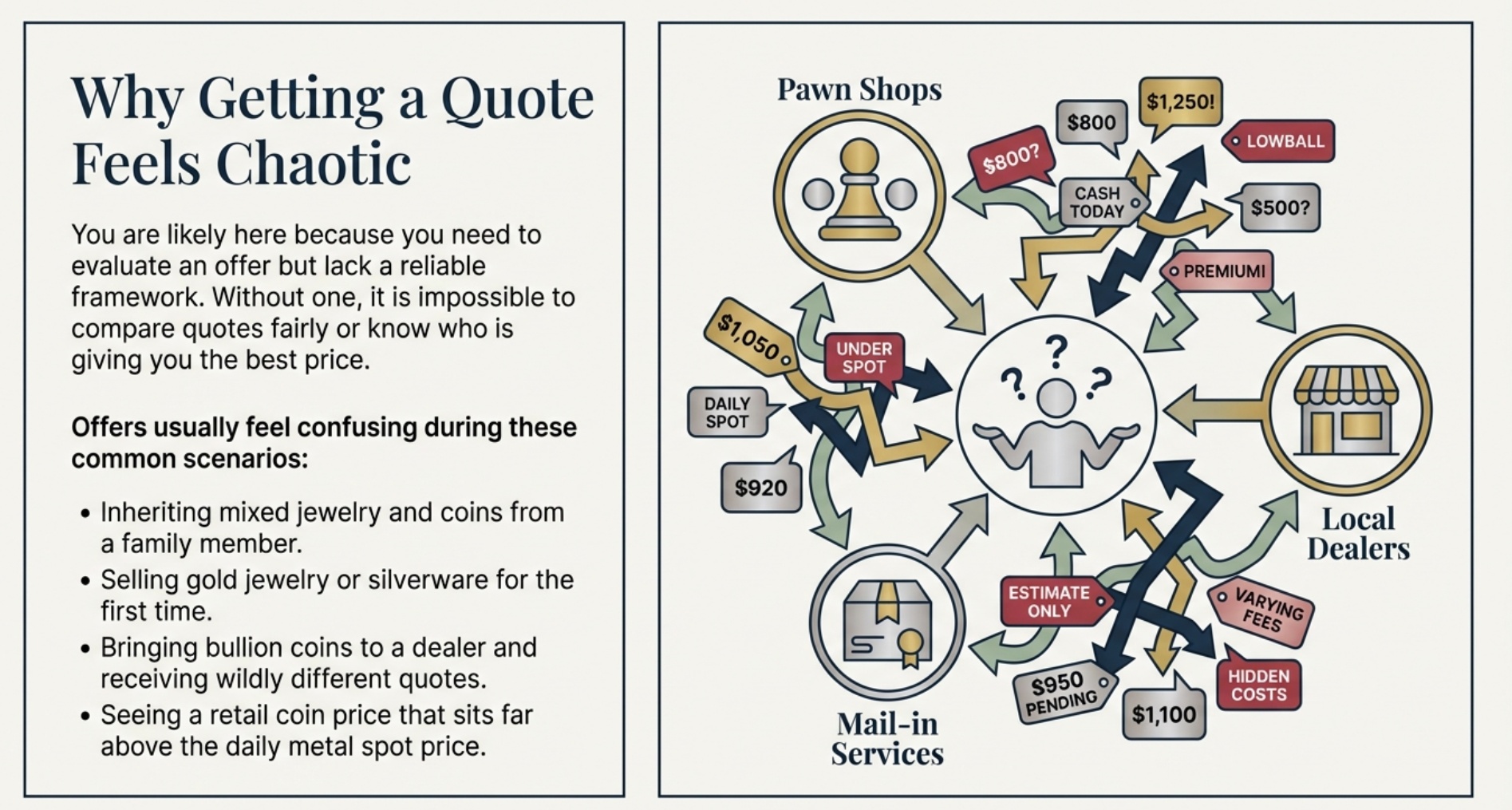
Different buyers can give very different quotes for the same gold or silver, especially across pawn shops, local dealers, and mail‑in services. Without a framework, it is hard to compare those offers fairly or know who is really giving you the best price when selling gold.
A simple, repeatable process turns any offer into a few clear checkpoints: what you have, what spot price they used, how they calculated melt value or retail price, and how their payout or premium compares with others.
Local, long‑established buyers often explain their process in a similar step‑by‑step way.
Common Situations Where Offers Feel Confusing
People usually start searching “how to evaluate gold offer” or “fair price for gold and silver” after one of a few common scenarios:
- Inheriting mixed jewelry and coins from a family member
- Selling gold jewelry or silverware for the first time
- Bringing bullion coins or bars to a dealer and receiving wildly different quotes
- Seeing a coin price that seems far above the gold or silver spot price
In each case, the goal is the same: understand what the offer really means before you accept it.
Key Concepts: Spot Price, Premiums, Melt Value, and Dealer Spread
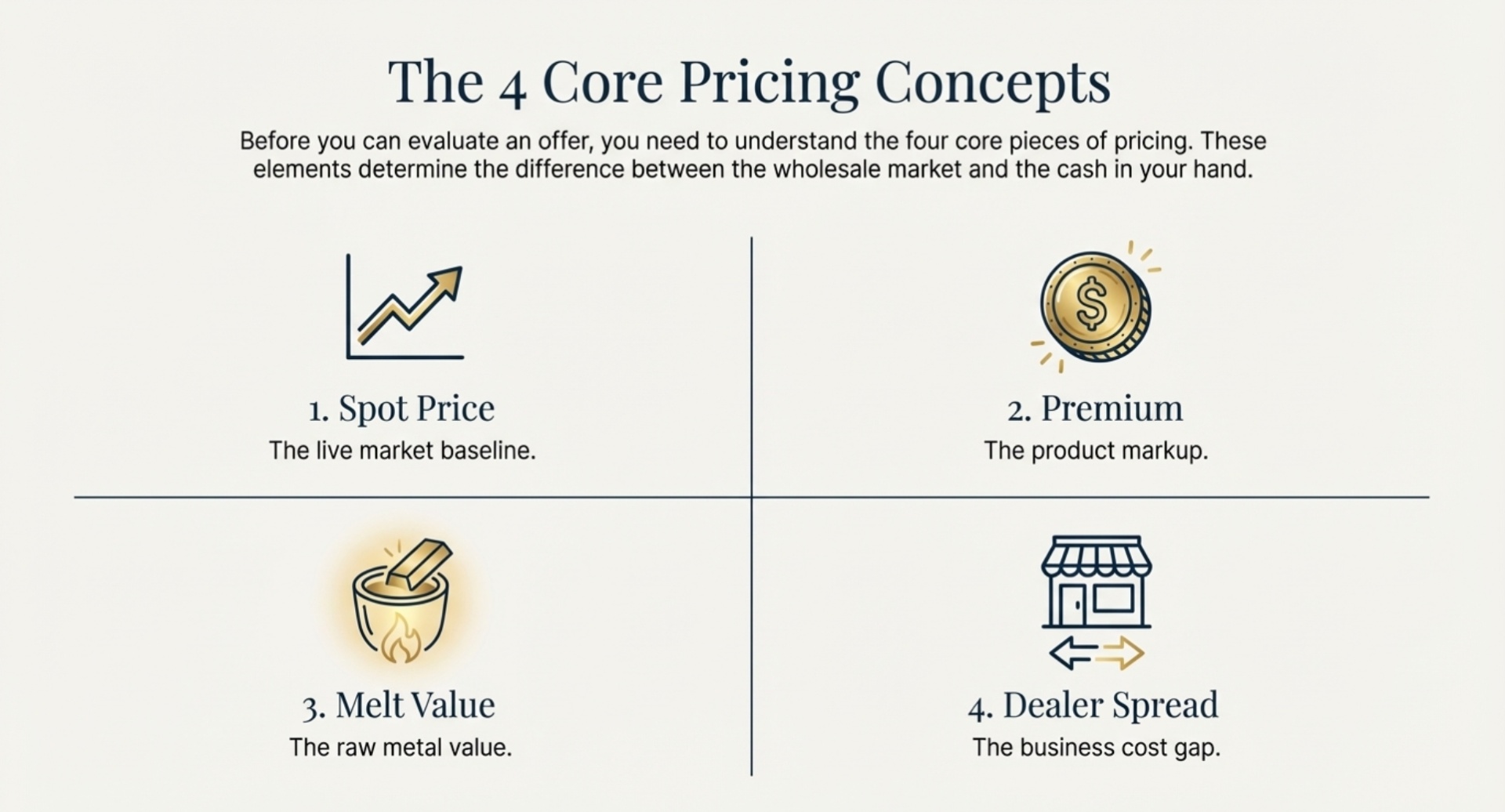
Before you can evaluate a gold and silver offer, you need to understand the four core pieces of pricing: spot price, premiums, melt value, and dealer spread.
What Is the Gold and Silver Spot Price?
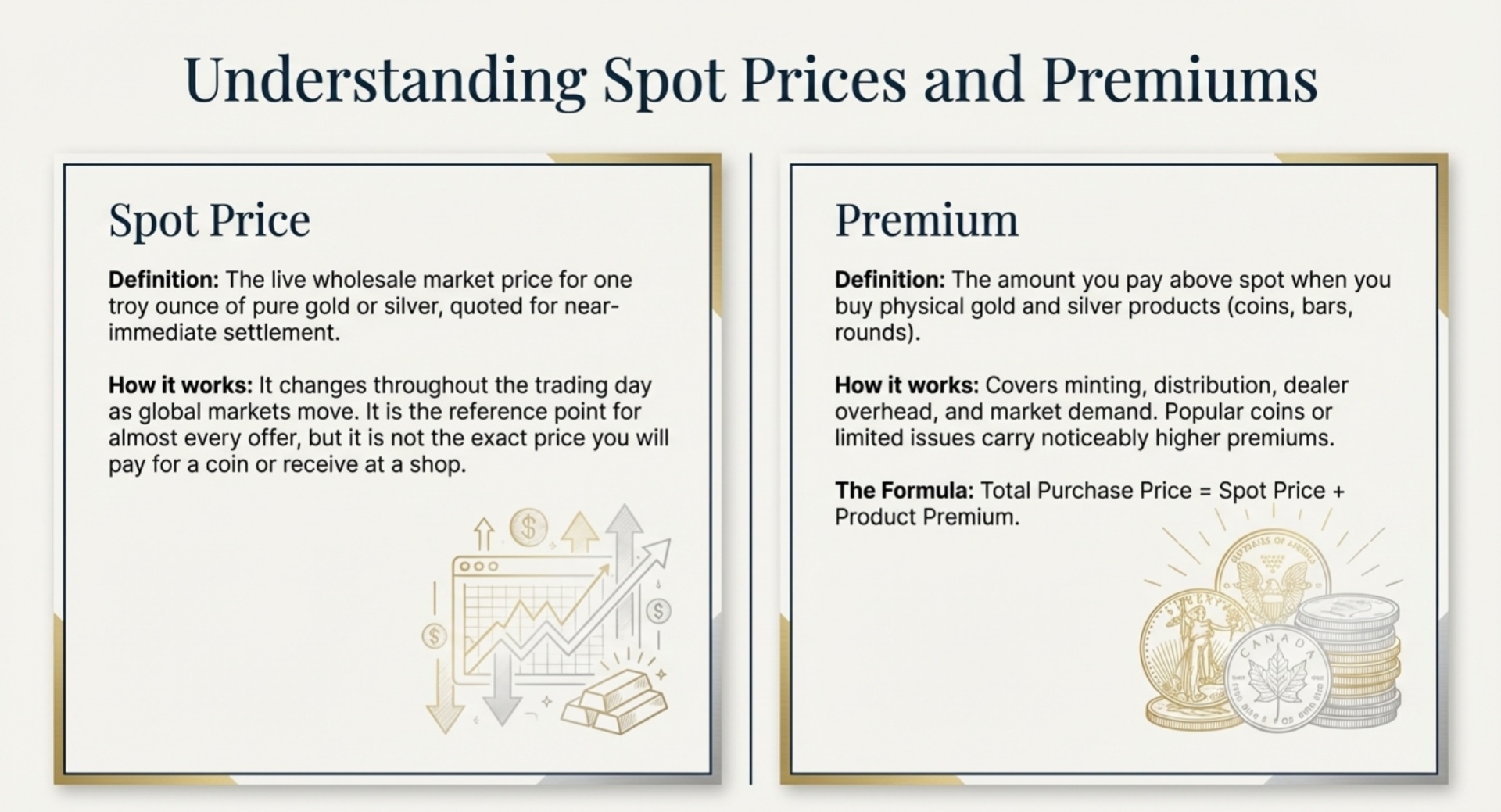
The spot price is the live wholesale market price for one troy ounce of pure gold or silver, quoted for near‑immediate settlement. It changes throughout the trading day as global markets move, and it is the reference point for almost every gold and silver offer you will ever see.
When you look at a price chart or see “gold is trading at X,” you are usually looking at the spot price—not the price you will receive at a shop or pay for a coin.
What Is a Premium on Gold and Silver?
A premium is the amount you pay above spot when you buy physical gold and silver products such as coins, bars, and rounds. That extra cost covers minting, distribution, dealer overhead, and market demand, which is why highly popular coins or limited issues can carry noticeably higher premiums.
In simple terms, your total purchase price equals the spot price plus the premium for that specific product and quantity.
What Is Melt Value?
Melt value is the spot‑based value of the precious metal in your item after adjusting for purity and weight. For example, if you have 14k gold jewelry, the melt value reflects only the gold content (not other alloys), multiplied by the current spot price.
Most gold and silver payouts for jewelry and scrap start from melt value, then subtract the buyer’s costs and profit margin, because they will typically refine the metal rather than resell the item as‑is.
What Is a Dealer Spread?
Dealer spread is the difference between the price at which a dealer sells an item to you and the price at which they are willing to buy that same type of item back. Spreads exist because dealers need to cover rent, staff, insurance, testing, and market risk.
For common bullion products, spreads are typically smaller in percentage terms than for jewelry or obscure pieces, but there is always some gap between buy and sell prices.
How to Evaluate a Gold Offer Step by Step
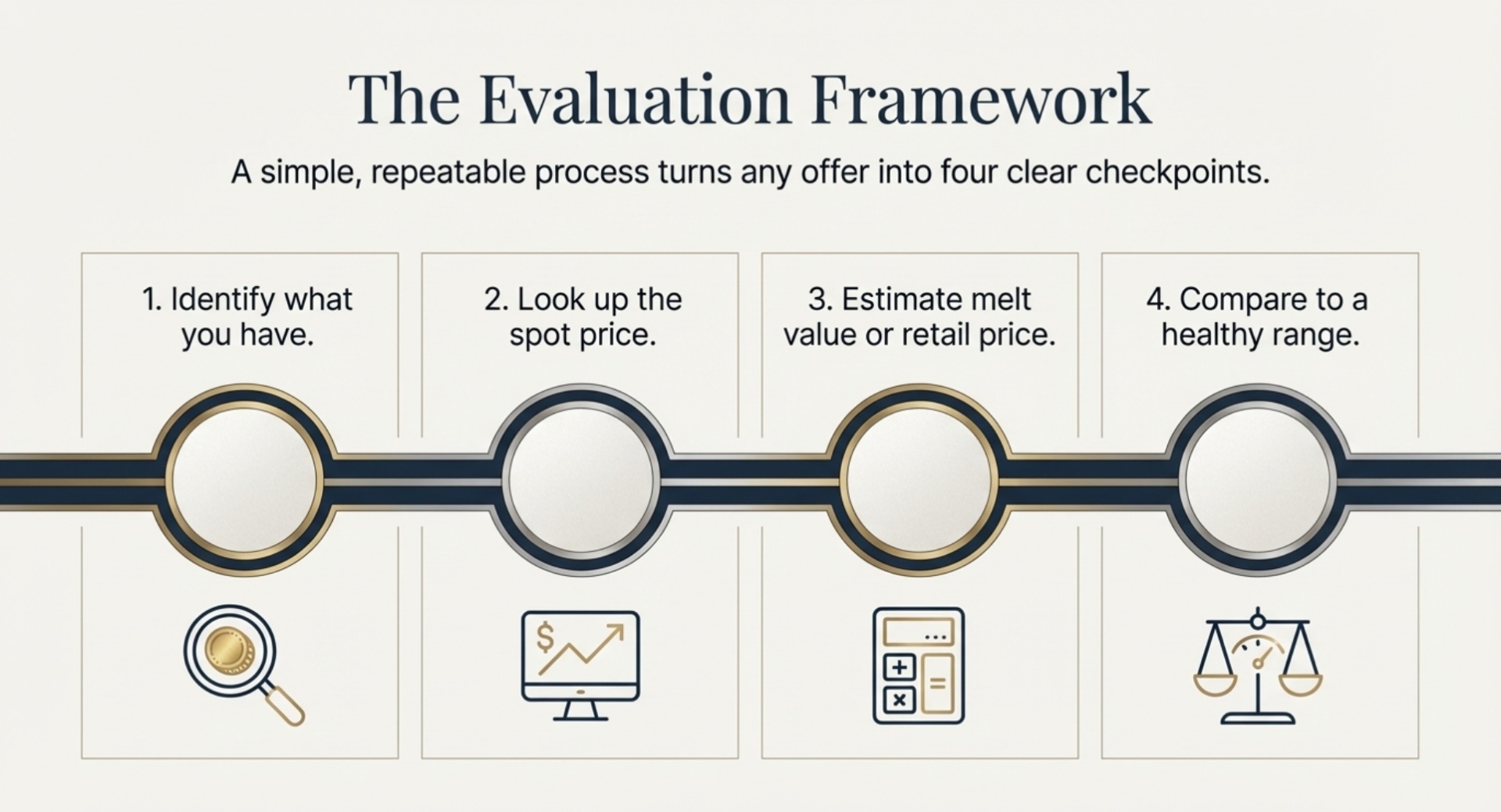
Once you know the key concepts, you can evaluate almost any gold offer using a simple four‑step process.
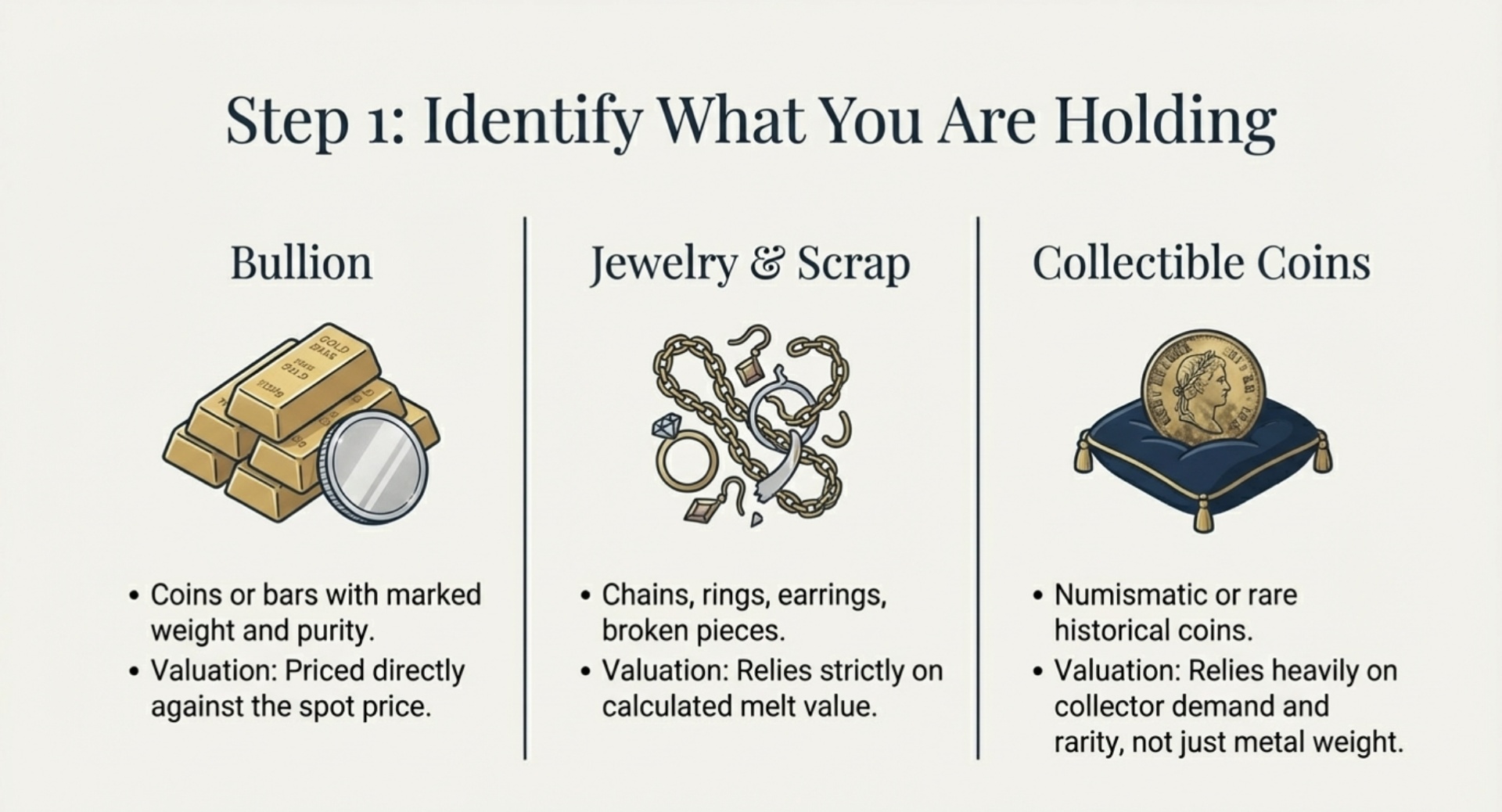
Step 1 – Identify What You Are Holding
Start by identifying whether your item is:
- Bullion (coins or bars with marked weight and purity)
- Jewelry or scrap (chains, rings, earrings, broken pieces)
- Collectible or numismatic coins
Bullion and common coins are usually priced more directly against spot, while jewelry and collectibles rely more on melt value and collector demand.
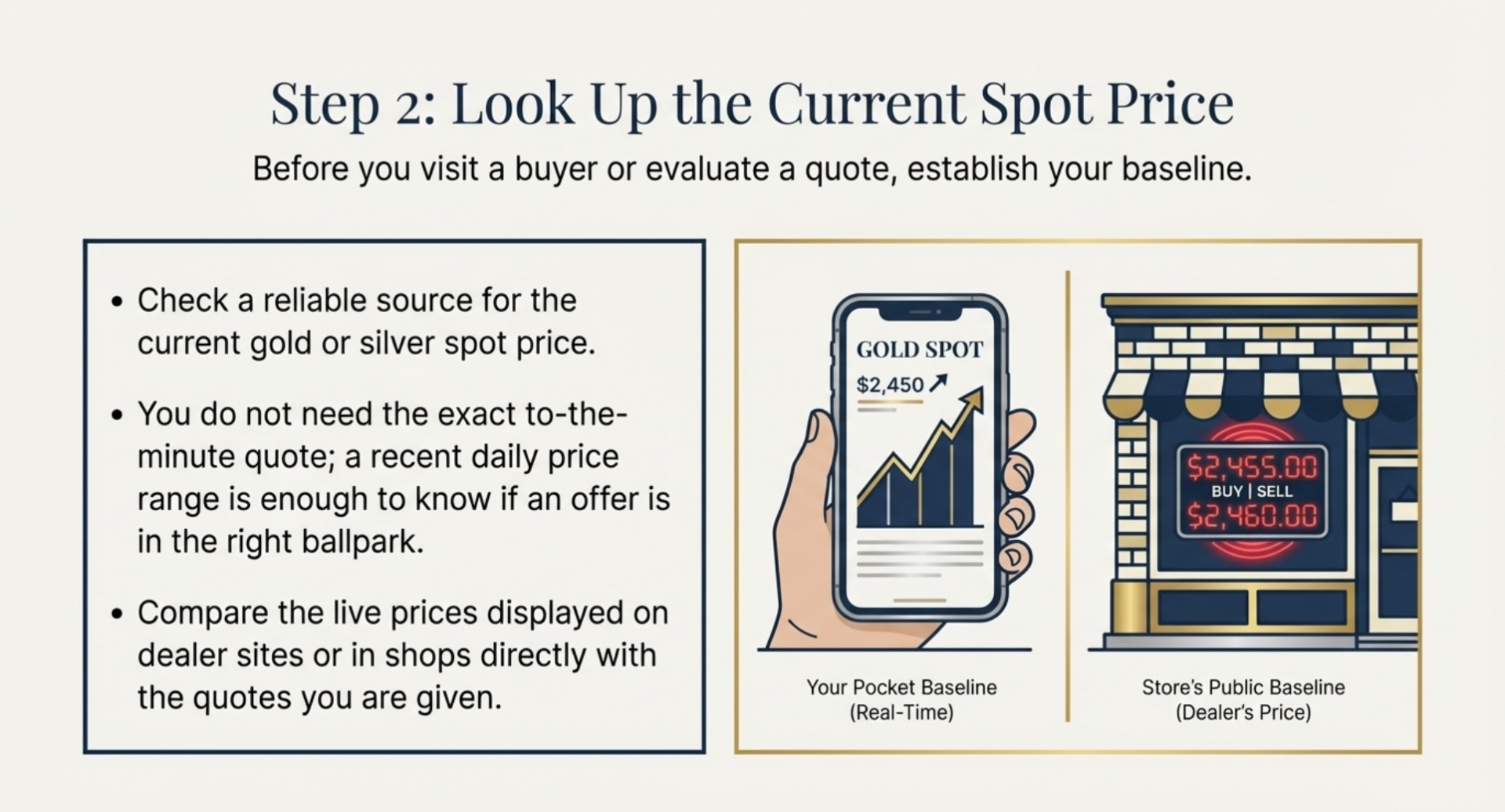
Step 2 – Look Up the Current Gold Spot Price
Before you visit a buyer or evaluate a quote, check a reliable source for the current gold spot price. You do not need the exact minute; a recent daily price range is enough to know whether an offer is in the right ballpark.
Many dealers display live gold and silver prices on their sites or in the shop, and you can compare those numbers with quotes you see in real time.
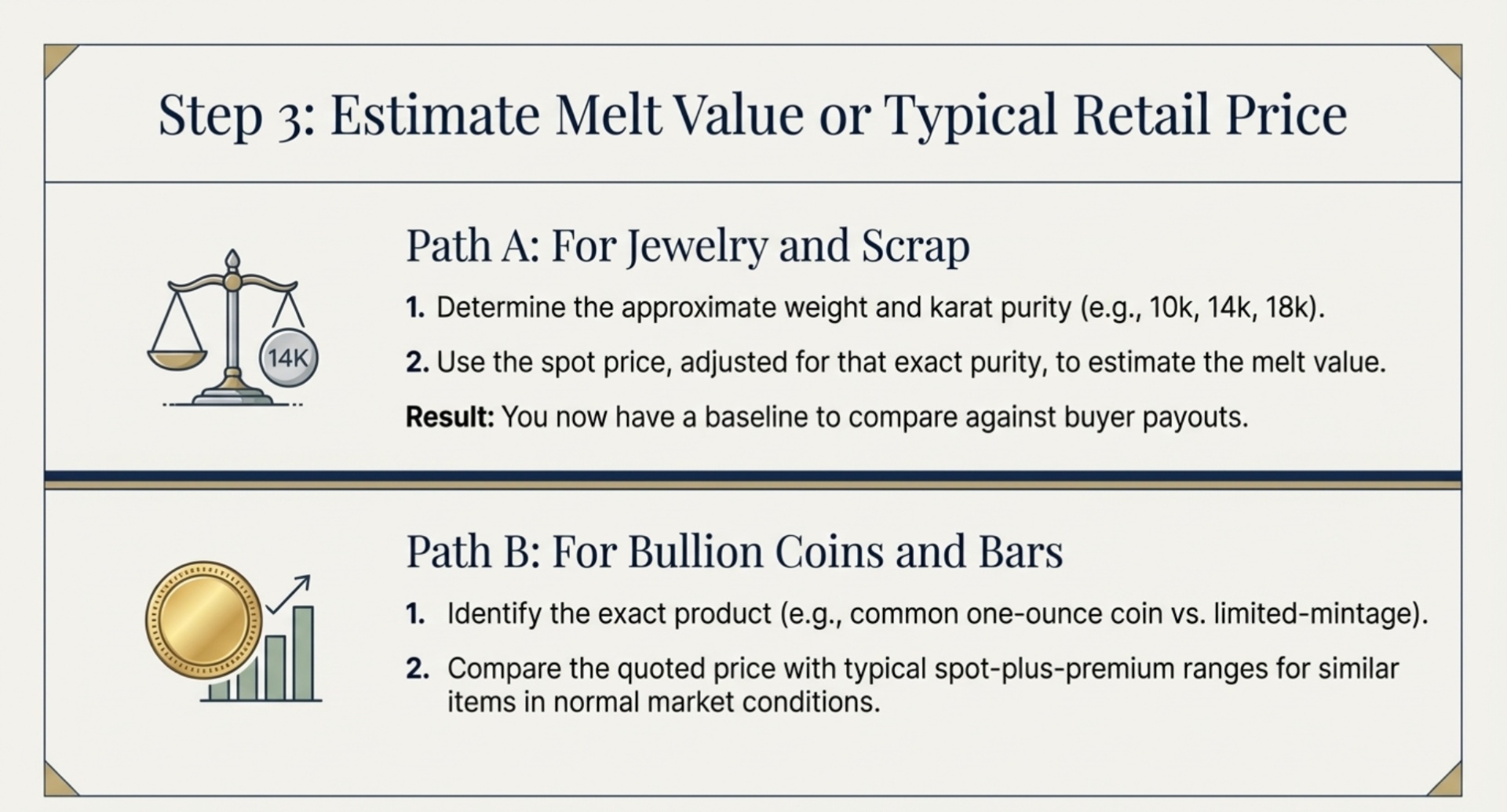
Step 3 – Estimate Melt Value or Typical Retail Price
For jewelry and scrap:
- Determine approximate weight and karat purity (e.g., 10k, 14k, 18k).
- Use the spot price, adjusted for purity, to estimate the melt value—what the pure gold content is worth if refined.
- This gives you a baseline to compare against offers from different buyers.
For bullion coins and bars:
- Identify the exact product (for example, a common one‑ounce gold coin vs a limited‑mintage piece).
- Compare the quoted price with typical spot‑plus‑premium ranges for similar items in normal market conditions, knowing that demand and volatility can stretch premiums during stressed periods.
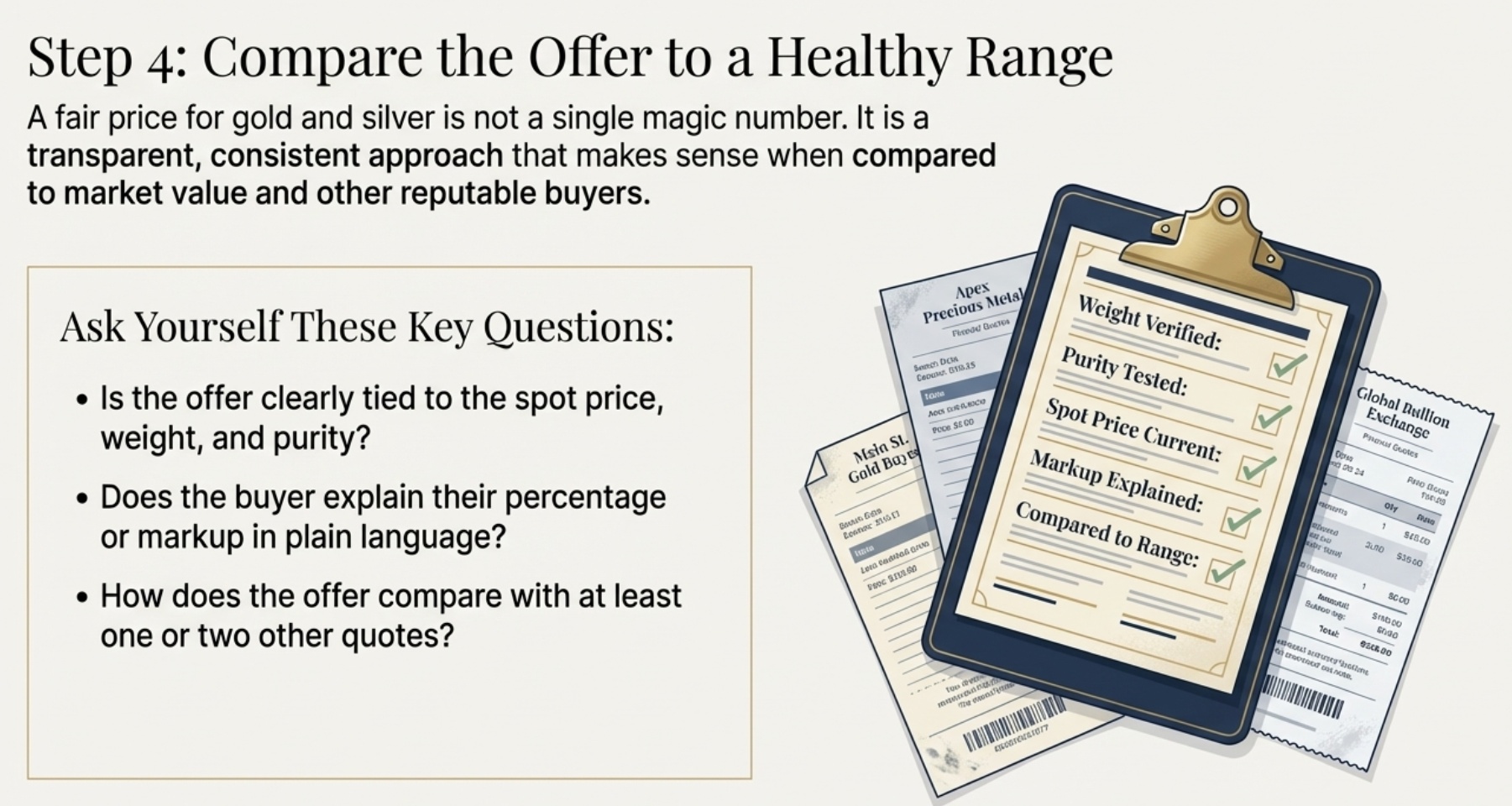
Step 4 – Compare the Offer to a Healthy Range
With melt value or a spot‑plus‑premium benchmark in mind, ask:
- Is the offer clearly tied to spot price, weight, and purity?
- Does the buyer explain their percentage or markup in plain language?
- How does the offer compare with at least one or two other quotes?
A fair price for gold and silver is not a single magic number; it is a transparent, consistent approach that makes sense when you compare it with market value and other reputable buyers.
How to Evaluate a Silver Offer (Same Logic, Different Numbers)
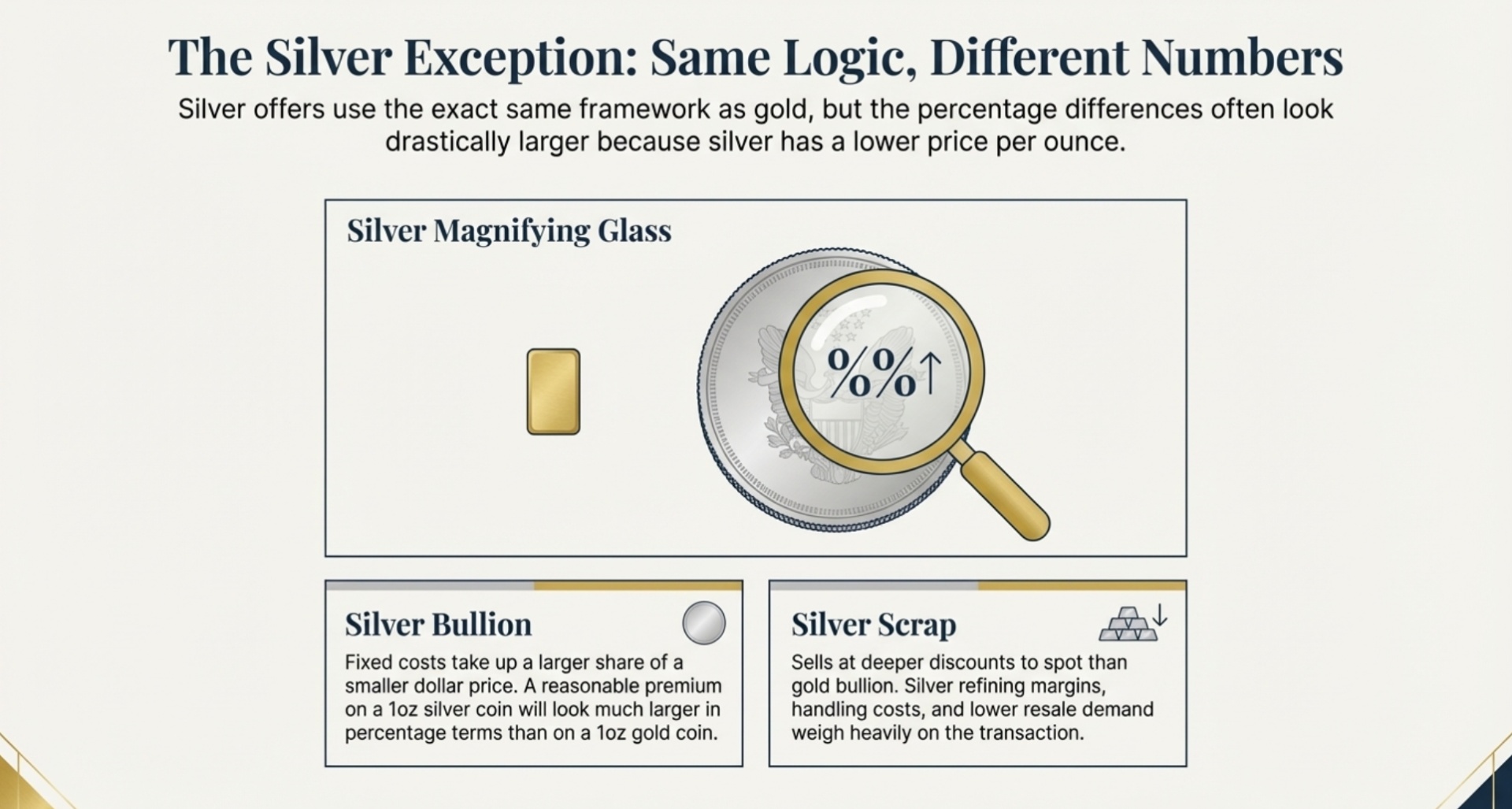
Silver offers use the same logic—spot price, product type, premium or discount—but the percentage differences often look bigger because silver has a lower price per ounce.
Spot Price vs Premiums for Silver Coins and Rounds
Silver bullion coins and rounds frequently carry higher percentage premiums than gold, simply because fixed costs take up a larger share of a smaller dollar price. That means a reasonable premium on a one‑ounce silver coin can look larger in percentage terms than on a one‑ounce gold coin.
When evaluating a silver offer, compare it to similar products (for example, silver rounds vs silver coins) and remember that very small dollar differences can translate into noticeable percentage swings.
Payout Expectations for Silver Jewelry and Scrap
Silver jewelry and scrap almost always sell at deeper discounts to spot than bullion, because silver refining margins, handling costs, and lower resale demand weigh more heavily on the transaction.
Realistic expectations matter, but so does transparency: a good buyer will still explain how they calculated the payout from weight, purity, spot price, and their business costs.
Comparison Table: Buying vs Selling, Spot vs Premium vs Payout
| Scenario | Relationship to Spot | What You Pay or Receive | Key Questions to Ask |
|---|---|---|---|
| Buying bullion coins or bars | Spot price + premium | You pay spot plus a product‑specific premium | How much over spot is this item and why? |
| Selling bullion coins or bars | Spot price minus buy‑back discount | You receive spot minus the dealer’s spread | What percentage of spot do you pay on buy‑backs? |
| Selling gold jewelry or scrap | Percentage of melt value (below spot) | You receive a portion of calculated melt value | What karat/weight did you use and what percent? |
| Selling silver jewelry or scrap | Deeper discount to melt value | You receive a lower percentage of metal value | How did you arrive at this silver payout? |
This table shows why a gold and silver payout on jewelry will never look like spot price, and why buy‑back prices on bullion are closer to spot than offers on scrap.
Signs of a Fair Offer vs a Problem Offer
Recognizing the pattern of a fair offer is just as important as doing the math.
What Does a Fair Gold and Silver Offer Look Like?
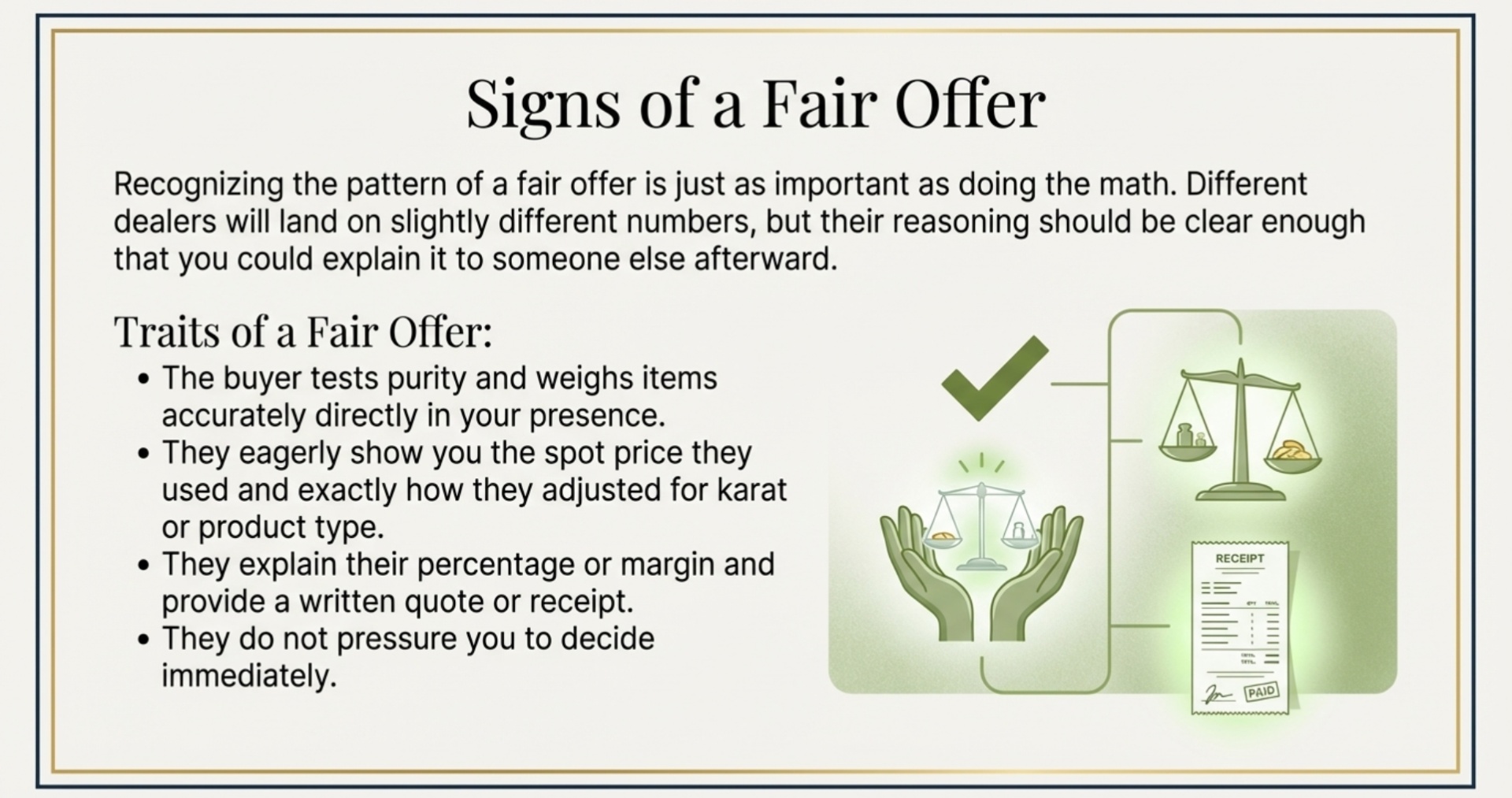
A fair gold and silver offer usually has these traits:
- The buyer tests purity and weighs items accurately in your presence.
- They can show you the spot price they used and how they adjusted for karat or product type.
- They explain their percentage or margin and give you a written quote or receipt.
- They do not pressure you to decide immediately.
Different dealers will still land on slightly different numbers, but the reasoning should be clear enough that you could explain it to someone else afterward.
Red Flags That Suggest You Should Walk Away
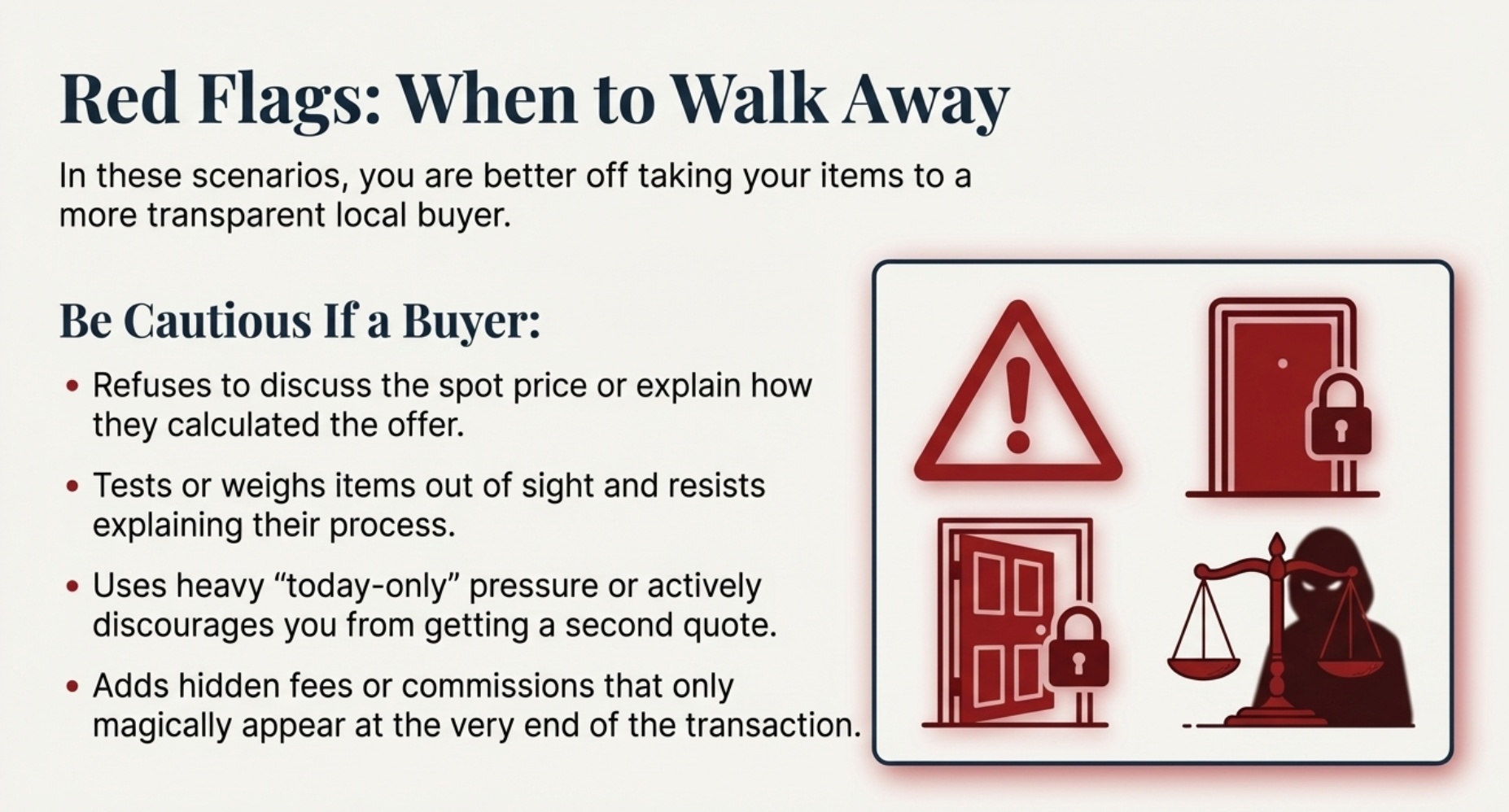
Be cautious if a buyer:
- Refuses to discuss spot price or how they calculated the offer
- Tests or weighs items out of sight and resists explaining the process
- Uses heavy “today‑only” pressure or discourages you from getting a second quote
- Adds hidden fees or commissions that only appear at the end of the transaction
In those cases, you are better off taking your items to a more transparent local gold and silver buyer.
Quick Checklist: How to Get the Best Price When Selling Gold
Use this checklist before accepting any gold and silver payout:
- Sort items by type and, if possible, by karat or purity.
- Check current gold and silver spot prices from a reliable source.
- Calculate a rough melt value for larger jewelry or scrap batches.
- Get quotes from at least two or three reputable buyers and compare.
- Ask each buyer to explain their percentage of melt or spot and how they pay (cash, check, transfer).
Preparation and comparison shopping usually matter more than trying to guess a single perfect number in advance.
Frequently Asked Questions
How do I know if a gold offer is fair?
A fair gold offer is clearly tied to the current spot price, your item’s weight and purity, and a reasonable business margin that the buyer can explain in plain language. You should be able to get a written quote, ask questions, and compare it with at least one other reputable buyer.
How much under spot is normal when selling gold jewelry or scrap?
No buyer pays full spot for jewelry or scrap because they must refine, handle, and resell the metal, so offers are always a percentage of the melt value. The exact percentage varies by dealer and market conditions, which is why checking spot, estimating melt value, and comparing a few offers is so important.
Why is my gold and silver payout different at each dealer?
Different dealers use different payout percentages, have varying overhead and risk tolerances, and may be more or less interested in certain product types. That is why one buyer may pay more for bullion coins while another competes aggressively on jewelry—comparing multiple offers gives you a clearer view of the best price when selling gold and silver.
What is the difference between gold spot price and premium?
The gold spot price is the live market value of one ounce of pure gold, while the premium is what you pay above spot for a physical product such as a coin or bar. Premiums reflect minting, distribution, dealer costs, and demand, which is why two products with the same gold content can have different final prices.
How can I get the best price when selling gold and silver locally?
To improve your payout, know what you have, check current spot prices, estimate approximate melt value for scrap, and get quotes from several reputable local buyers. Avoid high‑pressure offers, ask each buyer to explain their numbers, and choose the one that combines a strong payout with transparent, professional service.
Do bullion coins get higher payouts than jewelry when I sell?
Common bullion coins and bars usually receive higher payouts relative to spot than jewelry or scrap because they are easier to resell and require less processing. Jewelry requires refining and often has lower resale demand, so offers are typically a lower percentage of the underlying metal value.
Should I accept the first offer I get for my gold?
There is no rule that you must accept the first offer, and in many cases it is smarter to collect at least two or three quotes before deciding. A trustworthy buyer will not pressure you and will encourage you to compare, knowing their offer stands up well against other fair dealers.
If you are ready to put this framework into practice, bring your gold and silver to a reputable local buyer, ask how they calculate spot, premiums, and payouts, and compare that explanation with at least one other quote before you decide.