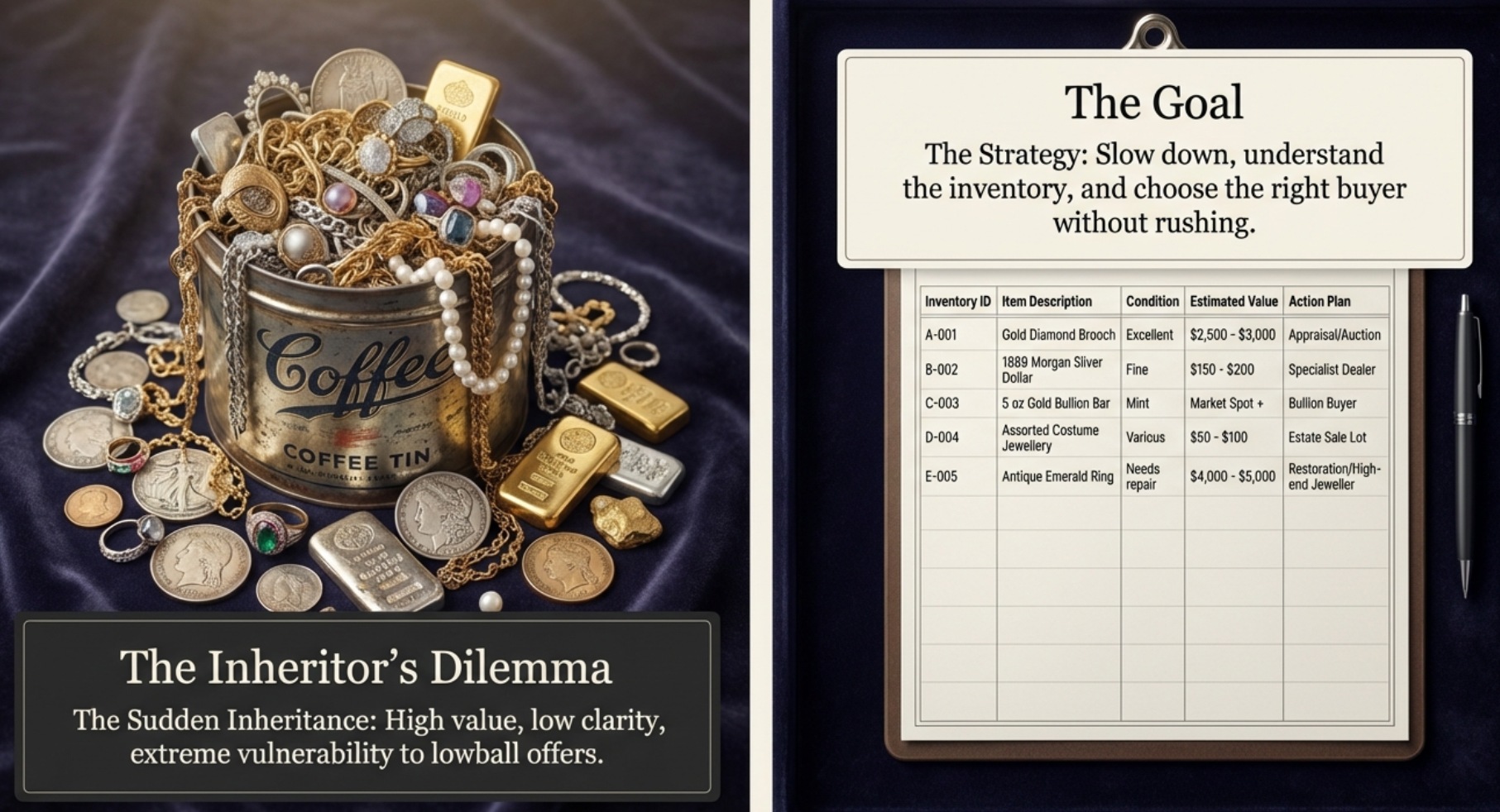
If you have inherited gold, silver, or coins in Amarillo and you are not sure where to start, you are not alone. Many families in Texas suddenly find themselves with a box of inherited jewelry or coins and no clear plan, which is exactly when people are most vulnerable to lowball offers and rushed decisions.
Who This Amarillo Inherited Gold and Silver Guide Is For
This guide is for Amarillo and Texas Panhandle residents who have inherited gold, silver, or coin collections and want to sell safely and confidently. It assumes you are not a numismatist or bullion expert—you just want straightforward local gold buyer advice and a process that protects the value of what you have.
Common Inheritance Scenarios in Amarillo
Typical situations include:
- A jewelry box with mixed gold and silver pieces from a parent or grandparent
- A binder or coffee can full of “old coins” with no clear inventory
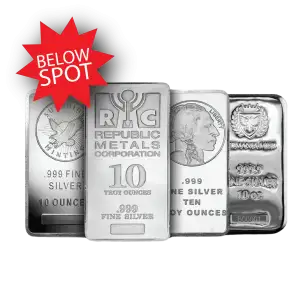
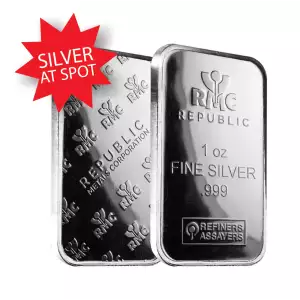
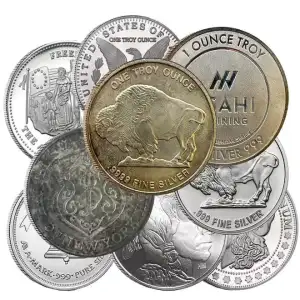
- A safe containing bullion bars, rounds, or modern bullion coins
- An estate that mixes sentimental items with metals you intend to sell
In each case, the goals are the same: slow down, understand what you inherited, and choose where to sell inherited gold and silver wisely instead of grabbing the first offer.
First Steps Before You Sell Inherited Gold and Silver
The best way to sell inherited gold and silver—whether in Amarillo or anywhere else—is to do a bit of homework before you visit any buyer.
Take Inventory and Separate by Type
Start by laying everything out in a clean, well‑lit area and sorting items into broad categories:
- Jewelry (rings, chains, bracelets, earrings, broken pieces)
- Bullion coins (modern gold and silver coins with marked weight and purity)
- Bars and rounds (often stamped .999 or .9999 fine)
- Potential collectible coins (older dates, unusual designs, graded holders)
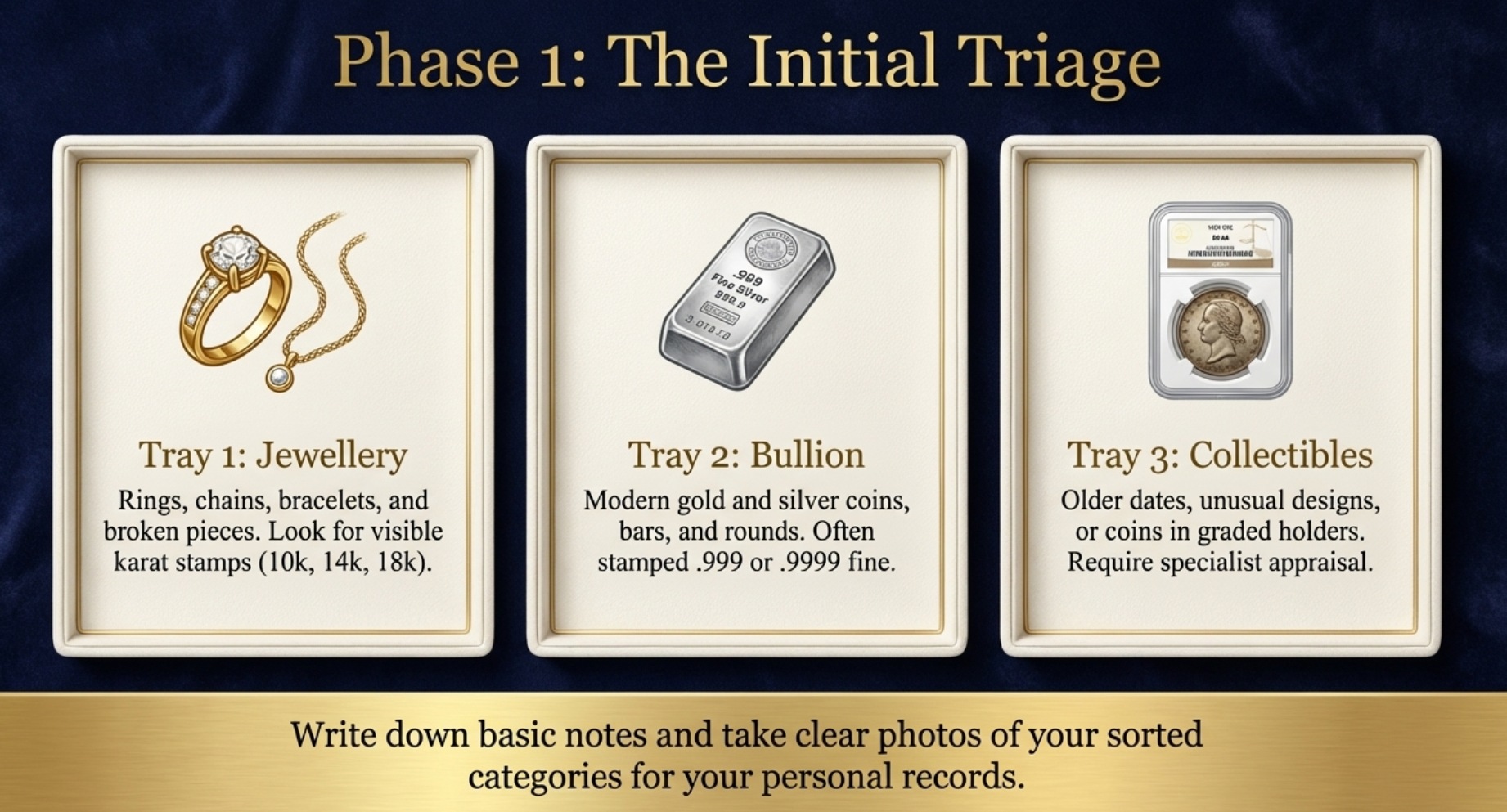
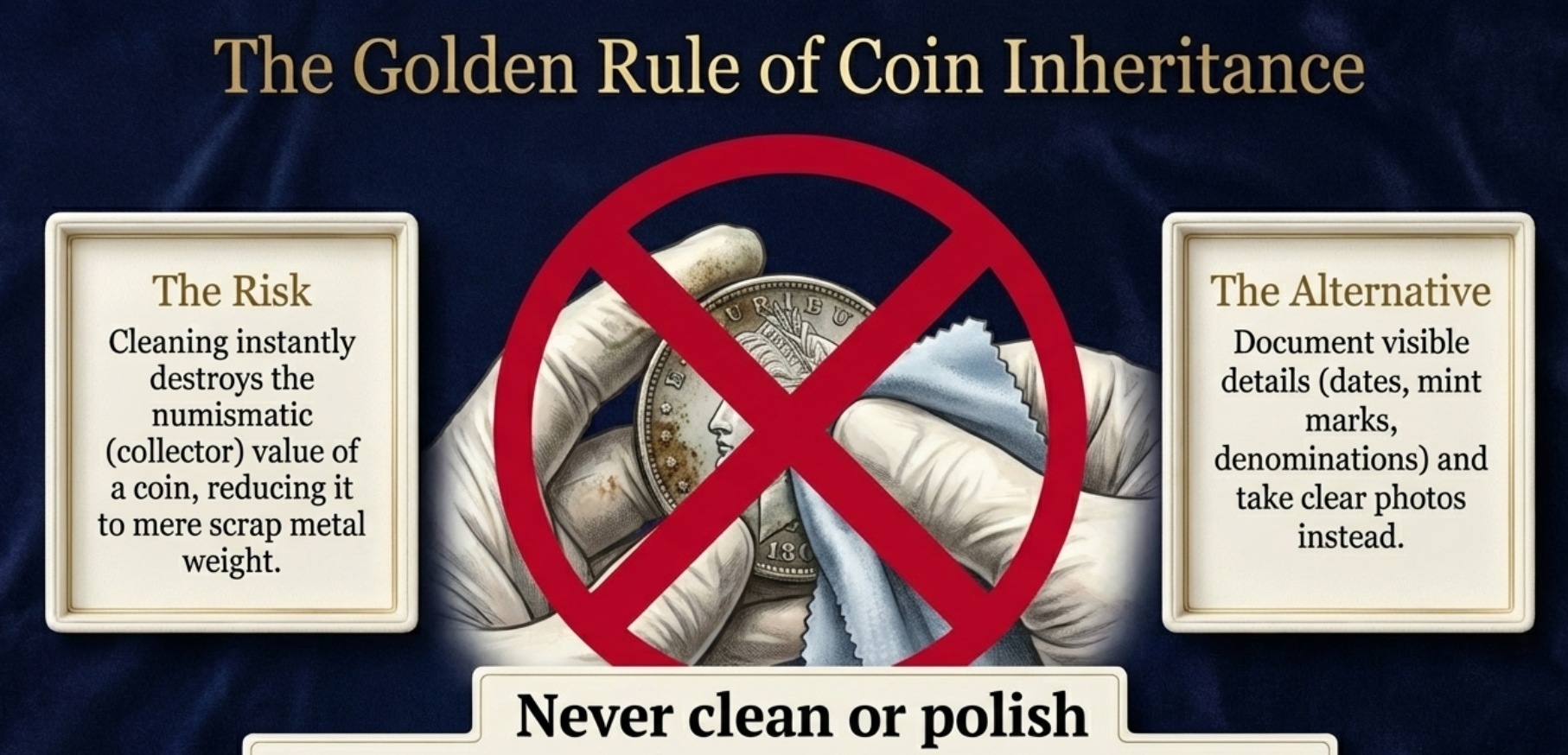
Write down basic notes: visible karat stamps (10k, 14k, 18k), coin dates and denominations, and any mint marks you can easily spot. Take clear photos for your records, but avoid cleaning or polishing coins, which can reduce value.
Identify Potentially Valuable Coins (Beyond Melt Value)
Some inherited coins are worth more than just their gold or silver content. Before you sell inherited coins in Texas, set aside:
- Older U.S. coins (pre‑1965 silver, classic gold pieces, large cents, etc.)
- Foreign gold coins, especially those with recognizable denominations and mints
- Any coin already in a third‑party graded holder (PCGS, NGC)
- Coins with unusual designs, low mintage dates, or exceptional condition
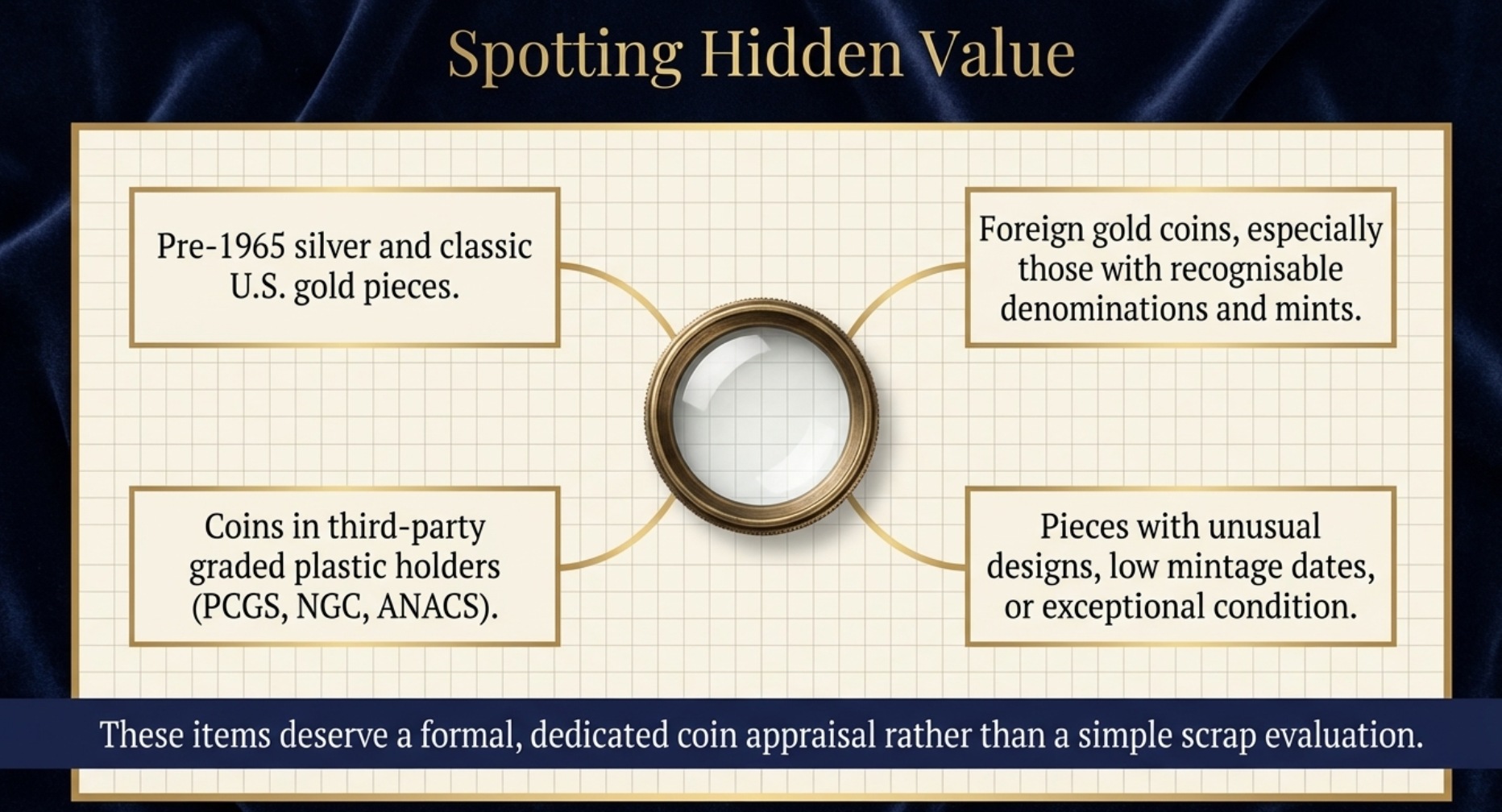
These may deserve a specialist coin appraisal rather than a simple scrap or melt‑value offer.
Understanding How Inherited Gold and Silver Are Valued
Before you walk into a local buyer, it helps to understand the basic language of offers: melt value vs numismatic value and how local buyers think about each.
Melt Value vs Numismatic Value
- Melt value is what your gold or silver is worth based purely on metal content and the current spot price, adjusted for purity. This is the main driver for jewelry, scrap, generic bars, and common bullion.
- Numismatic value is the additional value a coin may have due to rarity, condition, or collector demand, above and beyond its melt value. This matters most for older coins, key dates, and graded pieces.
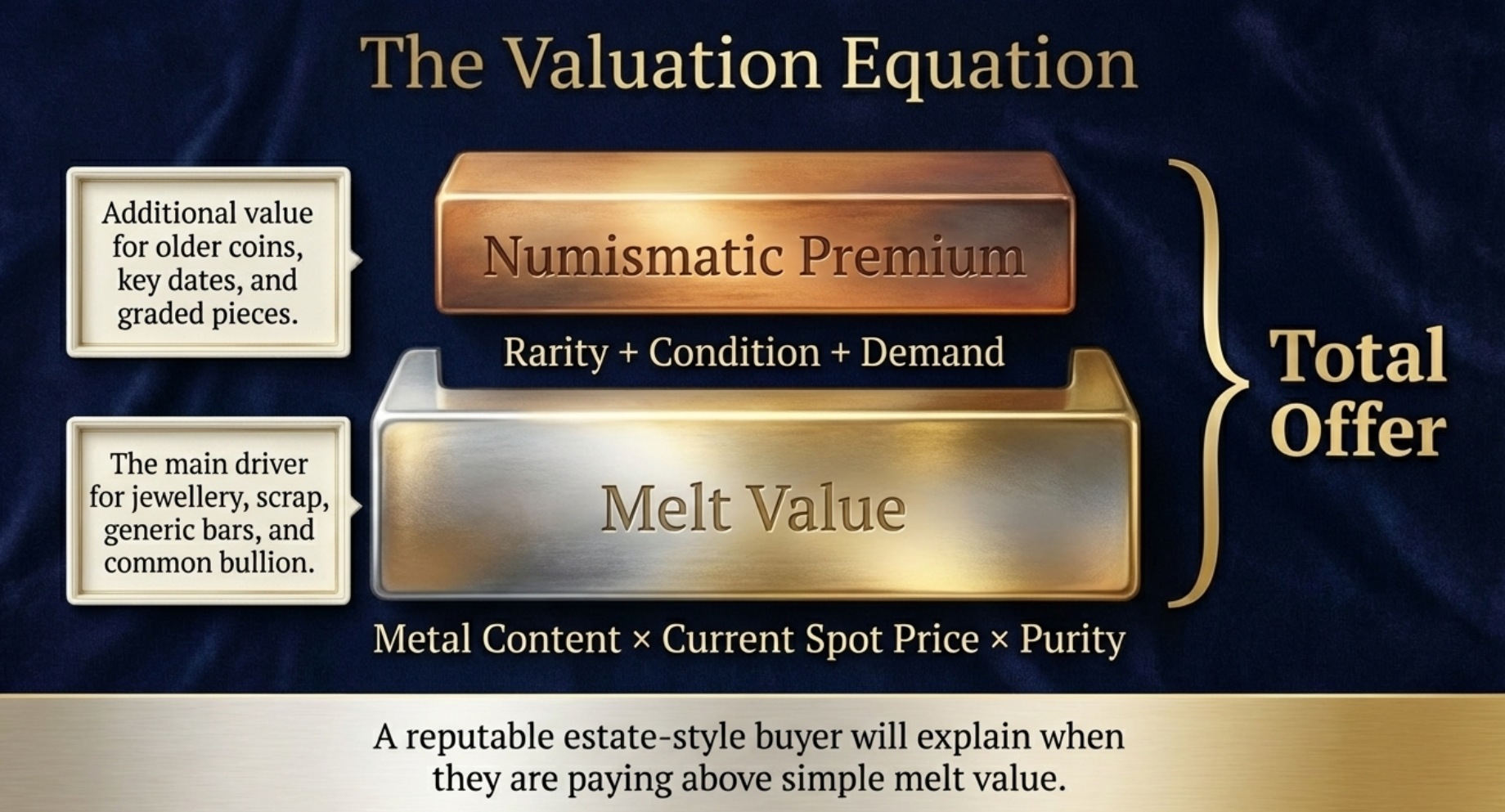
A good estate‑style buyer will consider both when evaluating inherited coins and will explain when they are paying above simple melt value.
How Local Gold Buyers in Amarillo Calculate Offers
Reputable local gold and silver buyers in Amarillo typically start with:
- Current gold and silver spot prices
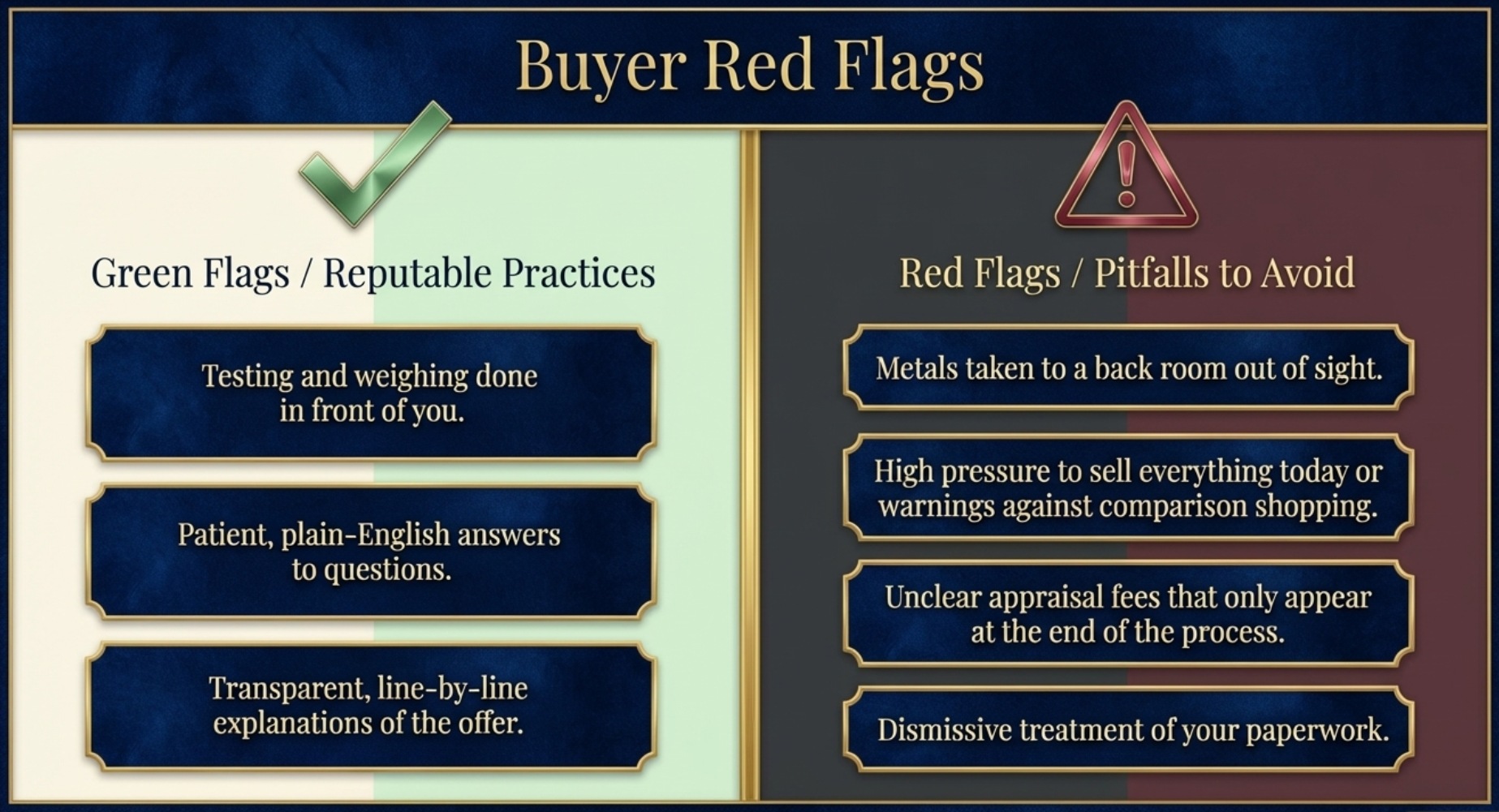
- Accurate weight and purity testing (done in front of you)
- Any identified numismatic or collectible premiums for special coins
They then apply a clear percentage of melt value (for scrap) or bid levels (for bullion and coins) to arrive at an offer. Transparent buyers can walk you through each step, line by line, so you understand where the number comes from.
Local Options for Selling Inherited Gold and Silver in Amarillo
Once you know what you have, you can decide where to sell inherited gold and silver in Amarillo. Each option has trade‑offs.
Comparison of Selling Options for Inherited Gold and Silver
Here’s a quick comparison of different selling options, including payout, speed, and risks.
| Option | Typical Payout | Speed | Risk / Trade‑offs |
|---|---|---|---|
| Local gold & coin buyer | Gold: ~70–95% melt; Silver: ~60–90% melt | Same‑day payment | Must choose a reputable specialist; offers vary |
| Reputable online buyer | Competitive % of melt / bid levels | Days–weeks | Shipping risk, trust in remote buyer, paperwork |
| Pawn shop | Often lower % of melt | Same‑day | Higher risk of lowball offers, little coin expertise |
| Private sale / auction | Potentially higher for rare pieces | Weeks–months | More complexity, fees, and need for buyer vetting |
Selling to a Local Gold and Coin Buyer
For many estates, a local gold and coin buyer is the most straightforward option:
- You can sit down face‑to‑face, ask questions, and get explanations in plain English
- You often receive immediate payment once you accept an offer
- A specialist can evaluate both bullion and potentially rare coins, not just scrap weight
Amarillo has an active gold and silver market, and working with a dedicated coin and bullion shop usually yields better results than a generic buyer that treats everything as scrap.
When to Consider Online or Mail‑In Buyers
Reputable online or mail‑in buyers can be useful if:
- You live outside Amarillo or cannot travel easily
- You have a very large or specialized collection needing national‑level expertise
- You want to compare local offers with national bids before deciding
In those cases, make sure the buyer provides insured shipping, clear written offers, and a policy for return shipping if you decline their offer.
Why Pawn Shops Are Usually a Last Resort
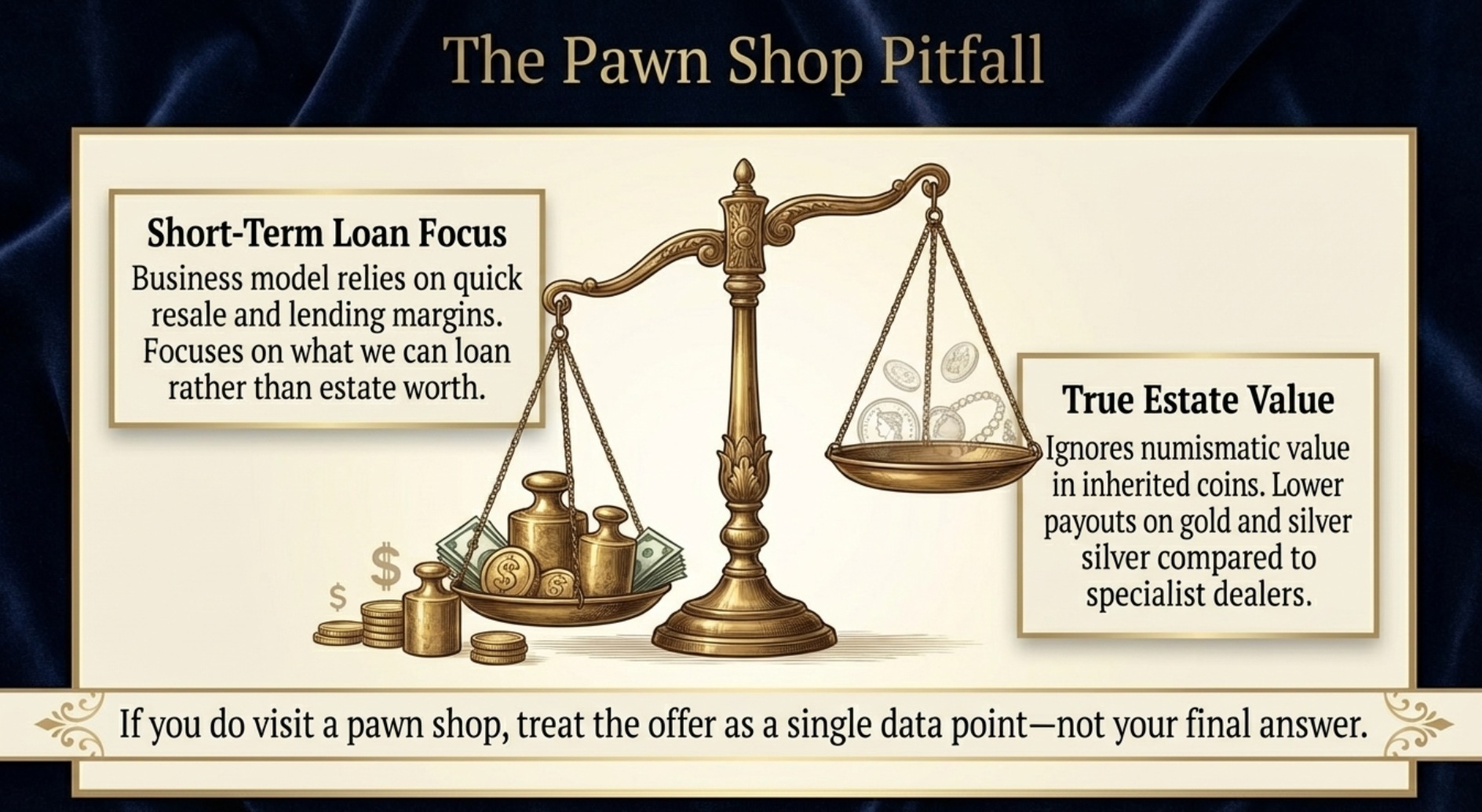
Pawn shops can be convenient but often focus on quick resale and short‑term loans, not maximizing estate value. Common issues include:
- Lower payouts on gold and silver compared with specialist dealers
- Less attention to numismatic value in inherited coins
- More focus on “what we can loan” rather than “what this collection is truly worth”
If you do visit a pawn shop, treat the offer as a data point, not your only option.
How to Avoid Getting Lowballed for Inherited Gold and Silver
Avoiding lowball offers is mostly about preparation and being willing to walk away.
Always Get Multiple Quotes
One of the most effective protections is simple: get more than one offer. Estate‑focused advisors recommend:
- Getting at least two or three independent quotes for larger inheritances
- Taking notes on each buyer’s spot price, percentage of melt, and comments on collectible coins
- Comparing offers from local Amarillo buyers with reputable regional or online buyers when the estate is sizable
This not only surfaces better offers but also shows who is willing to explain their numbers.
Questions to Ask Every Buyer
To avoid getting lowballed for gold and silver, ask every buyer:
- What spot price are you using today?
- What percentage of melt are you paying for these items?
- Did you check these coins for numismatic value, or just treat them as bullion?
- Are there any fees for testing, appraisals, or documentation?
Straightforward, consistent answers are a good sign. Vague or evasive responses are not.
Red Flags and Common Pitfalls to Avoid
Be cautious if you see:
- Testing or weighing done out of sight
- Pressure to “sell everything today” or warnings against comparison shopping
- Unclear fees for testing or appraisal that only appear at the end
- Dismissive treatment of your questions or paperwork
Common mistakes include cleaning coins, accepting the first offer on a large or unusual collection, or mailing valuables without proper insurance or documentation.
Special Considerations for Inherited Coin Collections
Inherited coin collections can be both the most intimidating and the most valuable part of an estate.
When You Should Get a Formal Coin Appraisal
Consider a dedicated coin appraisal if:
- You have boxes or binders full of older U.S. coins or foreign gold coins
- You see key dates, unusual designs, or very high‑grade pieces
- Some coins arrive already graded and encapsulated (PCGS, NGC)
A professional appraisal can help you separate everyday material from standout coins that merit special handling.
Selling Part of the Collection vs the Whole Estate
You do not have to sell everything at once:
- Selling standout pieces separately can help maximize value on the best coins
- Selling the rest of the collection as a lot can save time and reduce complexity
- Keeping a few items with sentimental value while selling the remainder is a common compromise in families
A good local buyer or appraiser will talk through these options instead of pushing for an “all or nothing” sale.
Practical Checklist: Selling Inherited Gold and Silver in Amarillo
Before you sell inherited gold in Amarillo or inherited silver anywhere in the Panhandle, work through this quick checklist:
- Sort items into jewelry, bullion, and potential collectibles without cleaning them
- Note obvious details (karat, coin dates, denominations) and take photos
- Learn basic terms like spot price, melt value, and numismatic value
- Get at least two or three quotes from reputable buyers (local and, if appropriate, online)
- Ask each buyer to explain their calculations in plain language
- Take your time, especially with large or unusual estates
A structured process makes it much easier to avoid lowball offers and rushed decisions.
Frequently Asked Questions
Where is the best place to sell inherited gold in Amarillo?
The best place to sell inherited gold in Amarillo is usually a reputable local gold and coin buyer who specializes in bullion and numismatic material, not just generic scrap. Look for a buyer who tests and weighs items in front of you, explains their offer, and encourages you to compare quotes rather than rushing you.
How do I know if my inherited coins are worth more than melt value?
Inherited coins may be worth more than melt if they are older, scarce, in exceptional condition, or already graded by a major service. Setting aside unusual dates, foreign gold coins, and graded pieces for a specialist appraisal is the safest way to check for value beyond metal content.
How can I avoid getting lowballed when selling inherited gold and silver?
You can avoid lowball offers by understanding basic melt value, checking current spot prices, and getting written or clearly documented quotes from multiple buyers. Ask each buyer to explain their numbers; if someone cannot or will not show you how they arrived at the offer, treat that as a red flag.
Should I sell inherited gold and silver locally or use an online/mail‑in buyer?
Both can work, but many people prefer starting with a local appraisal so they can ask questions and see the process firsthand. You can then compare those offers with reputable online or mail‑in buyers for large or specialized collections, as long as shipping is fully insured and terms are clear.
Do I need an appraisal before I sell an inherited coin collection?
You do not always need a formal appraisal for small or straightforward inheritances, but it can be very helpful for larger or older collections that may contain rare coins. A proper estate appraisal can reveal which pieces should be sold individually and which can be grouped together.
Is it better to sell inherited coins as a collection or piece by piece?
It depends on the collection. High‑value or rare coins may command better prices when sold individually, while common duplicates, modern bullion, or lower‑value pieces can be sold together for efficiency. A reputable coin buyer can recommend a mix of both approaches based on what you have and how quickly you want to sell.
Are there any tax issues I should consider when selling inherited gold and silver?
In many jurisdictions, selling inherited assets can have tax implications, especially if there are significant gains, so it is important to keep records of what you sold and for how much. Because tax rules vary and can change, you should consult a tax professional for advice tailored to your situation.
If you are ready to take the next step, start by organizing your inherited gold and silver, then bring your items to a trusted Amarillo gold and coin buyer for a clear, no‑pressure evaluation and written offer before you decide what to sell and what to keep.