In short: For most individual investors, a reasonable allocation to physical precious metals usually falls somewhere in the 5–15% range of an overall investment portfolio, with gold as the core and silver as a smaller, higher‑volatility slice. The exact percentage of gold and silver in your portfolio should reflect your goals, risk tolerance, and time horizon, rather than a one‑size‑fits‑all rule.
Why Gold and Silver Belong in a Diversified Portfolio
Gold and silver have a long history as stores of value and portfolio stabilizers during periods of inflation, currency stress, or market turbulence. They will not replace the role of income‑producing assets, but a thoughtful gold allocation strategy can reduce overall risk and add resilience if stocks or bonds struggle.
What Precious Metals Can (and Cannot) Do for You
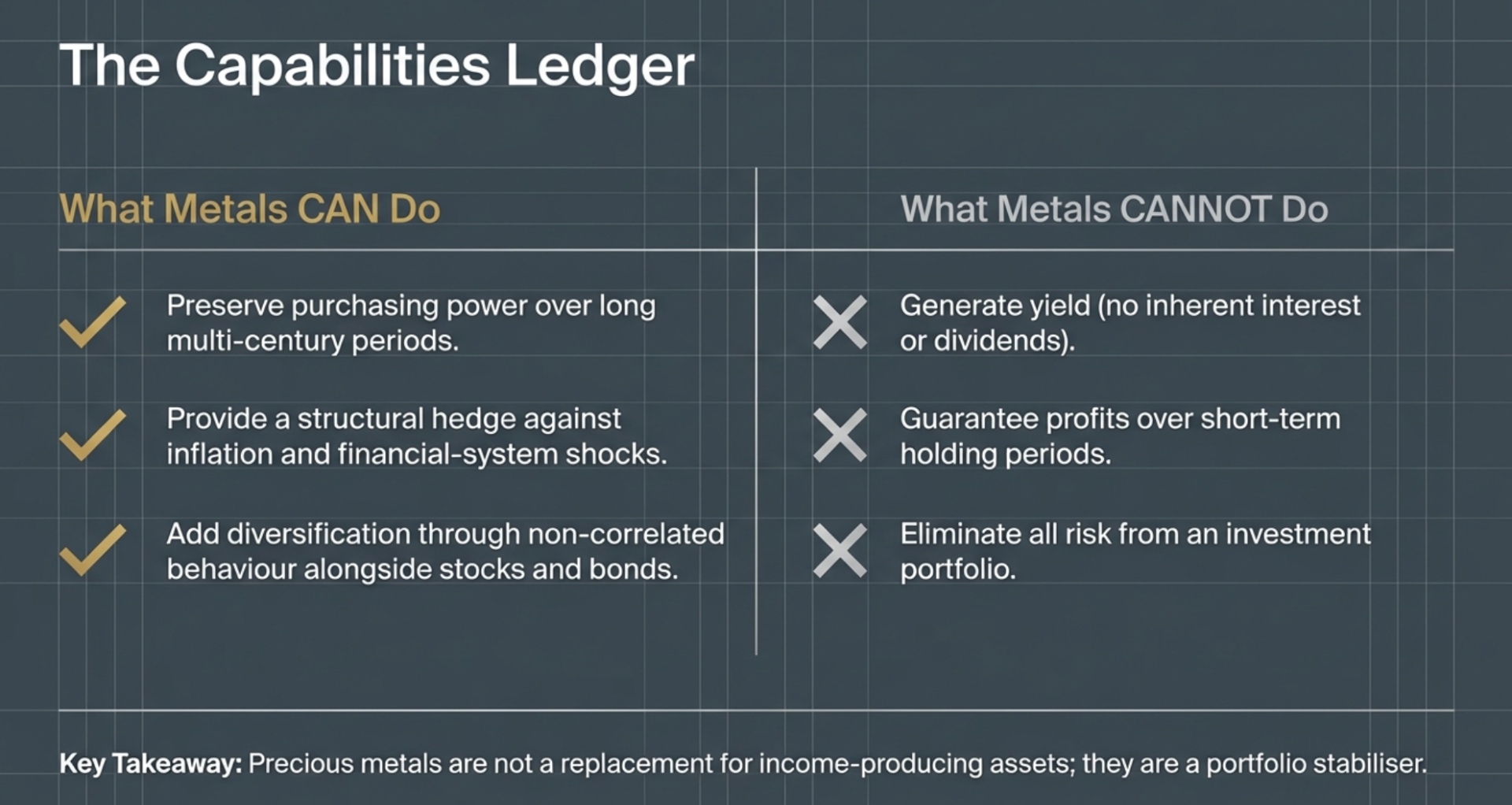
- Help preserve purchasing power over long periods
- Provide a potential hedge against inflation and financial‑system shocks
- Add diversification because they often move differently than stocks and bonds
They cannot:
- Generate interest or dividends on their own
- Guarantee profits over short periods
- Eliminate all risk in a portfolio
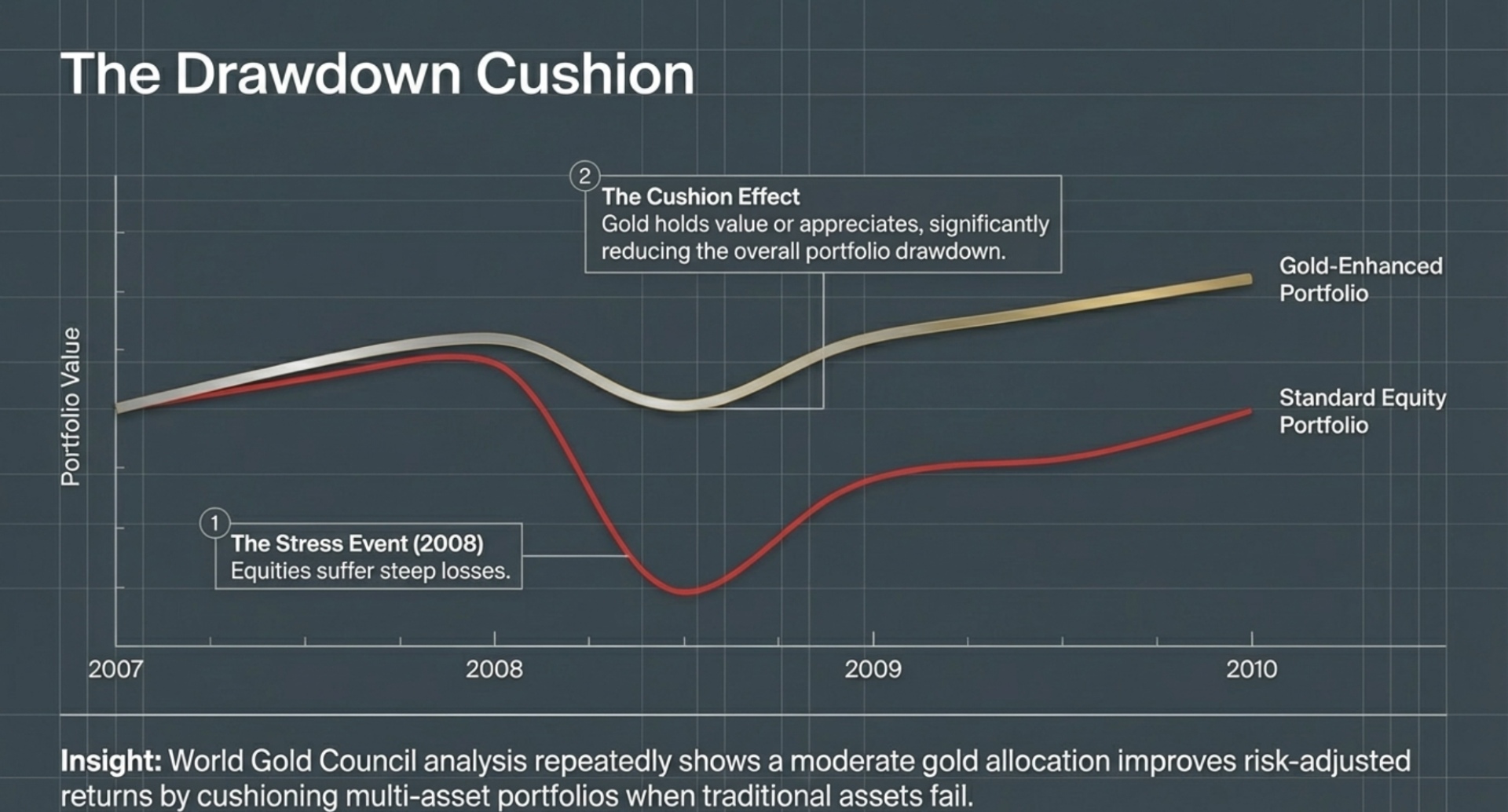
World Gold Council research has repeatedly found that adding a moderate gold allocation can improve risk‑adjusted returns over time by reducing drawdowns and volatility in multi‑asset portfolios.
Recommended Allocation Ranges: How Much Gold and Silver Is Enough?
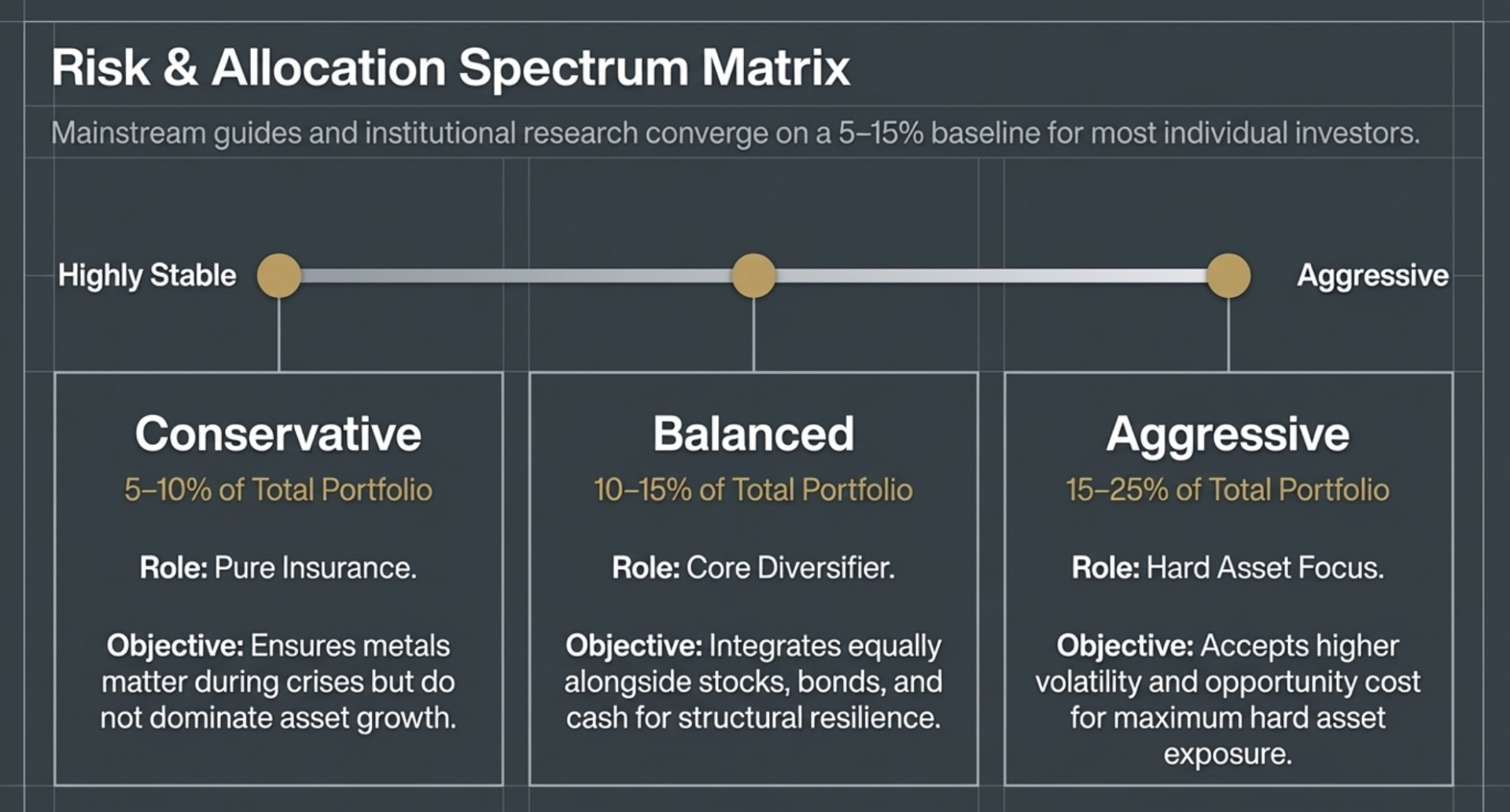
Most mainstream guides and institutional research converge on a practical range of roughly 5–15% of total investable assets in precious metals for many investors, with the exact number depending on risk profile and objectives.
Allocation Table by Investor Type
| Investor type | Suggested metals allocation (of total portfolio) |
|---|---|
| Conservative | 5–10% |
| Balanced | 10–15% |
| Aggressive | 15–25% |
- Conservative investors usually keep metals as “insurance,” ensuring they matter but do not dominate.
- Balanced investors treat precious metals as a core diversifier alongside stocks, bonds, and cash.
- Aggressive, metals‑heavy investors accept higher opportunity cost and volatility in exchange for more exposure to hard assets.
Key Questions Before You Decide How Much Gold and Silver to Own
Before you lock in a target percentage of gold in your portfolio, step back and think about how metals fit into your life, not just your spreadsheet.
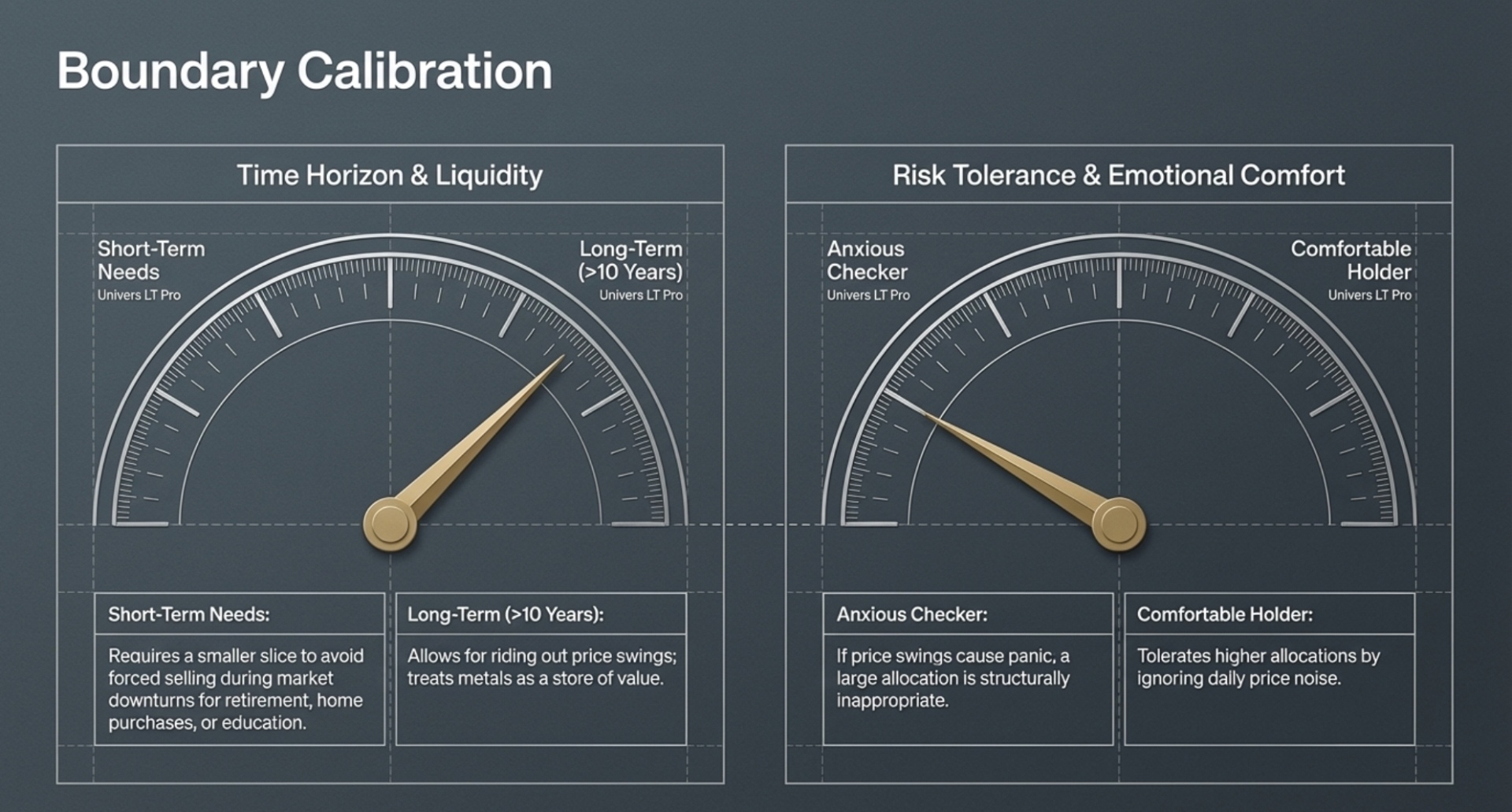
Time Horizon and Liquidity Needs
If your time horizon is 10 years or more, it is easier to treat a precious metals allocation as a long‑term store of value and ride out price swings. If you expect to need cash soon for retirement income, a home purchase, or education, a smaller metals slice helps avoid forced selling during a downturn.
Risk Tolerance and Emotional Comfort
Gold and silver can be calming for some investors and stressful for others. If you find yourself checking prices multiple times per day and panicking on every move, a large metals allocation might not be appropriate. If you value stability and are comfortable holding assets through cycles, you may tolerate a somewhat higher allocation.
Gold vs Silver: How to Split a Precious Metals Allocation
“How much gold and silver to own” has two layers: your total metals percentage and the split between gold and silver.
Role of Gold in a Balanced Precious Metals Portfolio
Gold usually sits at the center of a precious‑metals strategy:
- Higher value per ounce and deep, liquid markets
- Behaves more like a monetary asset and long‑term store of value
- Historically acted as a hedge during inflationary or crisis periods
For most investors, gold makes up the majority of the precious‑metals sleeve, especially in conservative and balanced allocations.
Role of Silver in a Balanced Precious Metals Portfolio
Silver plays a complementary role:
- More affordable per ounce, easier to accumulate gradually
- Significant industrial demand, which can drive strong cyclical moves
- Typically more volatile than gold, with sharper upside and downside swings
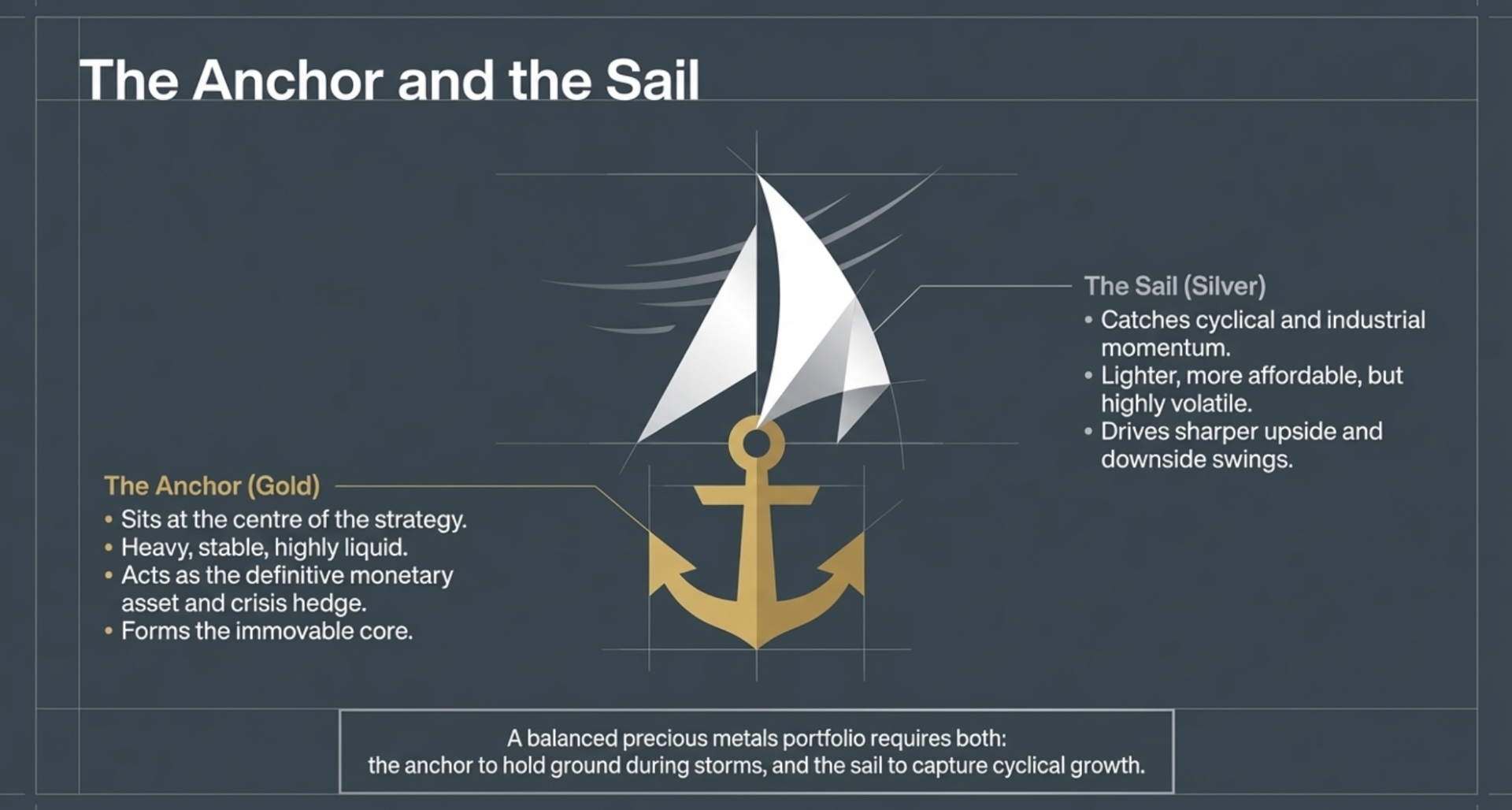
Because of this higher volatility, silver usually occupies a smaller share of the total metals allocation, scaled to your risk appetite.
Example Gold Allocation Strategies (by Risk Profile)
While there is no single “correct” percentage, you can think in simple profiles:
- Safety‑first: a modest metals slice with gold as the clear anchor and only a small silver position.
- Balanced: a gold‑heavy core complemented by a deliberate, but smaller, silver sleeve.
- Growth‑tilted: a larger overall metals allocation with a higher silver share for those comfortable with volatility in pursuit of potential upside.
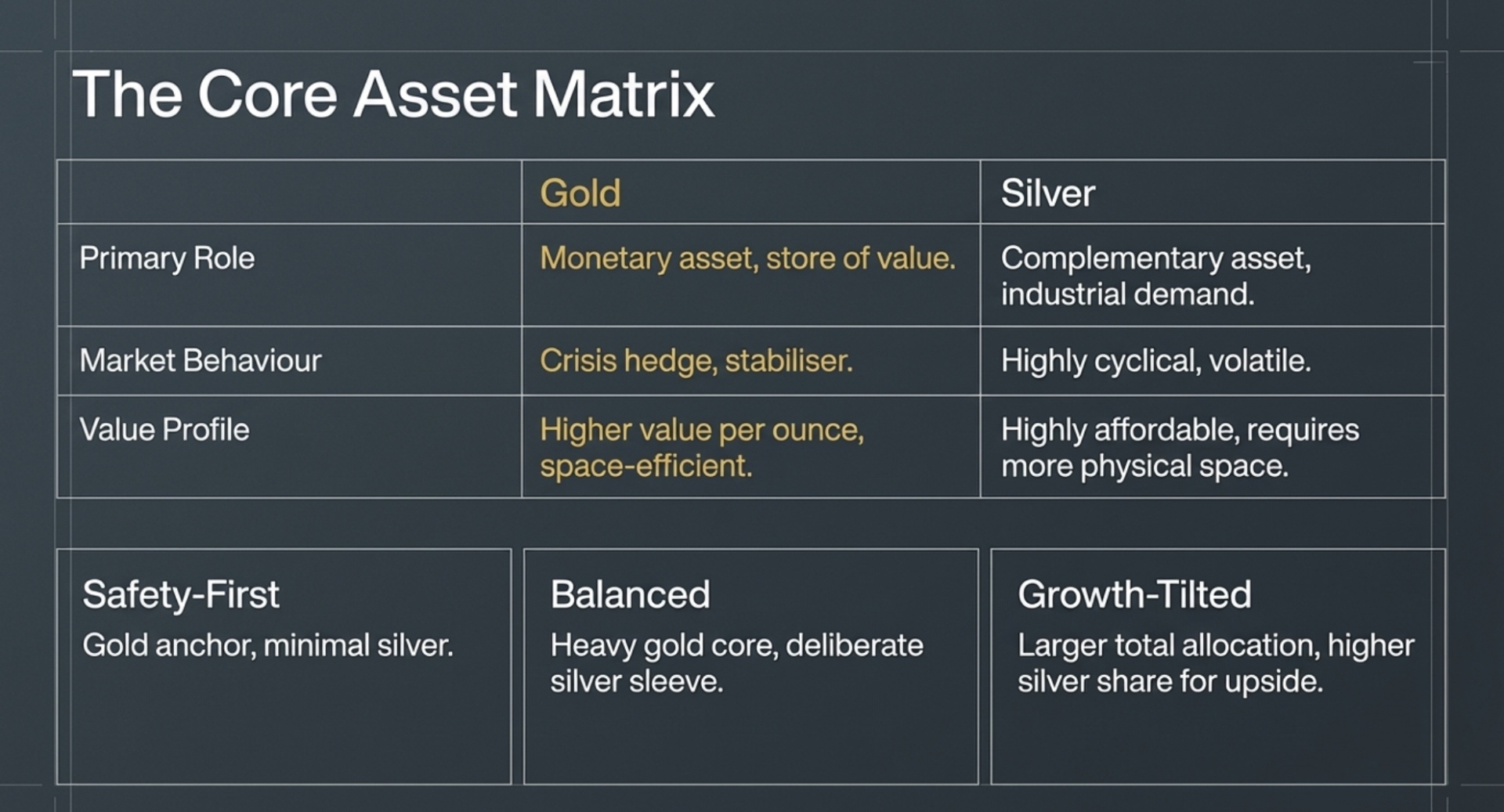
These frameworks are starting points for discussion, not personalized advice.
Physical Bullion vs “Paper Gold”: Where Does Each Fit?
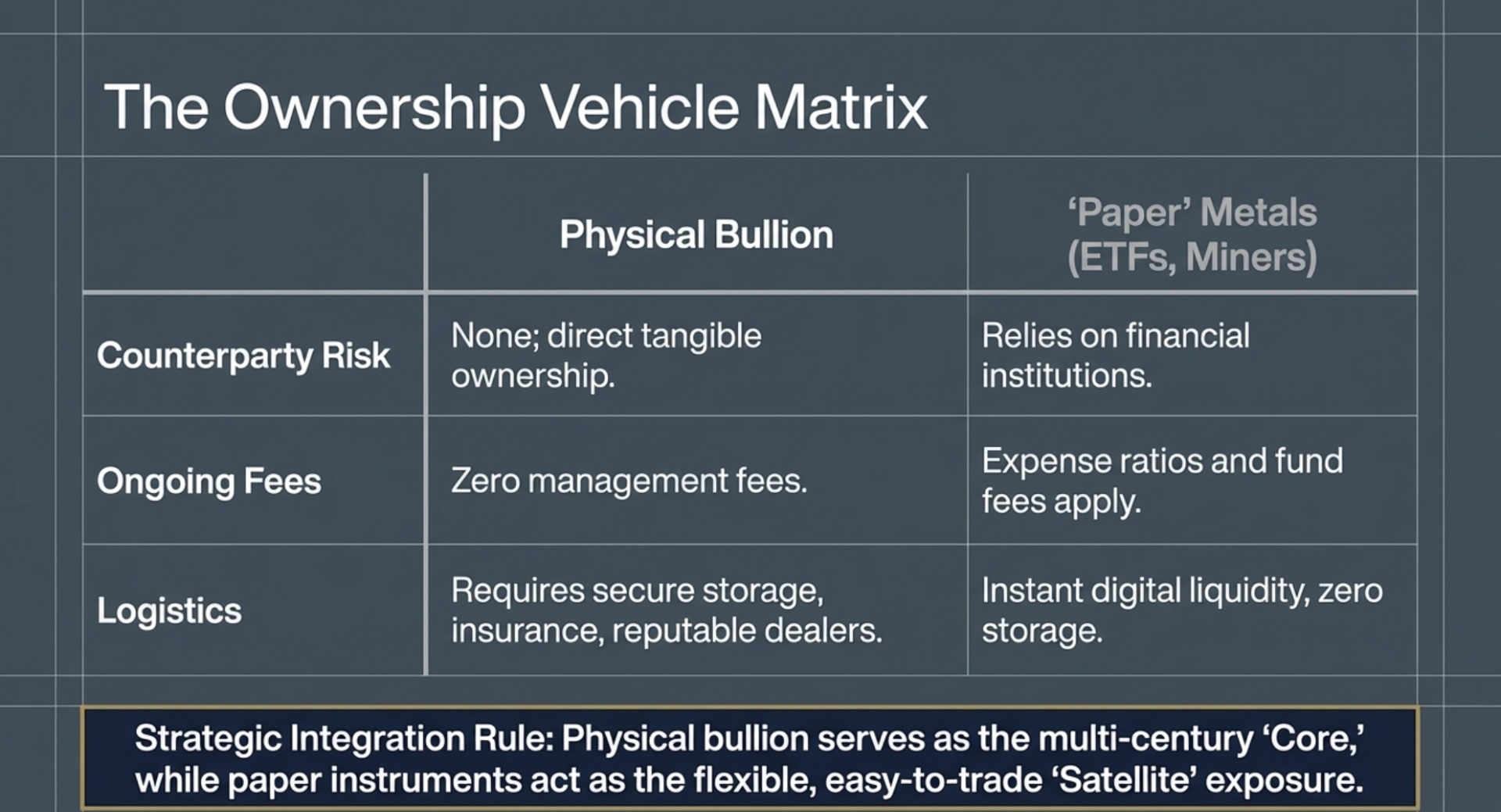
When you decide how much gold and silver to own, it helps to distinguish between physical bullion and “paper” exposure like ETFs, mining stocks, and futures.
Why Physical Gold and Silver Still Matter
Physical bullion has unique characteristics:
- Direct, tangible ownership without the same counterparty risk as financial claims
- No ongoing management fees in the way many paper products charge
- A multi‑century track record as a store of value across different monetary systems
The trade‑offs are tangible too: storage, insurance, and the need to work with a reputable dealer when buying and selling.
How to Integrate Physical Metals with the Rest of Your Portfolio
A practical approach for many investors is:
- Decide on a total precious‑metals allocation (for example, 5–15% of the portfolio).
- Choose what proportion of that allocation belongs in physical bullion versus ETFs or mining stocks depending on convenience, liquidity, and personal preference.
Physical gold and silver often serve as the long‑term “core,” with paper instruments adding flexible, easier‑to‑trade exposure around that core.
Historical Context: How Gold Has Behaved in Crises
Looking at history can clarify why investors keep coming back to gold as part of a diversified portfolio.
Gold During the 2008 Global Financial Crisis
During the 2008 Global Financial Crisis and the years around it, gold tended to hold value or appreciate while many equity markets suffered steep losses, helping reduce overall drawdowns for diversified investors who held a meaningful gold allocation. Studies and market commentary highlighted how gold’s performance during that period supported its role as a hedge and portfolio diversifier.
World Gold Council analysis has frequently used the 2008 crisis as an example of how gold can improve risk‑adjusted returns by cushioning portfolios when traditional assets come under stress.
3 Steps to Build a Metals Allocation
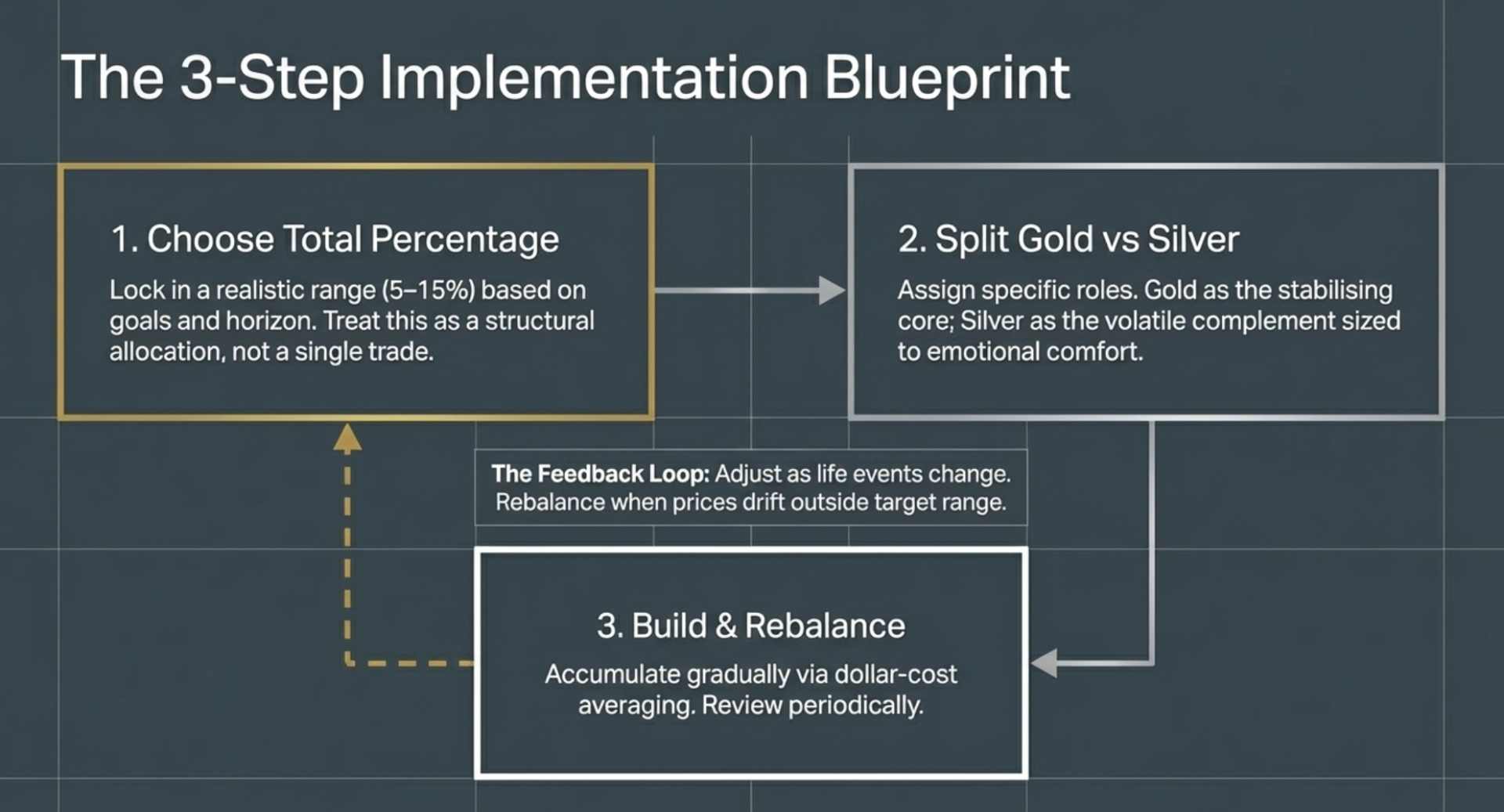
To move from theory to action, use this straightforward framework:
Step 1: Choose Your Total Percentage
Decide on a realistic range for your precious‑metals allocation, such as 5–10% (conservative), 10–15% (balanced), or 15–25% (aggressive), based on your goals, time horizon, and risk tolerance. Treat this as an allocation decision, not a one‑time trade.
Step 2: Split Gold vs Silver
Within that metals sleeve, assign roles:
- Gold as the primary, stabilizing core
- Silver as a smaller, higher‑volatility complement that you size according to your comfort level
This ensures your precious‑metals strategy is intentional rather than accidental.
Step 3: Build Your Position Gradually
Instead of trying to time the market, many investors build their allocation in stages:
- Buy in regular increments (dollar‑cost averaging)
- Adjust purchase size as income, markets, or life events change
- Periodically review and rebalance back toward your target range
This framework keeps your focus on the long‑term strategy rather than short‑term price noise.
Practical Steps to Implement Your Precious Metals Strategy
Once you know your range and framework, you can start implementing.
Choosing Products to Match Your Strategy
Different products align with different goals:
- Widely recognized bullion coins for liquidity and broad recognition
- Larger bars for efficient storage when building sizable positions
- Select rounds or specialty items only after your core positions are in place
For most investors, starting with simple, high‑recognition bullion makes it easier to buy, sell, and rebalance over time.


Rebalancing and Reviewing Your Metals Strategy
A balanced precious metals portfolio is not static:
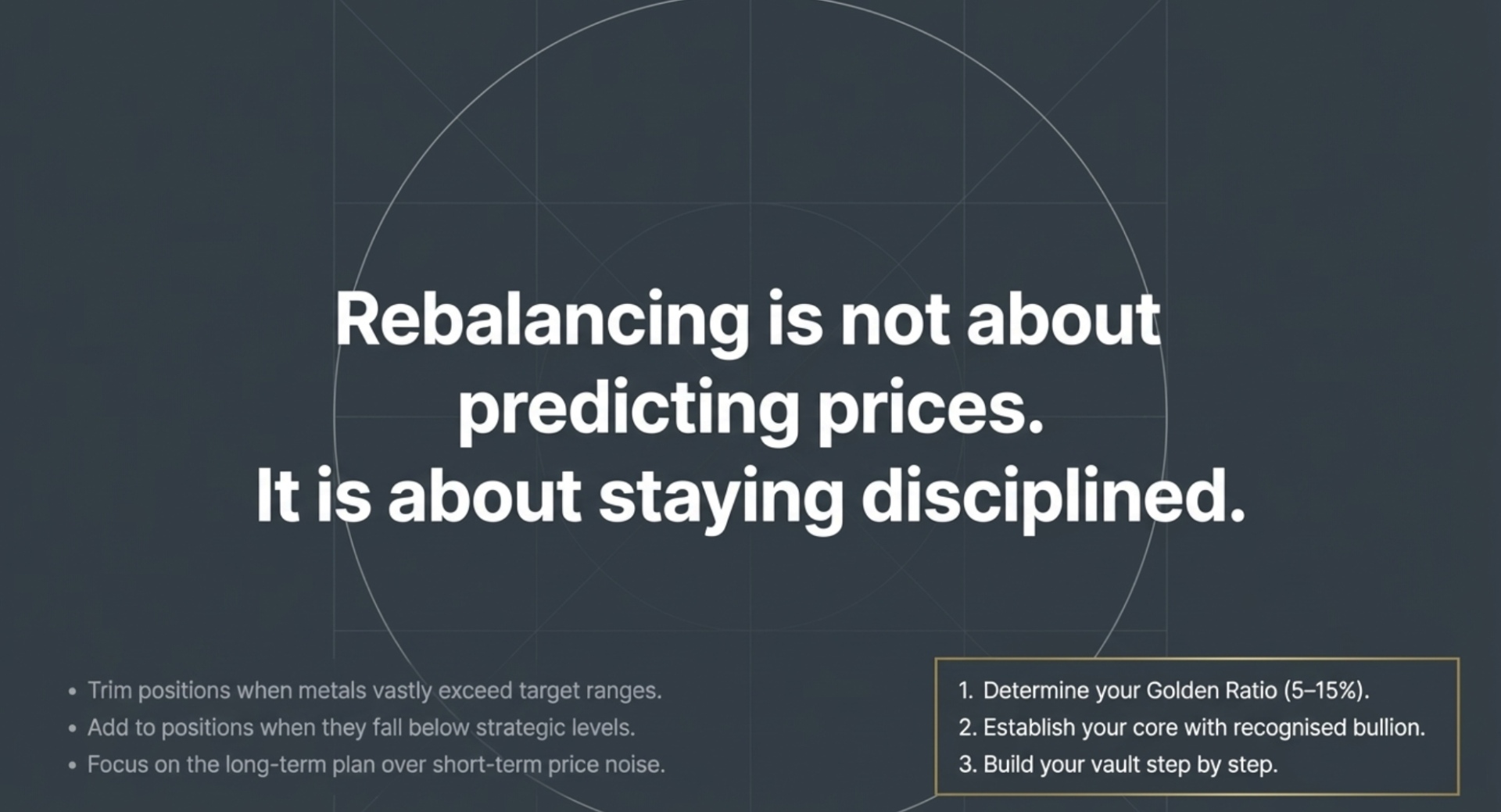
- Review your allocation periodically (for example, annually or after large market moves).
- If metals have grown far above your target range, consider trimming a portion.
- If they have fallen well below, consider adding to bring the sleeve back toward your strategic level.
Rebalancing is less about predicting prices and more about staying disciplined and aligned with your long‑term plan.
Frequently Asked Questions
How much gold and silver should I own in my portfolio?
There is no single answer for everyone, but many investors choose to hold roughly 5–15% of their total portfolio in precious metals, with the exact level tuned to their goals and risk tolerance. Within that range, gold typically makes up the majority, with silver playing a smaller, higher‑volatility role.
What percentage of my portfolio should be in gold vs silver?
For most people, gold acts as the anchor and silver as a supporting position, so gold usually accounts for a larger share of the metals sleeve. The exact split depends on whether you value stability (more gold) or are comfortable adding extra volatility and industrial exposure (more silver).
Is there a rule of thumb for a balanced precious metals portfolio?
A common rule of thumb is to treat precious metals as a minority but meaningful part of your portfolio—enough to matter in a crisis, but not so much that they crowd out income‑producing and growth assets. Within that, many investors favor a gold‑heavy core and a smaller, intentional silver allocation.
Should I count gold ETFs and mining stocks when deciding how much physical gold to own?
Yes, it is wise to think about your total gold and silver exposure across both physical bullion and paper instruments, because they are influenced by the same underlying metal prices. Many investors use physical bullion as their long‑term foundation and layer ETFs or mining stocks on top for flexible, more tradable exposure.
How often should I rebalance my gold and silver allocation?
There is no mandatory schedule, but many investors review and rebalance yearly or after large market moves or major life events. The goal is to keep your metals share within your chosen range, trimming or adding as needed instead of letting emotions or headlines drive big shifts.
Is it possible to have too much gold and silver in a portfolio?
Yes—if precious metals grow so large that they crowd out diversified, income‑producing assets, your long‑term growth potential can suffer even if metals perform well. A balanced precious metals strategy protects you from extremes on both sides: too little to matter, or so much that everything else becomes an afterthought.
How do I start building a precious metals position if I am a beginner?
Start by clarifying your goals and choosing a realistic target range (for example, 5–10% of your portfolio), then focus on simple, well‑known bullion products from a reputable dealer. Building your position gradually and learning how pricing and allocation work along the way is usually more effective than trying to do everything in one large purchase.
Key Takeaways
- For many investors, a reasonable precious‑metals allocation is in the 5–15% range of total portfolio value, with gold as the core and silver as a smaller complement.
- Gold typically plays the stabilizing, monetary role in a balanced precious metals portfolio, while silver adds higher‑volatility and industrial exposure that you should size based on your risk tolerance.
- World Gold Council research and other studies show that a moderate gold allocation has historically improved risk‑adjusted returns by reducing portfolio drawdowns during stress events like the 2008 Global Financial Crisis.
- A simple framework—choose your total percentage, split gold vs silver, and build your position gradually with periodic rebalancing—helps turn allocation theory into a practical, long‑term strategy.
- Working with a reputable dealer, starting with widely recognized bullion, and focusing on discipline rather than market timing can make your precious‑metals strategy easier to implement and maintain over time.
If you are ready to move from ideas to action, choose a target range for your precious‑metals allocation (for example, 5–15%), then talk with a knowledgeable dealer about which gold and silver products can anchor that strategy and how to build your position step by step.