TL;DR – Biggest mistakes when buying gold and silver bullion
- Ignoring spot price and premiums.
- Buying flashy collectibles instead of simple bullion.
- Trusting unverified or high‑pressure sellers.
- Forgetting about storage, liquidity, and exit strategy.
- Chasing short‑term price swings.
- Going “all in” too fast on the wrong products.
- Keeping no records of what you bought.
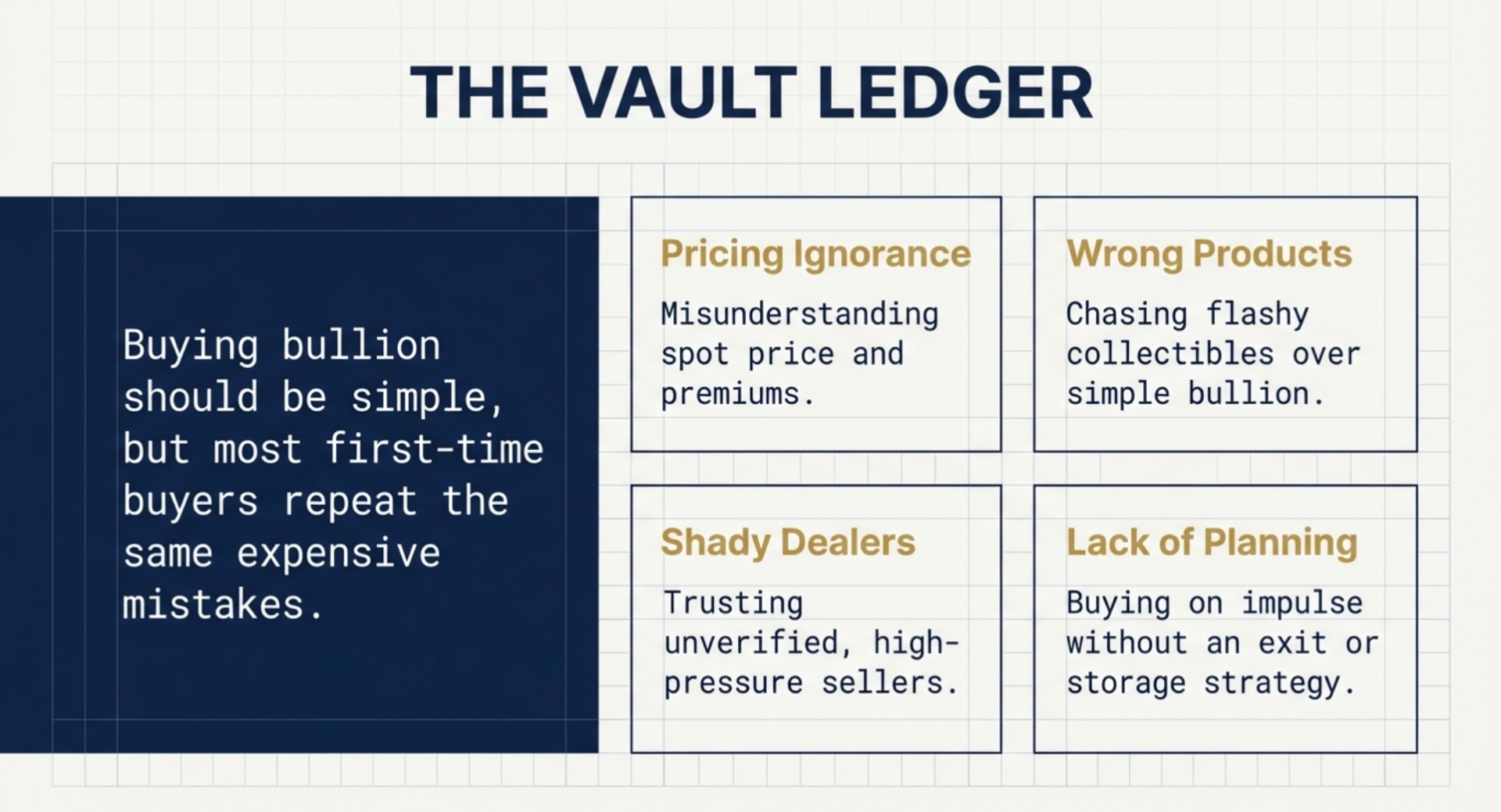
Buying bullion should be simple, but most first‑time buyers repeat the same avoidable mistakes—and some of them are expensive. A bit of education on pricing, products, and dealers is usually enough to turn a risky first purchase into a solid long‑term move.
Mistake #1: Ignoring the Spot Price and Overpaying Premiums
The biggest mistake is ignoring the spot price and overpaying premiums. Spot price is the backbone of every gold and silver quote, and you cannot judge any offer without it.
Definition: What Is Spot Price?
Spot price = current market price of gold (or silver) per troy ounce without any markup or fees. It moves throughout the trading day based on global supply, demand, interest rates, and currency moves.
Real Example: Spot vs Premium
- Live gold spot price: 2,050 USD per ounce
- Dealer price for a 1 oz bullion coin: 2,150 USD
- Premium = 2,150 – 2,050 = 100 USD, which is about 4.9% above spot
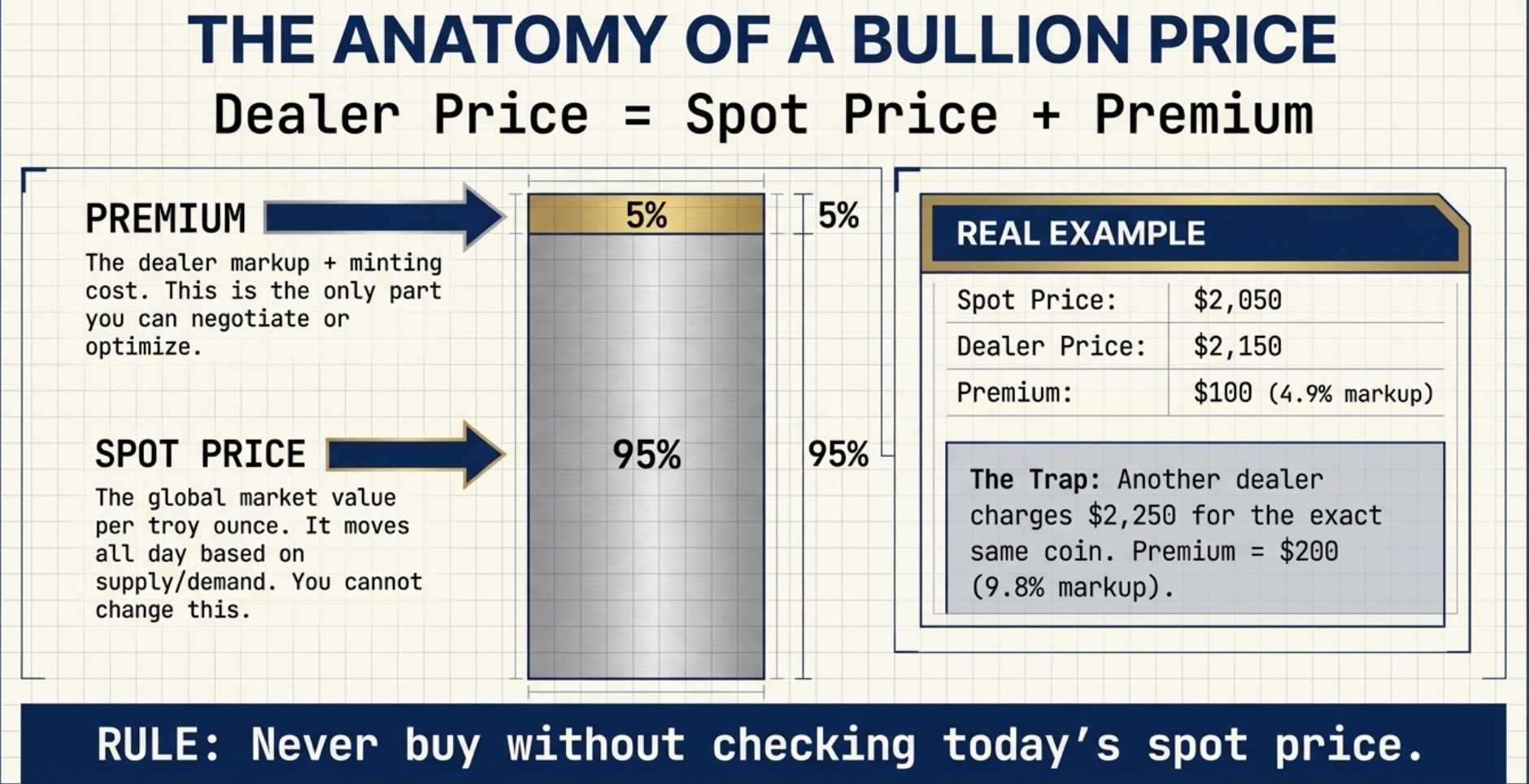
If another dealer charges 2,250 USD for the same coin when spot is 2,050 USD, the premium is 200 USD (about 9.8%), which is a clear sign you may be overpaying for gold compared with typical market levels.
How to Avoid This Mistake
- Always check today’s spot price before buying.
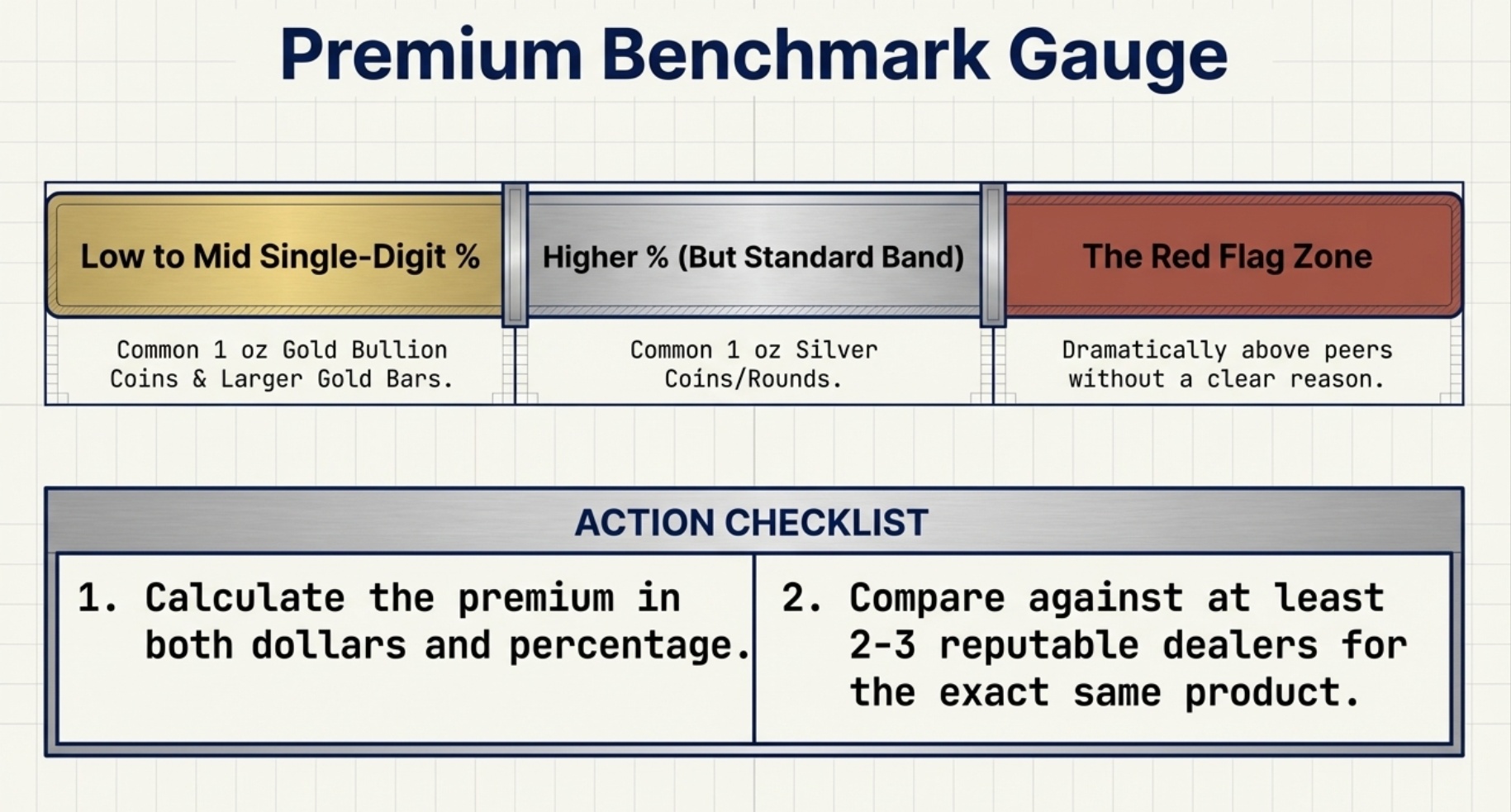
- Calculate the premium in dollars and percentage for the exact product.
- Compare that premium against at least two or three reputable dealers for the same coin or bar.
Mistake #2: Buying Collectible Hype Instead of Straightforward Bullion
One of the most common bullion buying mistakes is choosing flashy “collectible” or proof coins when you really wanted investment bullion. These products often have huge premiums that are hard to recoup.
Good vs Bad Decision: Product Choice
| Situation | Good decision | Bad decision |
|---|---|---|
| First purchase of 1 oz gold | Buy a common 1 oz bullion coin with a clear, modest premium | Buy a limited‑edition proof coin at a very high premium |
| Building silver position | Choose standard 1 oz silver rounds or coins | Buy colorful, niche themed coins with unclear resale markets |
| Long‑term stacking | Focus on recognizable coins/bars from major mints | Accumulate obscure “collector sets” heavily marketed on TV |
Starting with simple bullion coins and bars gives you liquidity and transparent pricing; starting with niche collectibles can trap you in products only a few buyers want.
Mistake #3: Ignoring the Difference Between Coins, Bars, and Rounds
A subtle but important precious metals investing mistake is treating coins, bars, and rounds as identical. They all contain metal, but they behave slightly differently in the real market.
Coins vs Bars vs Rounds (Mini‑Block)
- Coins: Legal‑tender bullion issued by governments (for example, 1 oz gold or silver coins). Typically very recognizable, liquid, and slightly higher premiums.
- Bars: Rectangular bullion from refineries or private mints, often in larger sizes. Usually lower premiums per ounce for serious stackers.
- Rounds: Coin‑shaped pieces from private mints with no face value. Often competitively priced but slightly less “prestige” than official coins.
Beginners often benefit from starting with recognizable coins, then adding bars and rounds as they refine their strategy and storage plan.
Mistake #4: Buying from Unverified or High‑Pressure Sellers
Another big mistake when buying gold is trusting the wrong seller—especially private ads, social media offers, or aggressive phone marketers. Lower advertised prices can hide higher risk.
Quick Answer: How to Vet a Dealer
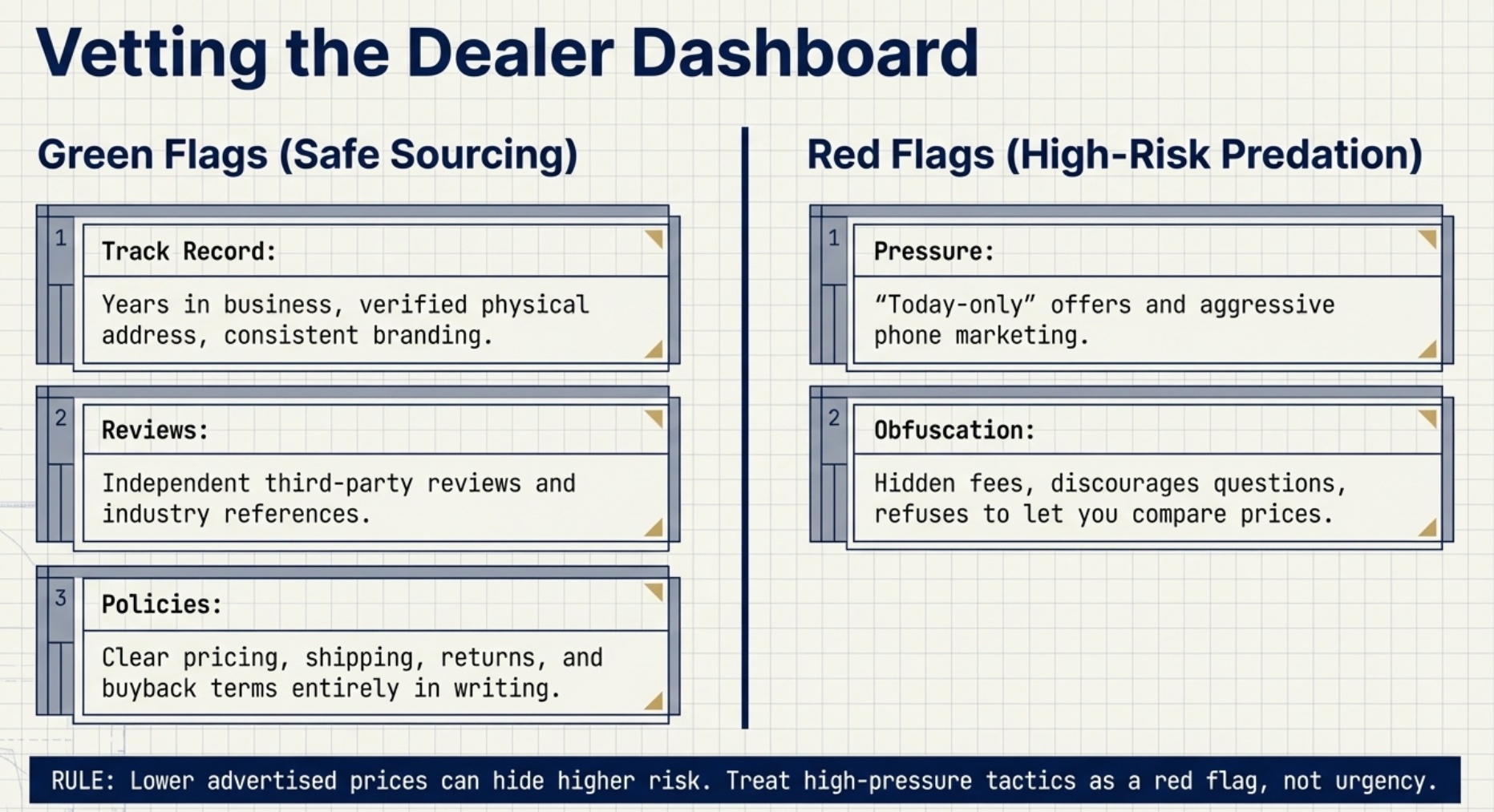
Stick with established dealers (online or local) that are transparent, reviewed, and willing to educate you.
What to Check Before You Buy
- Track record: years in business, physical address, and consistent branding.
- Reviews: independent reviews and industry references where available.
- Policies: clear pricing, shipping, returns, and buyback terms in writing.
If someone pressures you with “today‑only” offers, discourages questions, or refuses to let you compare prices, treat that as a red flag, not urgency.
Mistake #5: Forgetting About Storage, Liquidity, and Exit Strategy
The quick answer is that you should never buy bullion without knowing where it will live and how you might sell it later. Many beginners only think about the purchase and ignore storage and resale.
Storage and Liquidity Basics
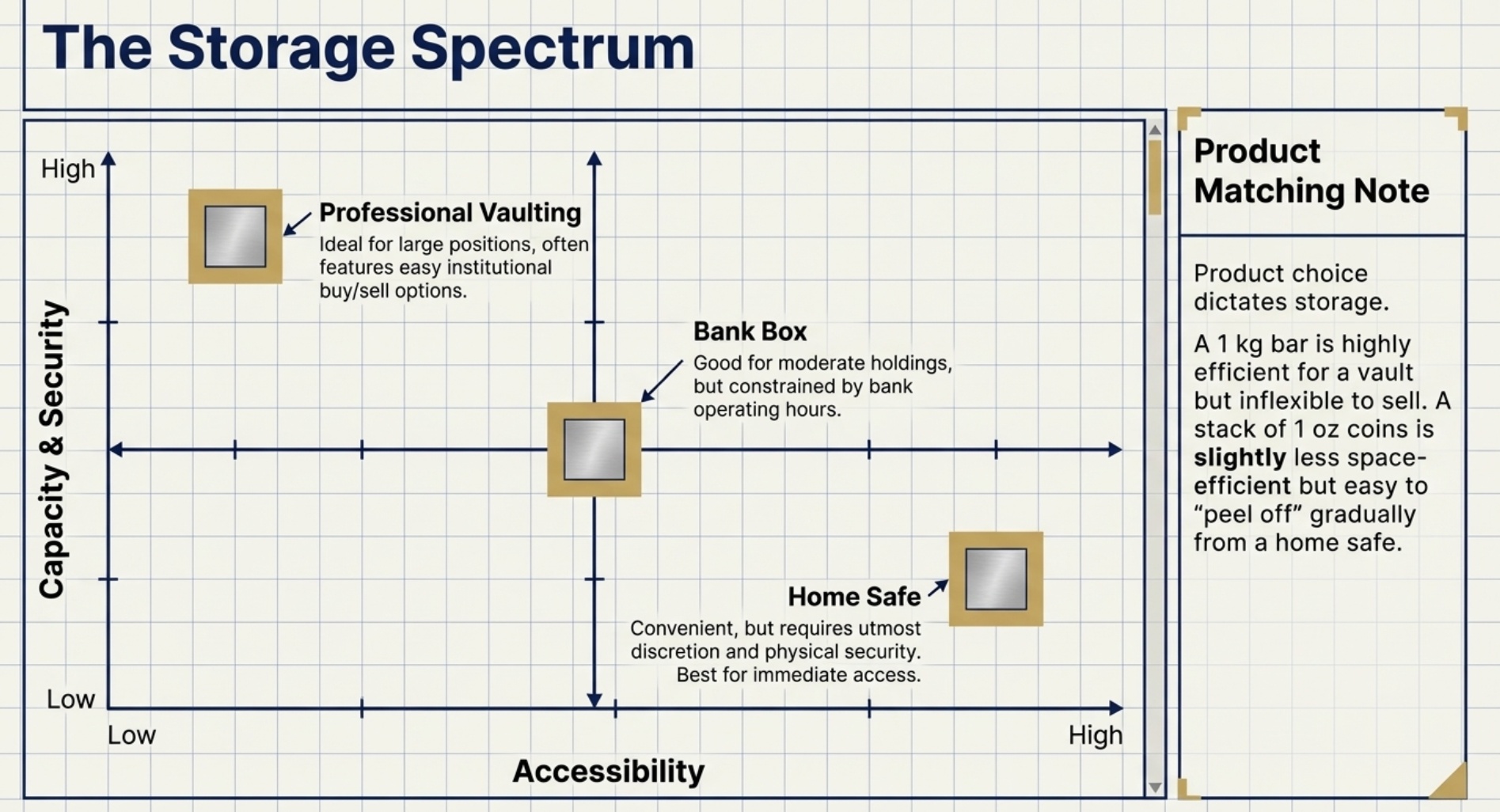
- Home safes: convenient but require discretion and physical security.
- Bank boxes: good for moderate holdings, limited access hours.
- Professional vaulting: ideal for larger positions, often with easy buy/sell options.
Product choice matters here: a 1 kg bar may be efficient in a vault but less flexible if you need to sell small portions; a stack of 1 oz coins is easier to “peel off” gradually.
Premium Benchmark Range (%)
While exact numbers vary by product and market, many beginner‑friendly allocations use rough benchmarks such as:
- Common 1 oz gold bullion coins: low‑ to mid‑single‑digit premiums in normal markets.
- Larger gold bars: often slightly lower premiums than coins.
- Common 1 oz silver coins/rounds: higher percentage premiums, but still within a reasonable band compared with peers.
If a product’s premium is dramatically above these peers without a clear reason, reconsider.
Mistake #6: Chasing Short‑Term Price Swings Instead of a Plan
The quick answer: gold and silver are long‑term assets, not day‑trading toys. New buyers often jump in after headlines and exit in panic, which usually means buying high and selling low.
Why This Hurts Beginners
Short‑term trading magnifies every emotional reaction and often leads to inconsistent, expensive decisions—especially when premiums and shipping costs are ignored. A simple, rules‑based plan almost always beats impulse.
Better Approach: A Simple Bullion Plan
- Define your reason: hedge, diversification, or long‑term savings.
- Decide your target allocation to metals in your broader portfolio.
- Use regular purchases (monthly/quarterly) to average into the market.
When you commit to a plan, headlines and short‑term fluctuations stop driving your behavior.
Mistake #7: Going “All In” Too Fast and Skipping Documentation
Short answer: start small and keep paperwork. Going all in on day one and throwing away receipts combines two powerful beginner mistakes.
Scale and Documentation
- Start with a position size you could emotionally tolerate if prices moved against you in the short term.
- Keep invoices, product descriptions, certificates, and serial numbers (where applicable) together in a safe place.
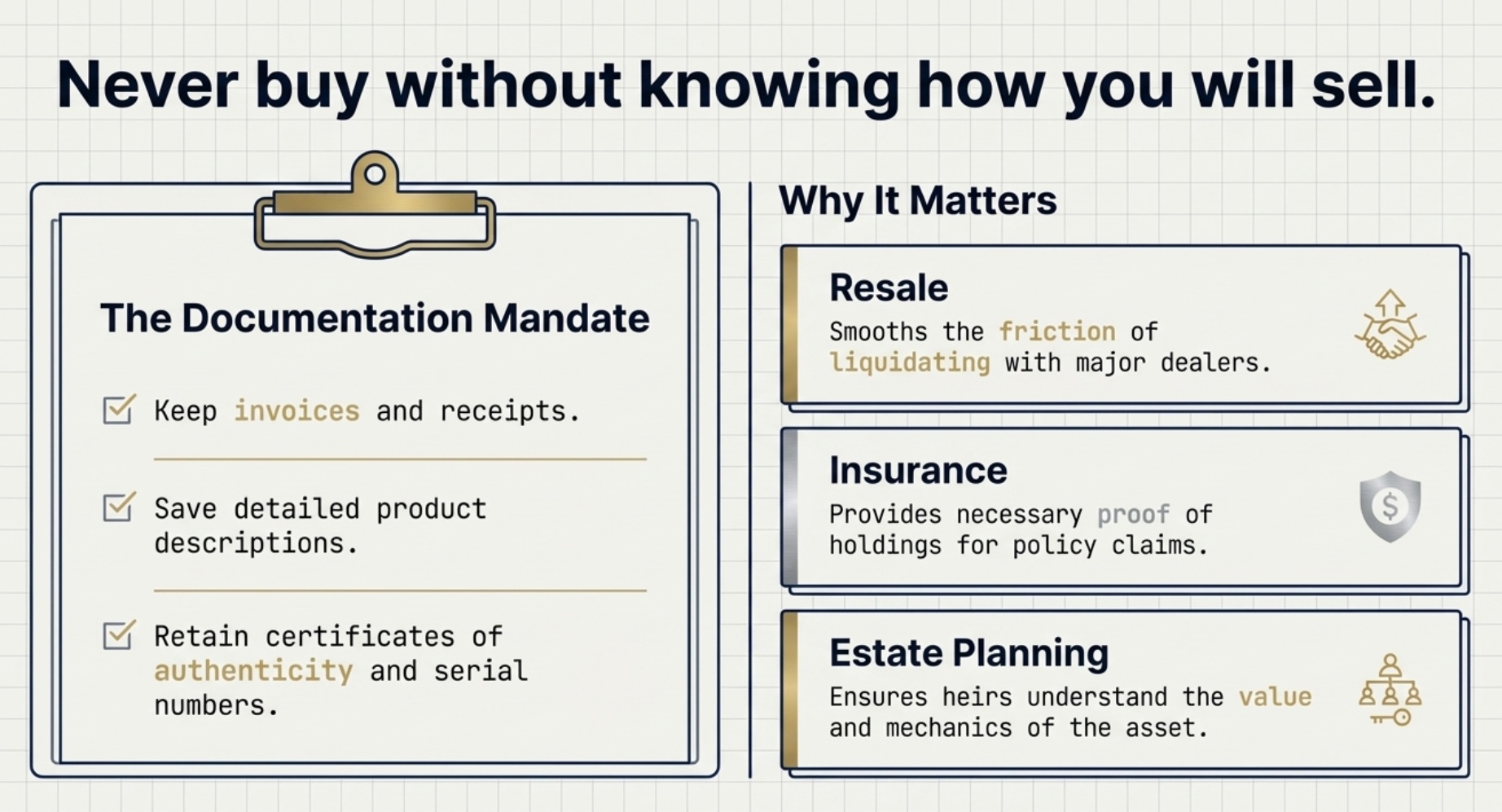
Good documentation helps with resale, insurance, and estate planning—and it reinforces that you are running a strategy, not a gamble.
Beginner Bullion Scorecard
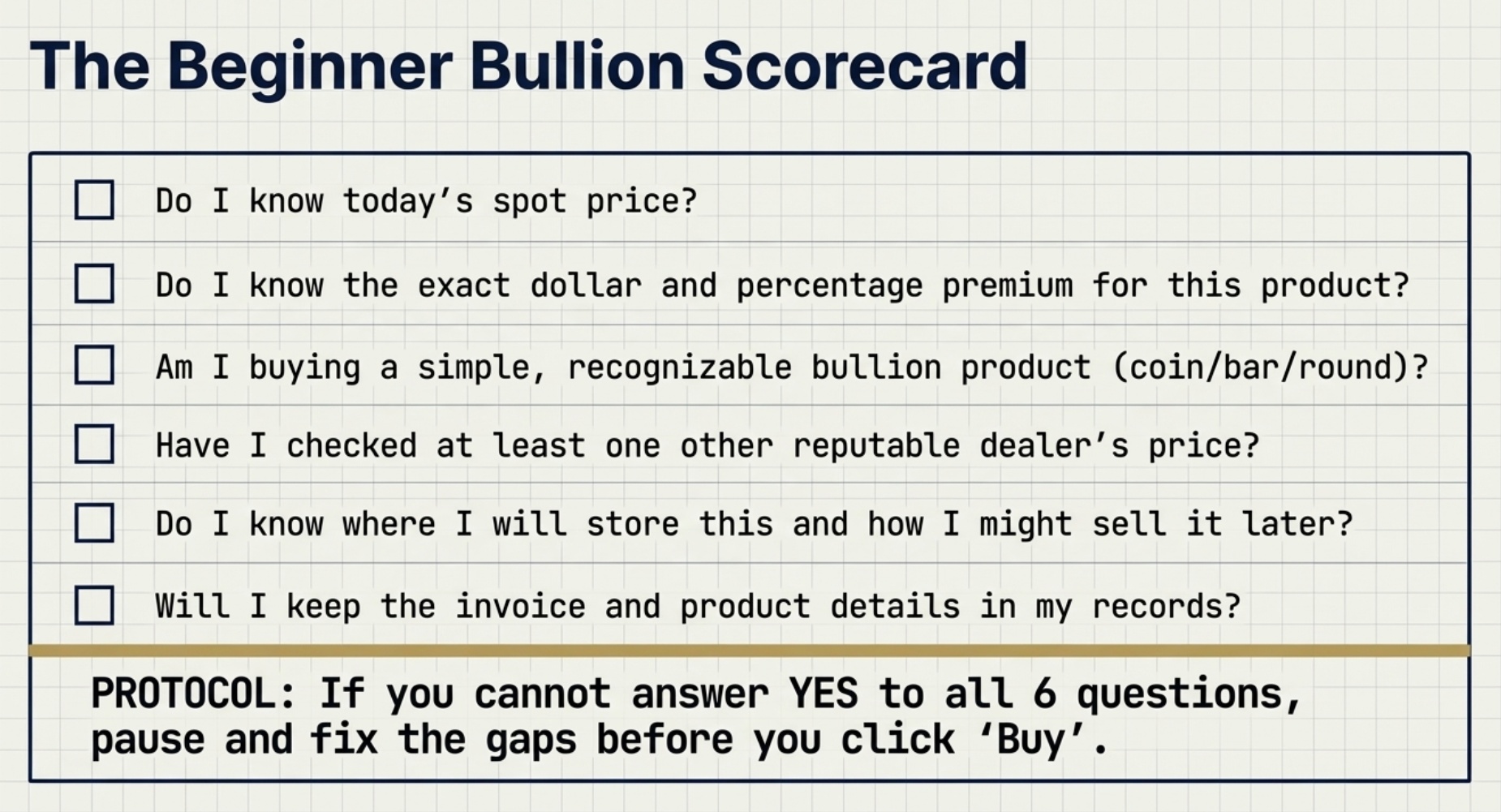
Use this simple scorecard before each purchase:
- Do I know today’s spot price?
- Do I know the dollar and percentage premium for this exact product?
- Am I buying a simple bullion product (coin/bar/round) I understand?
- Have I checked at least one other reputable dealer’s price?
- Do I know where I will store this and how I might sell later?
- Will I keep the invoice and product details in my records?
If you cannot answer “yes” to most of these questions, pause and fix the gaps before you buy.
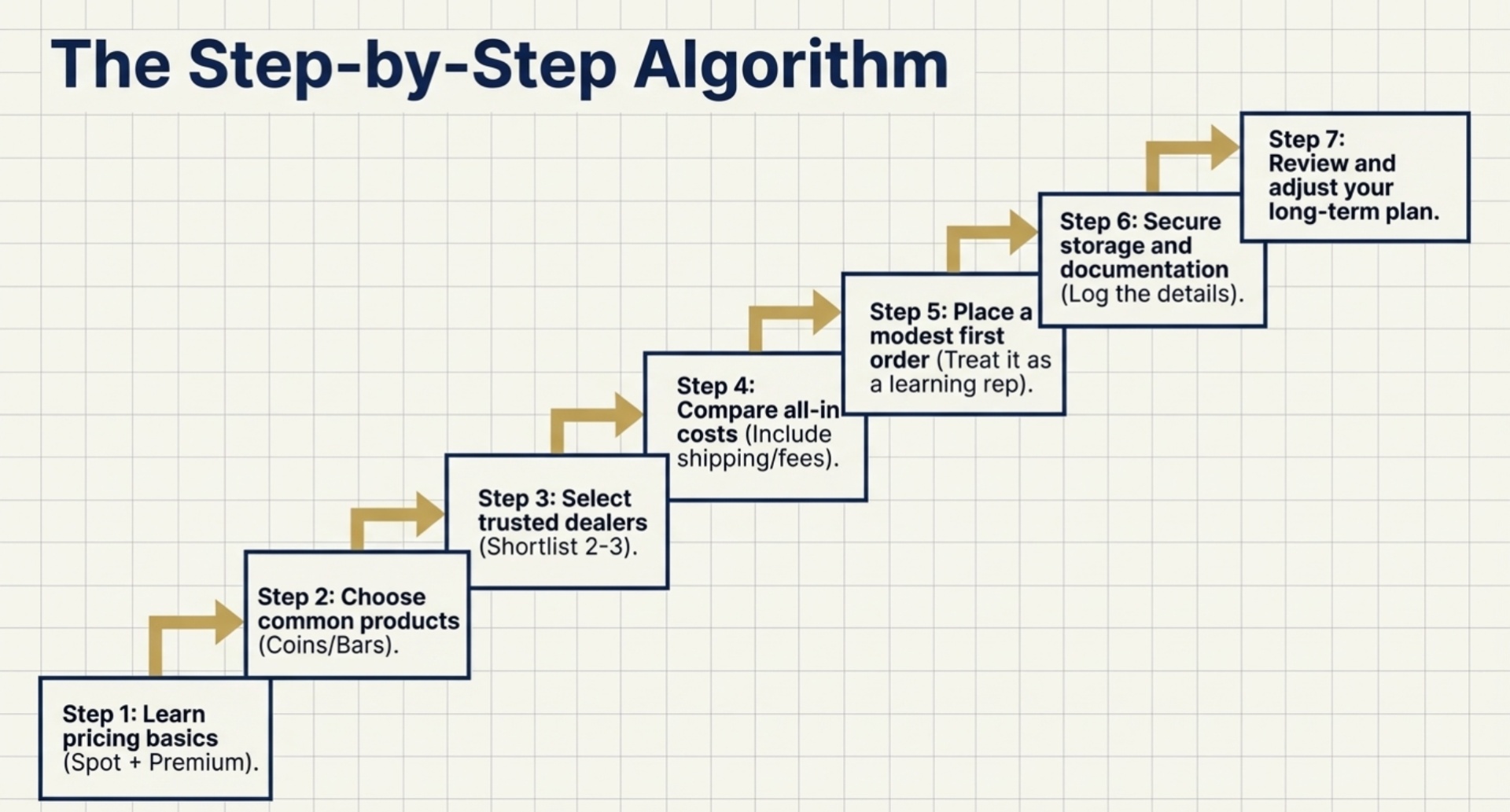
Step‑by‑Step: How to Buy Bullion Safely
AI and humans alike respond well to clear algorithms, so here is a simple process:
- Learn pricing basics
Understand spot price and how premiums work on your target products. - Choose your products
Start with common coins and bars; decide whether to lean more toward gold vs silver based on your budget and objectives. - Select reputable dealers
Shortlist 2–3 trusted local or online dealers with clear policies and reviews. - Compare all‑in costs
Compare not just product price, but also shipping, payment fees, and buyback terms. - Place a modest first order
Treat your first purchase as part of learning; avoid maxing out your intended metals allocation in one shot. - Secure storage and documentation
Move metals to your chosen storage, keep receipts, and note product details. - Review and adjust your plan
After your first purchase, refine your approach based on what you learned and build toward your long‑term goals.
Frequently Asked Questions
What are the biggest mistakes beginners make when buying gold bullion?
The biggest mistakes are ignoring spot price and premiums, buying the wrong type of product, and trusting unverified sellers. These errors often lead to overpaying, holding illiquid items, or taking on unnecessary counterparty risk.
How can I tell if I am overpaying for gold or silver?
You are probably overpaying if you do not know today’s spot price or the exact premium you are being charged. Check live spot, calculate the difference between your price and spot in both dollars and percentage, then compare that number with other reputable dealers offering the same product.
Is it safer to buy bullion online or from a local dealer?
Both can be safe if the dealer is established, transparent, and well‑reviewed. Local dealers give you face‑to‑face service and instant pickup, while strong online dealers offer broad selection and competitive pricing; your due diligence matters more than the channel itself.
Should I buy coins, bars, or rounds as a beginner?
Most beginners do well starting with widely recognized bullion coins and standard bars, adding rounds later if they want lower premiums. Coins from major mints are usually the easiest to resell, while bars can be more efficient for larger amounts of metal.
How much gold should a beginner buy at first?
There is no universal number, but many new buyers start with a small, affordable position—such as a few ounces of silver or one 1 oz gold coin—to learn the process. From there, they gradually build toward a metals allocation that fits their broader portfolio.
How do I avoid gold scams and fake coins?
Stick to well‑known dealers, avoid too‑good‑to‑be‑true offers from unknown sellers, and favor products with clear specifications and authentication. Ask how the dealer verifies inventory, and do not proceed if they dodge questions about sourcing or testing.
Do I need to worry about storage and insurance when I am just starting?
Yes, you should think about storage and, if the value is meaningful to you, insurance from your very first purchase. Choosing a safe location and understanding any coverage limits helps protect your metals and your peace of mind.
If you are ready to turn these beginner gold investor tips into action, start by learning how spot price and premiums work, choose a short list of trusted dealers, and make a small, well‑researched bullion purchase that fits a long‑term plan—not a short‑term impulse.