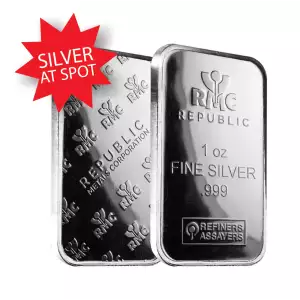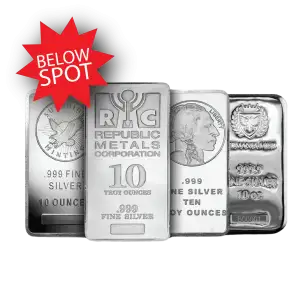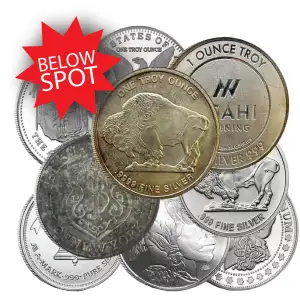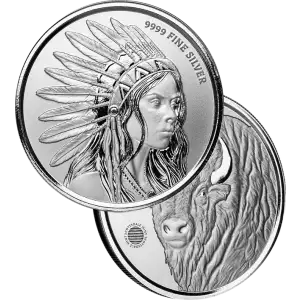
Gold and silver prices are influenced by a mix of supply and demand, investor sentiment, interest rates, and, for silver, powerful industrial trends like solar and electronics. Understanding what drives gold prices - such as shifts in these variables - helps beginners make calmer, more informed decisions about buying physical coins and bullion instead of just reacting to headlines.
There are several key factors that drive gold and silver prices, and recognizing these can provide a clearer picture of how the market moves over time.
What this guide will cover
This guide explains in plain English what drives gold price moves and what drives silver price moves, from supply and demand basics to safe‑haven flows and industrial demand. It is designed for beginners who are curious about the precious metals market basics and want to understand how macro trends translate into real‑world prices for coins and bars.
You will learn:
- How gold supply and demand shape long‑term price trends.
- Why silver’s industrial demand makes it behave differently from gold.
- The role of market trends in influencing gold and silver prices, and how understanding these trends can help you interpret price movements and make informed investment decisions.
- What all this means if you are buying physical gold and silver from a trusted local dealer.
Precious metals 101: how gold and silver markets work
Gold and silver trade in several overlapping markets: futures and options on exchanges, exchange‑traded funds (ETFs), mining stocks, and the physical market for coins and bullion. Headlines usually quote the spot price, which reflects wholesale market trading and then serves as the base for retail pricing. The spot price is often set by the London Bullion Market Association (LBMA), which provides the widely used London PM fixing price as a global benchmark for gold valuation and analysis.
For everyday buyers, the most relevant distinction is between spot price and the final price you pay for a bar or coin. Dealers add a premium over spot to cover minting, logistics, risk, and a reasonable margin, and premiums can rise when physical demand spikes relative to available inventory. That is why the same ounce of metal can cost noticeably more in a tight retail market than the spot price you see on financial news sites.
The basic rule: supply and demand
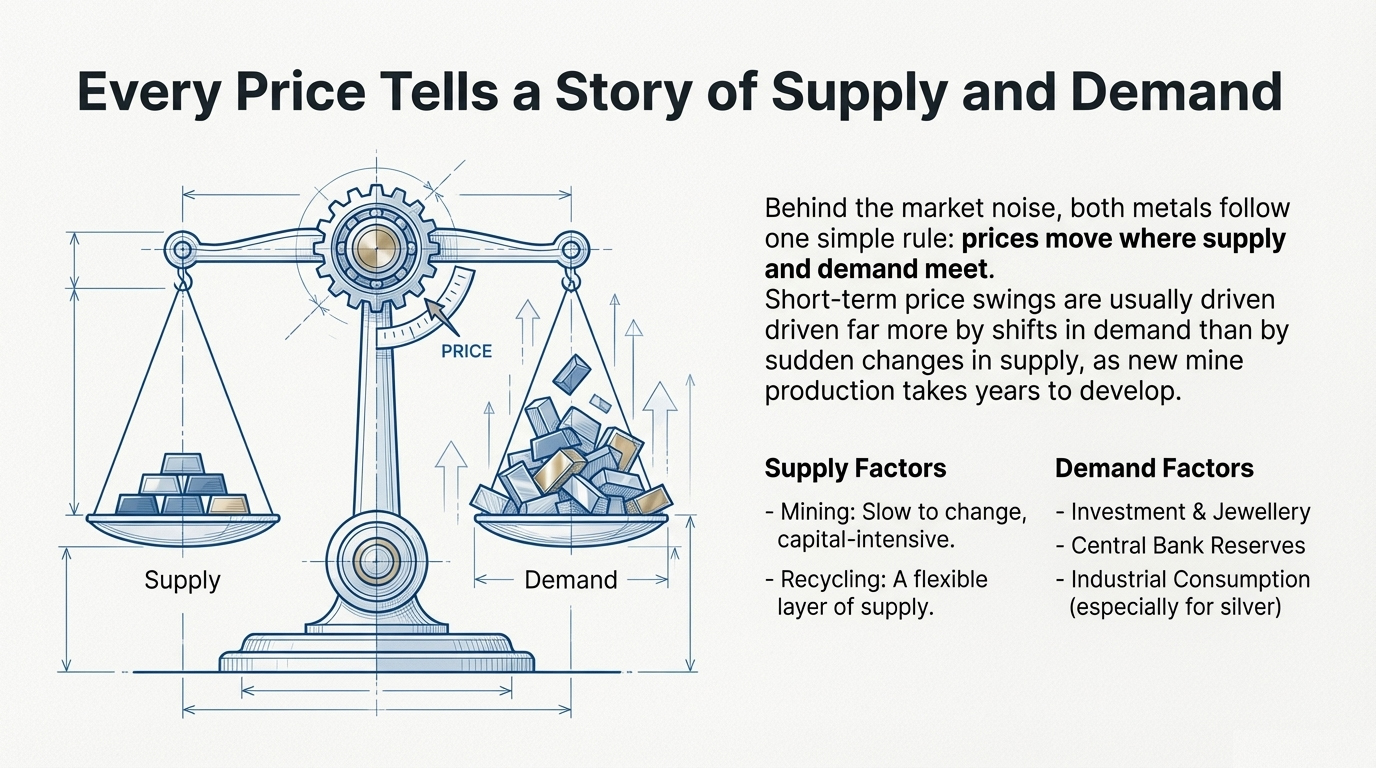
Behind the noise, both metals follow one simple rule: prices move where supply and demand meet. On the demand side, gold demand—driven by jewelry buyers, investors, central banks, and in silver’s case industrial users—all compete for a finite flow of new metal and recycled material.
On the supply side, gold and silver mainly come from mines and recycling. Mining output changes slowly because new projects take years and billions of dollars, so short‑term price swings are usually driven far more by shifts in gold demand than by sudden changes in supply. When gold demand jumps quickly in a crisis but supply barely moves, prices tend to rise until the market finds a new balance.
What drives the gold price?
Investment and “safe haven” demand
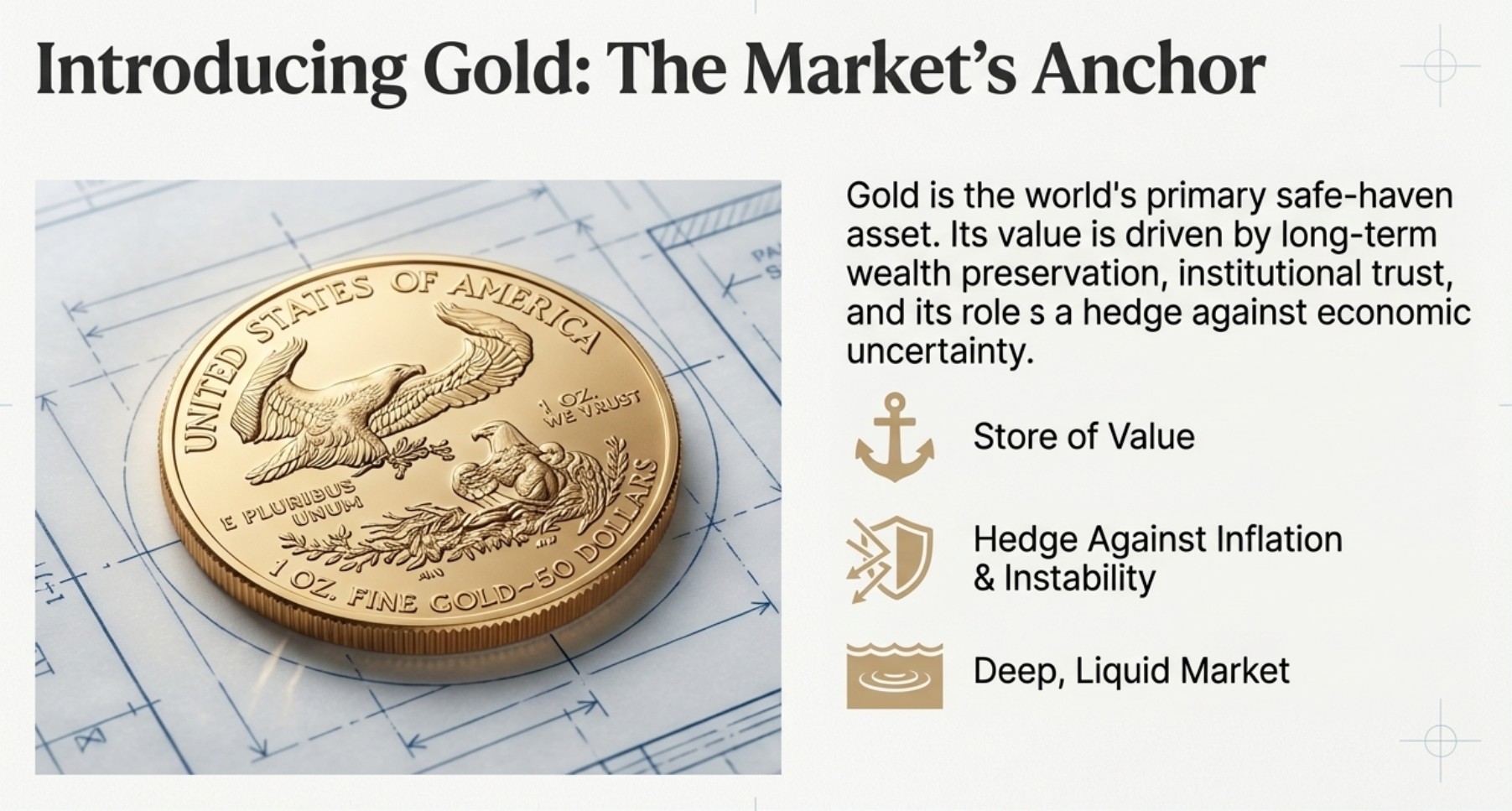
Gold is widely viewed as a safe‑haven asset, which means demand often rises when investors worry about inflation, recession, war, financial instability, or broader economic uncertainty. In such periods, people shift from paper assets into tangible stores of value, pushing up the gold price as more capital chases limited bullion and coins.
Holding gold can serve as a hedge during periods of economic uncertainty, especially when real interest rates are negative or inflation is high. As a non-yielding asset, holding gold becomes more attractive to investors seeking to preserve wealth and protect against currency fluctuations.
Modern investment flows amplify this effect. Large allocations into gold ETFs, institutional portfolios, and physical bars and coins can accelerate price moves, particularly when they happen alongside concerns about currencies and government debt. This is why gold tends to feature heavily in long‑term diversification and wealth‑preservation strategies.
Central banks and big players
Central banks are now significant buyers of gold, increasing their official gold holdings as a strategic reserve asset alongside major currencies. In recent years, purchases from emerging market central banks in particular have reached multi‑decade highs as they diversify away from concentrated holdings in the US dollar.
Following recent geopolitical tensions, emerging market central banks have increased gold reserves to reduce dependency on the U.S. dollar.
This steady, long‑term demand from official institutions underpins the market and can support prices even when shorter‑term investor sentiment is mixed. Central banks now hold about one-fifth of all gold ever mined. Because these buyers typically hold gold for years rather than months, their actions shape the structural backdrop for the gold price rather than just short‑term trading moves.
Interest rates, inflation and the US dollar
Interest rates and inflation are central to what drives gold price trends. The U.S. Federal Reserve plays a key role in setting interest rates and influencing inflation expectations, which in turn drives gold prices. When real interest rates (nominal rates minus inflation) are low or negative, the opportunity cost of holding non‑yielding gold is smaller, and investors are more willing to hold it as a hedge. The concept of 'real yield'—the inflation-adjusted return on long-term Treasury securities, such as those measured by Treasury Inflation-Protected Securities (TIPS)—is a key indicator for understanding gold price movements. Data from the TIPS market is often used to gauge both real yields and inflation expectations, which are critical drivers of gold prices. There is an inverse relationship between real interest rates and gold prices: when interest rates rise, gold's appeal typically decreases, as higher rates increase the opportunity cost of holding gold. Conversely, lower U.S. interest rates increase the attractiveness of gold as an investment. 'Real gold prices' or the 'real price' of gold refer to its inflation-adjusted value, often measured using the Consumer Price Index (CPI), which helps investors assess gold's role as an inflation hedge over time.
The strength of the US dollar also matters because gold is priced globally in dollars. When the dollar weakens, gold becomes cheaper in other currencies, often encouraging additional demand and supporting higher dollar prices; the opposite can happen when the dollar is very strong.
Supply side: mining and recycling
Gold mine production has grown only modestly over the past decade, with global output increasing by less than 10% even as demand has fluctuated. Bringing new mines online is slow and capital‑intensive, so production does not respond quickly to higher prices.
Recycling provides a flexible layer of supply as people sell jewelry and scrap when prices rise. At high price levels, scrap flows increase and help ease tightness in the market, while lower prices tend to discourage recycling, leaving more of the adjustment to come from demand.
What drives the silver price?
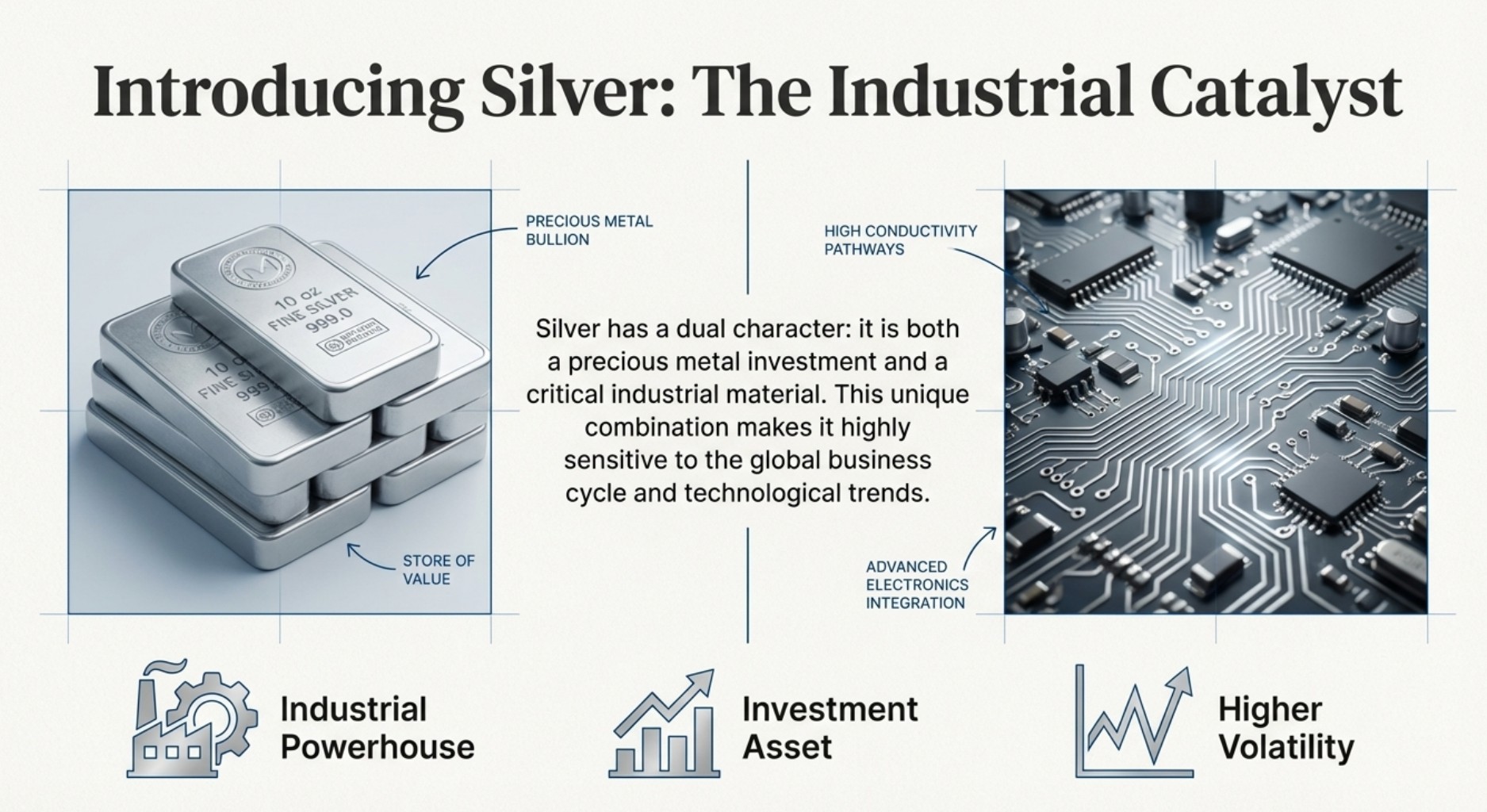
Silver’s “two personalities”: investment vs industry
Silver has a dual character: it is both a precious metal investment and a heavily used industrial material. This combination makes silver more sensitive to the global business cycle and technology trends than gold, which is dominated by investment and jewelry demand.
Investment sentiment still matters: silver often responds to the same macro forces that drive gold, and many investors watch the gold‑silver ratio to judge relative value between the two metals. Investors also compare silver to other assets and asset classes when making allocation decisions, considering its role in diversification strategies alongside equities, bonds, and other investments. Because the market is smaller, investment flows can cause more dramatic percentage moves in silver prices than in gold.
Industrial demand: solar, electronics, EVs and more
Industrial demand has become the largest component of silver consumption, accounting for around two‑thirds of total demand in recent years. Key uses include electronics, solar panels, automotive components, and medical applications where silver’s conductivity and antibacterial properties are hard to replace. According to the Silver Institute, industrial demand and market trends in silver are closely tracked, providing authoritative data on these sectors.
The solar industry in particular has been a powerful growth engine for silver demand, as photovoltaic cells rely on silver paste to conduct electricity. Forecasts from energy and development institutions expect silver demand from renewables to grow substantially in the coming decades, creating a more durable demand floor under the market.
Investment flows and market sentiment
Even with strong industrial demand, sentiment from investors and traders still shapes short‑term silver price movements. Periods of optimism about economic growth and technology can boost both industrial expectations and investment appetite, while risk‑off periods may see silver follow gold higher as a quasi safe‑haven.
Because of this mix, silver is typically more volatile than gold: it can outperform sharply in uptrends and fall faster in downturns. In percentage terms, silver's price movements are often more dramatic than those of gold, due to its smaller market size and higher volatility. Long‑term investors need to be comfortable with that greater price variability when considering how much silver to hold relative to gold.
Supply factors: mines, by‑product metal and recycling
Around 70% of silver production comes as a by‑product of mining other metals such as copper, lead, and zinc. This means silver supply often responds more to the economics of those base metals than to silver’s own price, making supply relatively inflexible in the short run. Government policies, such as mining regulations or national mint operations, can also significantly influence silver supply and market dynamics by affecting production levels and the availability of newly minted silver coins.
Recycling contributes a smaller share of silver supply than it does for gold, partly because the metal is used in many dispersed industrial applications where recovery is uneconomic. As a result, strong demand can push silver into tighter balance more easily, feeding into sharper price swings.
Gold vs silver: how their drivers differ
The table below highlights the key differences between what drives gold price moves and what drives silver price moves.
Factor | Gold | Silver |
| Main demand sources | Jewelry, investment, central banks | Industrial (electronics, solar), investment |
| Safe‑haven role | Strong, crisis‑driven demand | Moderate, often follows gold |
| Industrial dependence | Limited, niche uses | High, majority of demand |
| Supply profile | Primary gold mines, recycling | Mostly by‑product of base metals |
| Typical volatility | Lower | Higher |
For conservative wealth preservation, gold’s deep, investment‑driven market and strong safe‑haven profile often make it the core holding. Gold and silver both help protect purchasing power during periods of inflation and currency debasement, serving as hedges when traditional financial assets like stocks and bonds may lose value. Silver, with its industrial leverage and higher volatility, typically suits investors comfortable with bigger swings who want exposure to growth in technology and clean energy alongside precious metals themes.
Simple examples of when each metal might shine
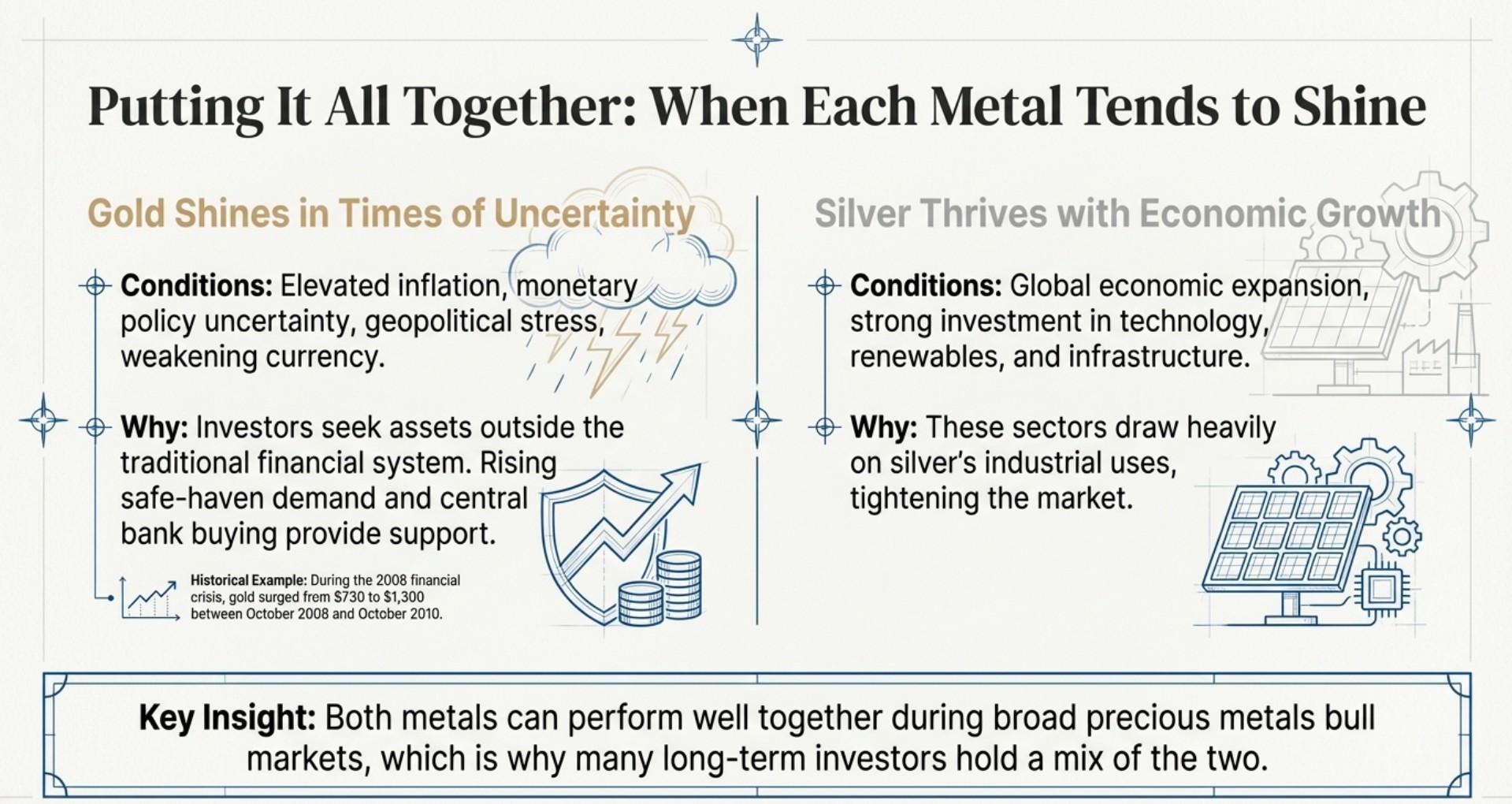
Gold tends to shine in periods of elevated inflation, monetary policy uncertainty, or geopolitical stress, when investors look for assets outside the traditional financial system.
Since 1971, gold prices have been allowed to float freely, resulting in significant volatility throughout the 1970s. Gold reached its inflation-adjusted peak of about $3,300 in January 1980—a record high—before experiencing a prolonged decline through the 1980s and 1990s, eventually bottoming at just $253 per ounce in 1999 amid a strong global economy. During the 2008 financial crisis, gold surged from $730 to $1,300 between October 2008 and October 2010. More recently, gold prices reached a new nominal record high above $2,450 per ounce in early 2025, and as of late December 2025, exceeded $4,500 per ounce, up approximately 70% for the year. Historically, gold prices typically start rising again from the fourth month onward after the first Federal Reserve rate cut. If you invested $100 in gold in 1972, it would have grown to about $6,700 by 2025. However, periods of low inflation can diminish gold's role as an inflation hedge, as lower inflation expectations reduce safe-haven demand.
In those environments, rising safe‑haven demand and central bank buying can support higher gold prices even if industrial conditions are mixed.
Silver often benefits when the global economy is expanding and investment in technology, renewables, and infrastructure is strong, because those sectors draw heavily on silver’s industrial uses. However, both metals can perform well together during broad precious metals bull markets, which is why many long‑term investors hold a mix of the two.
What this means if you’re buying physical gold or silver
For physical buyers, the key takeaway is not trying to predict every short‑term move but understanding the big forces behind the market. Watching trends in inflation, interest rates, central bank activity, and industrial demand can help you decide when to add to positions and how to balance gold and silver in your holdings. Gold and silver can serve as non-correlated asset classes within a diversified portfolio, helping to reduce overall risk. The gold market has also evolved with the growth of investment products like ETFs, making it more accessible to individual investors and linking fund flows to physical gold demand.
It is equally important to focus on quality, pricing transparency, and secure storage when buying coins and bullion. Working with an experienced local dealer that offers clear information on spot prices, premiums, and storage options can make the process smoother and reduce practical risks like theft or counterfeit products.
When you are ready to act on these trends, start by comparing current gold and silver bullion products from a reputable dealer.
How Stout Gold & Silver can help
Stout Gold & Silver combines decades of experience in the Amarillo area with a broad selection of gold and silver bullion products for both new and seasoned investors. Customers can choose from widely recognized coins and bars as well as specialty and numismatic pieces, all supported by knowledgeable staff who explain pricing, premiums, and product choices in straightforward language.
Beyond purchases, Stout Gold & Silver offers secure bullion storage solutions designed to protect your holdings while keeping them accessible when you need them. For many investors, using professional vaulting instead of home storage is a practical way to reduce risk and make precious metals ownership simpler day to day.
FAQs: quick answers about gold and silver prices
Q: What are the main factors that drive the gold price?
A: The main drivers of the price of gold are investment and safe‑haven demand, central bank purchases, jewelry demand, interest rates, inflation, inflation expectations, and the strength of the US dollar. Gold is often used as an inflation hedge, especially when inflation expectations are rising, as investors seek protection from eroding purchasing power. Central banks also influence gold prices through their reserve management policies. Supply from mining and recycling changes more slowly, so most short‑term moves come from shifting demand and macro conditions.
Q: Why is silver more volatile than gold?
A: Silver is more volatile than gold because it has a smaller market, relies heavily on industrial demand, and is often produced as a by‑product of other metals, making supply less responsive to price. As a result, changes in sentiment or demand can cause larger percentage moves in silver than in gold.
Q: How does industrial demand affect silver prices?
A: Industrial demand—especially from electronics, solar panels, and automotive applications—accounts for the majority of silver consumption and provides a strong base of ongoing use. When these sectors grow, they can tighten the silver market and support higher prices over time.
Q: Do central bank gold purchases really move the gold price?
A: Yes, central bank gold purchases are a significant, long‑term source of demand that can support prices, particularly when many institutions buy at the same time. Their role as large, strategic buyers adds stability to the market and reinforces gold’s status as a core reserve asset.
Q: How do interest rates and inflation impact gold and silver?
A: Lower real interest rates and higher inflation typically make gold and, to a lesser extent, silver more attractive because they reduce the opportunity cost of holding non‑yielding assets. In contrast, high real rates and subdued inflation often weigh on precious metals as investors favor interest‑bearing instruments.
Q: What is the difference between spot price and the price I pay for coins?
A: The spot price is the global benchmark price for unfabricated metal traded in wholesale markets, while the retail price includes a premium that covers minting, distribution, dealer costs, and market conditions. Premiums rise when physical demand is strong or inventory is tight and can fall when the market is well supplied.
Q: Is now a good time to buy gold or silver for the long term?
A: No single moment is perfect, but many long‑term investors treat gold and silver as strategic holdings they build gradually rather than timing short‑term peaks and troughs. A disciplined approach that respects your risk tolerance and uses reputable dealers can matter more than trying to predict the next price move.
Ready to take the next step?
Explore current gold and silver bullion products and, when you are ready, talk to the Stout Gold & Silver team about starting or expanding your precious metals position today.