Storing gold and silver safely is just as important as choosing the right coins or bars, especially once your holdings grow beyond a few pieces. This guide explains, in practical terms, how to store gold at home and how vault storage works so you can choose the bullion storage options that fit your risk tolerance, lifestyle, and budget.
What this safe storage guide will cover
This article walks through the pros and cons of keeping precious metals at home versus using professional vault storage, including security, access, cost, and insurance for secure gold storage. It is written for investors who already own or plan to own physical gold and silver and want a clear framework to decide between a home safe vs vault or a mix of both.
Why how you store gold and silver matters
Once you have bought gold or silver, the next critical decision is where and how to store it so it remains safe, undamaged, and easy to sell when needed. Poor storage can expose you to theft, fire, flood, or corrosion and may leave you under‑insured if your home policy does not fully cover bullion stored on‑site.
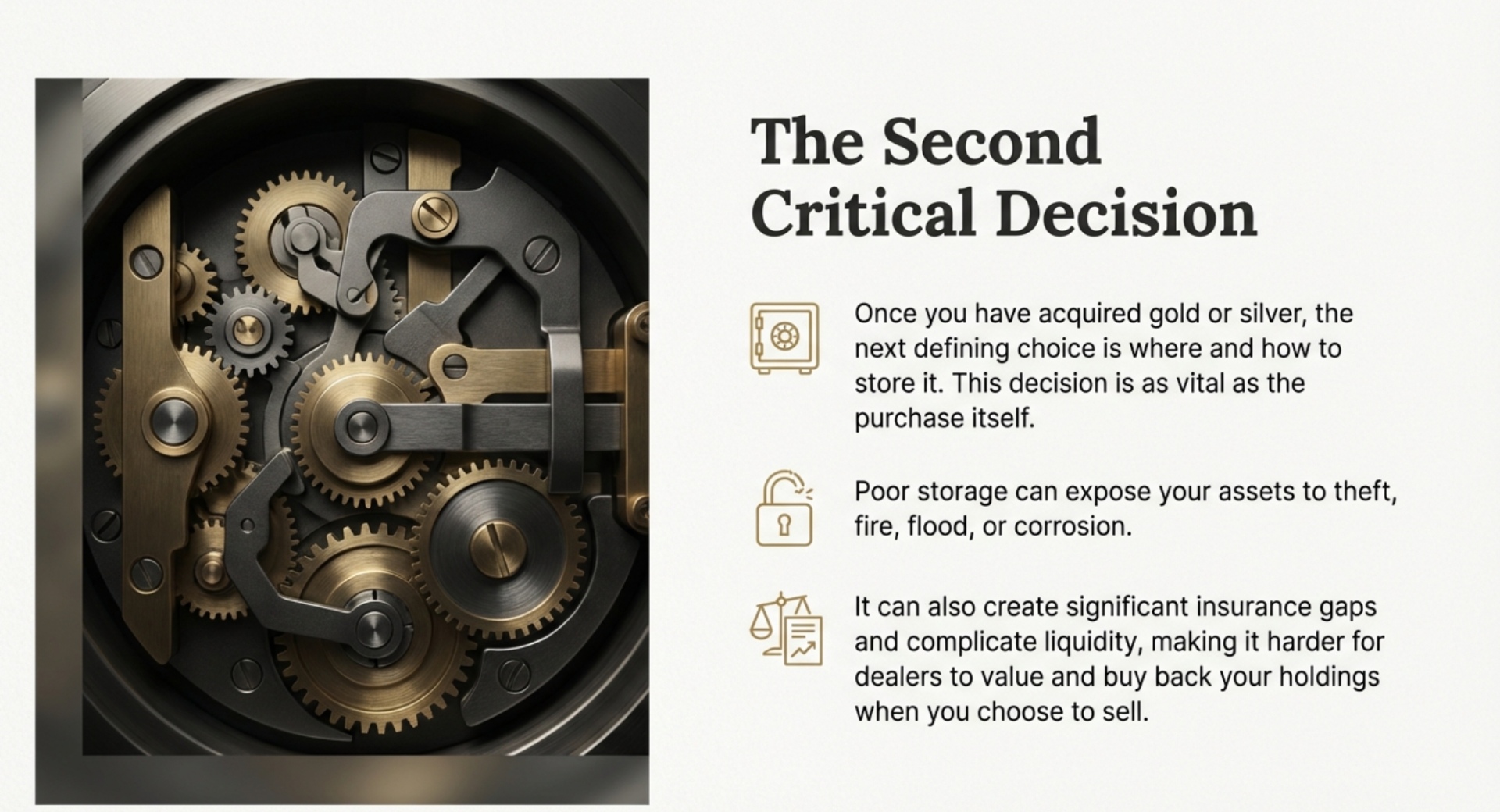
Good storage also supports liquidity: properly stored, well‑documented metals are easier for dealers to value and buy back quickly, especially when they are kept in recognizable forms and original packaging. Thinking through storage early helps you avoid scrambling for solutions after your holdings have already grown.
Bullion storage options at a glance
Main ways to store gold and silver
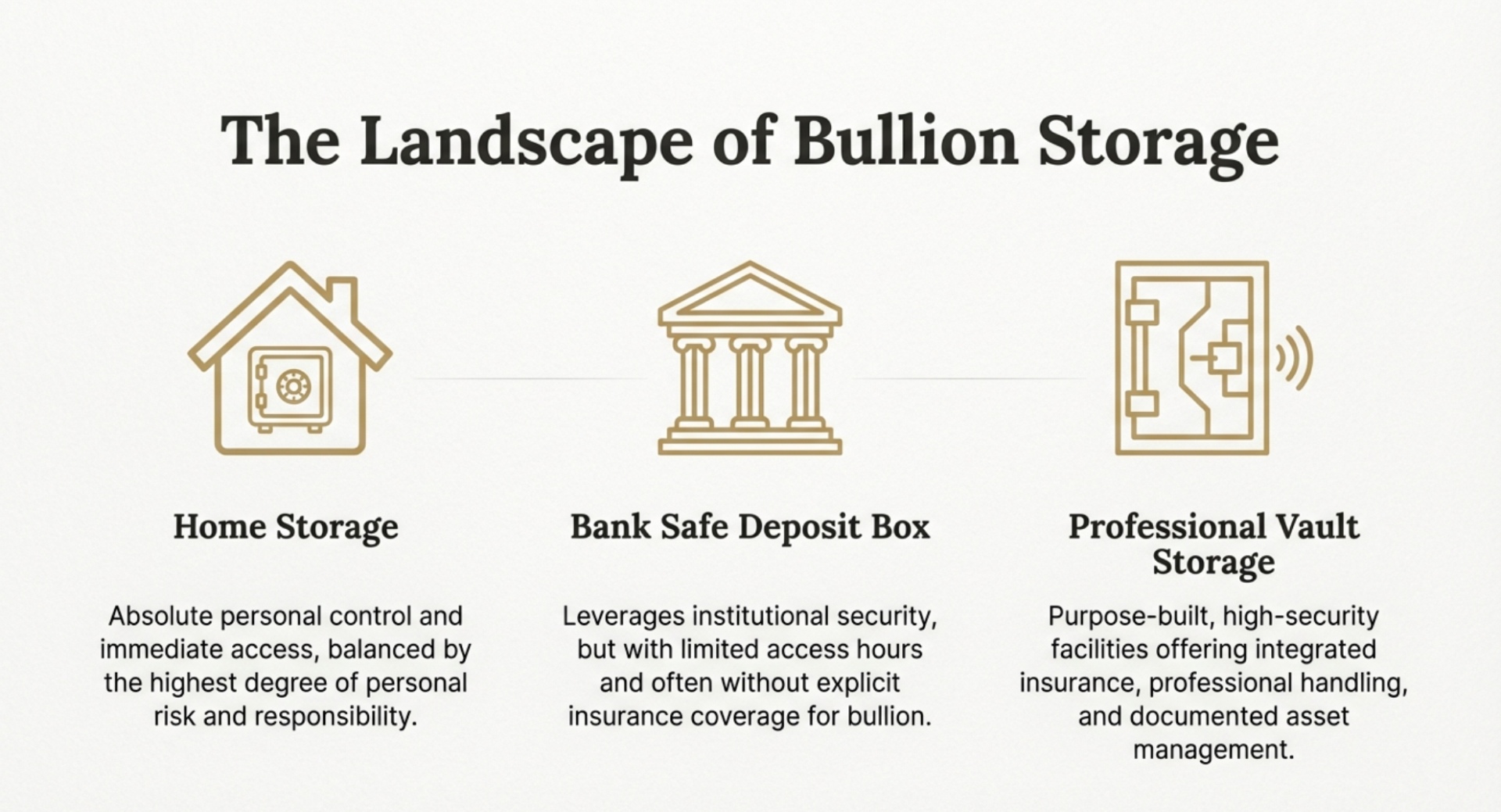
Most people use one or more of three main bullion storage options: at home, in a bank safe deposit box, or in a professional vault or bullion depository. Each has a distinct mix of security, access, cost, and paperwork requirements.
- Home storage: complete personal control and immediate access, but higher personal risk if your security setup is weak.
- Bank safe deposit box: strong building security but limited hours and often no explicit bullion insurance.
- Professional vault storage: purpose‑built high security, integrated insurance, and professional handling, with access arranged through clear procedures.
If you prefer a professional solution in the Amarillo area, you can use local bullion storage services.
Key factors to weigh before choosing
The best way to store gold and silver depends on the total value you hold, your home security, how quickly you need access, and your tolerance for ongoing fees versus risk. Someone with a small amount and strong home security might lean toward home storage, while larger stacks or more complex financial situations often justify vault storage. As your gold bullion holdings grow, professional storage becomes increasingly attractive.
Before you commit, ask yourself: how would a burglary, fire, or extended trip away from home affect your comfort level with keeping metals on‑site, and what insurance documentation would your family need if something went wrong. Answering honestly will usually point you toward the right mix of solutions.
How to store gold and silver at home safely
Pros of home storage
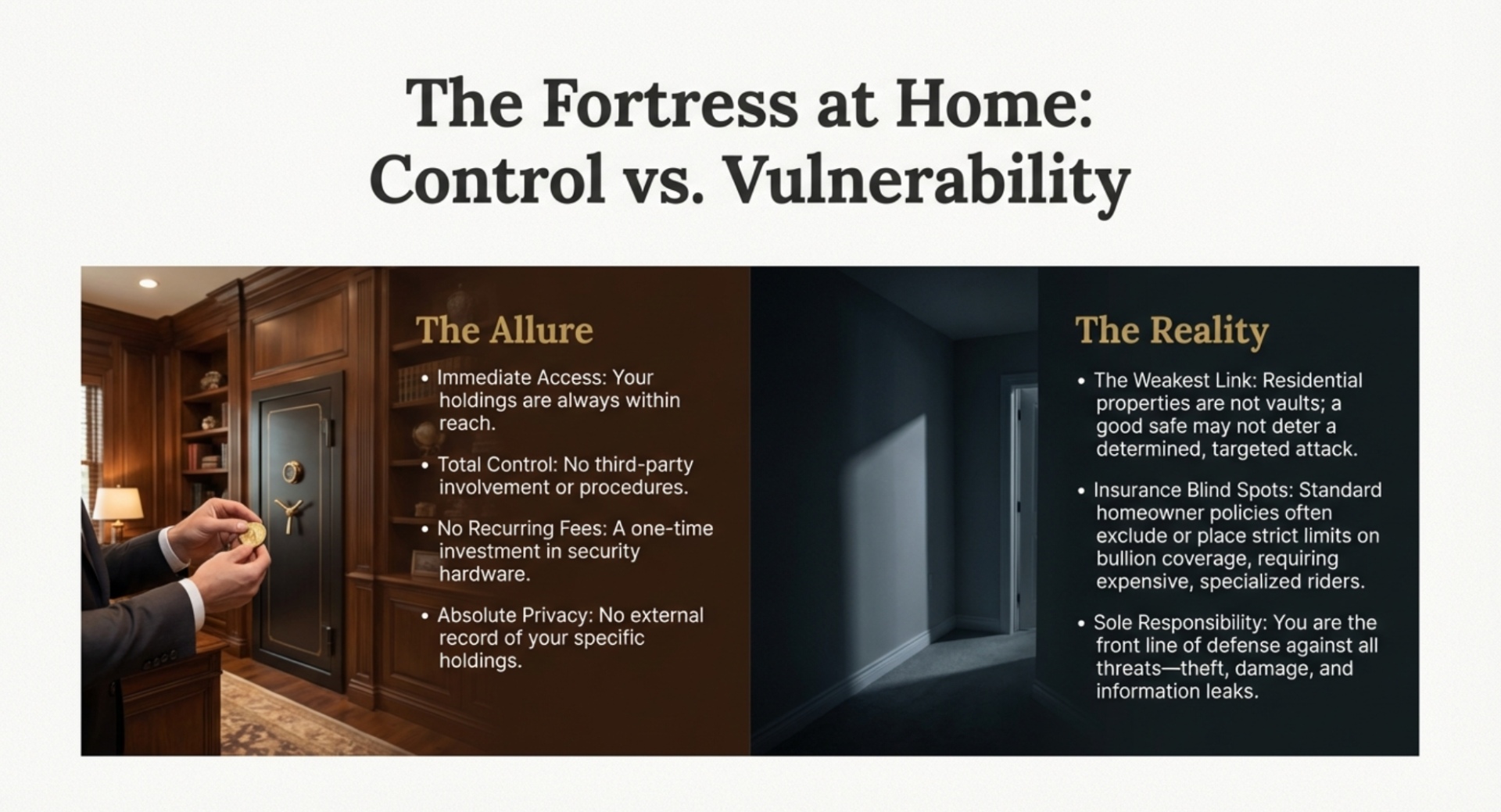
The main advantages of storing gold at home or keeping some silver at home are immediate access, full personal control, and no recurring storage fees once your setup is in place. For some investors, simply knowing their bullion is a few steps away in a safe offers strong psychological comfort.
Home storage also preserves privacy when handled discreetly; done properly, no third party has a list of what you own, which appeals to people who prioritize confidentiality. However, that privacy also means the responsibility for security falls squarely on you.
Home storage risks and limitations
The biggest drawback to keeping all your bullion at home is that your house becomes the weakest link in your security chain. Residential properties are not built like vaults, and even a good safe may not fully protect against determined thieves, fire, or serious water damage.
Insurance can be another blind spot: many standard homeowner policies either exclude bullion or require specific riders and limited coverage, especially for higher values. If your insurer does not clearly know about your holdings and where they are stored, you may be relying on protection that is not really there.
Best practices if you store gold at home
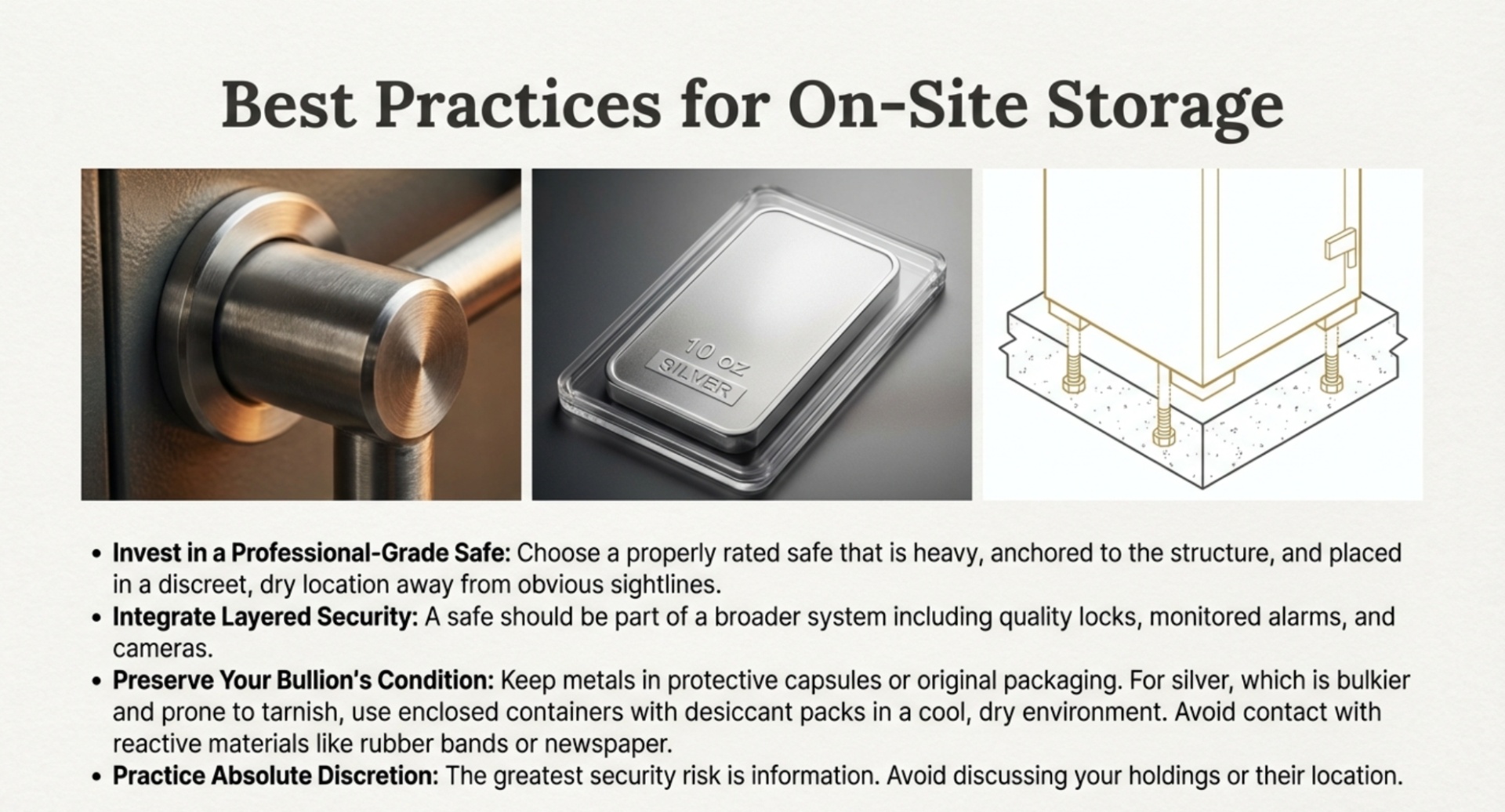
If you choose to store gold at home, treat it as a security project, not just a hiding game. A properly rated safe that is large, heavy, anchored, and placed in an unobvious, dry location is far better than a small, portable fire box in a closet. Integrate the safe into a broader setup: quality locks, alarm systems, cameras, and thoughtful placement away from obvious sightlines.
Keep your gold in protective capsules or original packaging, and avoid storing it with tarnished metals that might cause contact damage. Above all, avoid talking publicly about your holdings and where they are; most targeted theft begins with information leaks, not random chance.
Best practices if you store silver at home
Storing silver at home requires extra attention because silver is bulkier than gold and more prone to tarnish. Large quantities of silver bars and rounds take up more space, making concealment and safe capacity bigger issues.
To protect silver, store it in a cool, dry place, away from basements or attics prone to moisture or heat. Use enclosed containers or sleeves that minimize exposure to air, avoid materials like newspaper ink or rubber bands that can react with the metal, and consider using desiccant packs to reduce humidity.
Home safe vs vault storage: key differences
Security and physical protection
A solid home safe is far better than no safe, but even a strong residential setup rarely matches the layered security of a professional vault. Vaults typically use reinforced construction, restricted access, armed guards, 24/7 surveillance, and multiple authentication steps, making targeted theft far harder.
For high‑value bullion holdings, that structural difference in security becomes increasingly important: the more you own, the more rational it is to keep the majority of it away from your living space. That is a core reason many serious investors transition from pure home storage to at least partial vault storage over time.
Access, convenience, and privacy
Home storage offers immediate access to your metals, which can be useful for small emergency funds or occasional sales. However, that convenience comes with the trade‑off that you are also the front line of defense against any security issue.
Vault storage requires arranging access or withdrawals, which may involve notice and some paperwork, but it also means your metals are held in a controlled environment by professionals who handle bullion every day. Professional vaults are designed to balance privacy and regulatory requirements, typically using confidential account structures while still complying with necessary identification rules.
Costs, fees, and insurance
At home, your main costs are the safe, any upgrades to home security, and potential additional insurance coverage; after that, there are no monthly storage fees, but the risk remains largely on you. With vault storage, you pay ongoing fees based on weight or value, but in return receive high‑grade security and integrated insurance that covers theft and specified damage.
Over time, many investors find that for mid‑to‑large holdings, the peace of mind and reduced personal liability that come with insured vault storage justify the ongoing costs, especially compared with upgrading residential security to comparable levels. For smaller holdings, a quality safe and careful home practices can still make sense.
When vault storage makes more sense
Larger holdings and higher risk profiles
As your bullion holdings grow, the case for professional vault storage strengthens. When the value of your gold and silver becomes significant relative to your net worth, keeping it all in one physical location you live in concentrates personal and financial risk.
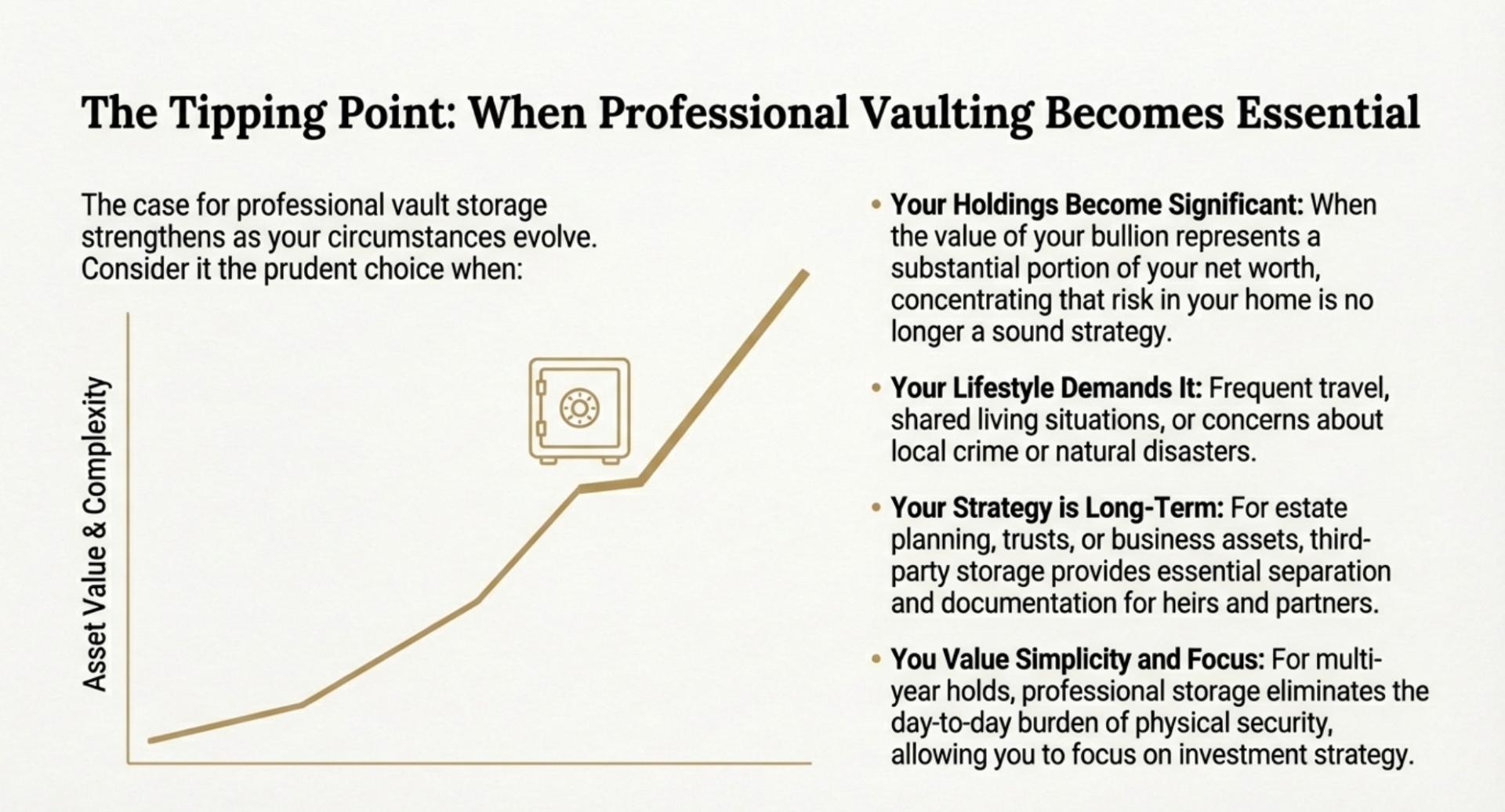
Vault storage can be especially appropriate if you travel frequently, live in shared housing, or have concerns about local crime or natural disasters. In those situations, shifting most of your holdings to insured vault storage while keeping a smaller amount at home is often a practical compromise.
Estate planning, business, and long‑term strategies
For estates, trusts, businesses, or self‑directed retirement accounts, third‑party vault storage is often recommended or required to separate personal use from investment assets and to simplify documentation. Clear records from a professional vault can make it easier for heirs or business partners to understand and manage bullion holdings over time.
If you intend to hold metals for many years, professional storage can also reduce the day‑to‑day worry about physical protection and maintenance, especially for large silver positions that would otherwise dominate home storage space. That lets you focus on long‑term allocation decisions rather than on humidity, safe capacity, and concealment tricks.
How Stout Gold & Silver’s vault storage works
Overview of Stout’s bullion storage service
Stout Gold & Silver offers secure bullion storage designed specifically for gold and silver investors who want professional protection for their physical holdings. Clients can place their metals into high‑security vaults under clearly documented arrangements, rather than relying solely on home safes or bank boxes.
Because Stout already specializes in buying, selling, and trading bullion, the storage service fits naturally into the broader customer journey: you can buy metals, store them securely, and later sell or reallocate through the same trusted partner. That continuity reduces friction and mistakes compared with juggling multiple providers.
Security, insurance, and peace of mind
Stout’s vault storage is built around high‑level physical security, advanced monitoring, and strict access controls, offering far more robust protection than typical residential setups. Storage fees include comprehensive insurance coverage for covered events, significantly reducing your personal exposure to loss.
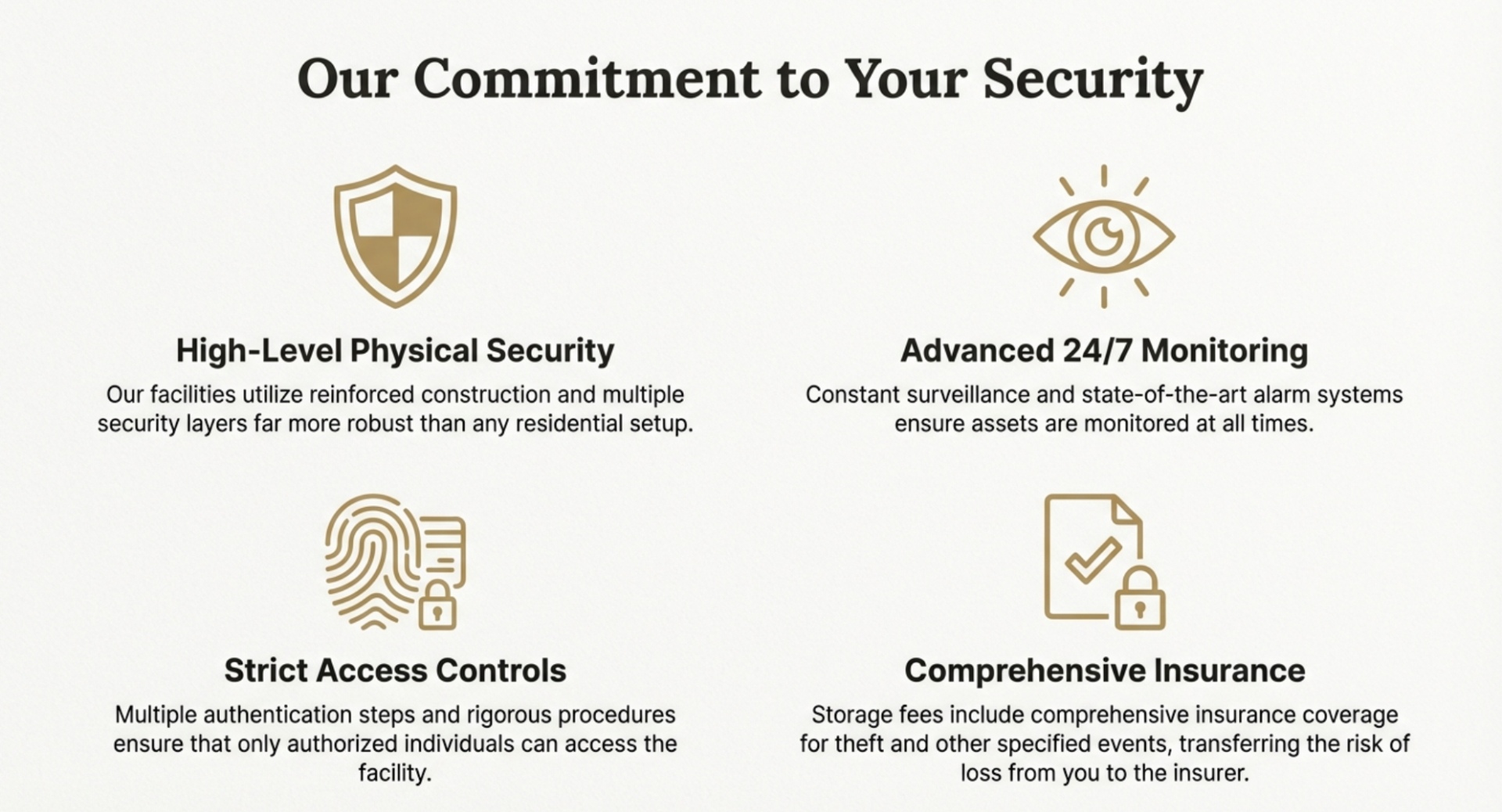
For many investors, the biggest benefit is peace of mind: knowing their metals are in a professional environment rather than under their roof can ease worries about burglary, fire, or unexpected emergencies. Instead of thinking constantly about how to store gold and silver safely on their own, they can delegate that problem to specialists.
Who Stout’s storage is best suited for
Stout’s storage service is well‑suited to Amarillo and Texas Panhandle investors with mid‑to‑large bullion holdings, clients who lack a suitable home safe, and anyone who wants professional documentation and insurance for their metals. It also fits those who prefer to keep only a small “emergency stash” at home and place the bulk of their holdings in a vault.
Newer investors can use the service to avoid rushing into expensive home security systems, while experienced stackers can use it to transition from purely DIY storage to a more structured, diversified approach. Either way, the goal is the same: secure gold storage that aligns with your risk profile.
How to decide: home vs vault (or both)
Ultimately, most people do not have to choose exclusively between home and vault storage; a hybrid approach often works best. A common pattern is keeping a modest amount of gold and silver at home for immediate access while placing the majority of the stack in insured, professional vault storage.
To decide on your mix, review the value of your metals, the strength of your home security, your insurance details, and how often you realistically need access. If you are unsure, walking through your situation with a bullion specialist can highlight blind spots and help you match your storage strategy to your real‑world needs.

FAQs: quick answers about storing gold and silver
Q: Is it safe to store gold at home?
A: It can be safe to store gold at home if you use a high‑quality, anchored safe, integrate it into a solid home security setup, and keep your holdings discreet. However, residential storage still carries higher personal risk than professional vaults, especially for larger amounts.
Q: What is the safest way to store silver at home?
A: The safest way to store silver at home is to use secure, dry, and hidden storage such as a proper safe, combined with sealed containers that limit air exposure and protect against scratches. Avoid damp areas, reactive materials like newspaper or rubber bands, and obvious hiding spots seen in movies.
Q: What is the difference between a home safe and a vault for gold storage?
A: A home safe is a single device in your residence, whose overall security depends on your house’s structure, location, and alarm systems. A professional vault is a purpose‑built facility with reinforced construction, multiple security layers, strict access controls, and integrated insurance specifically designed for high‑value storage.
Q: How much gold and silver should I keep at home vs in a vault?
A: There is no universal rule, but many investors keep a relatively small amount at home for convenience and hold the majority of their bullion in insured vault storage. The larger your holdings and the weaker your home security, the more sense it usually makes to shift value into a vault.
Q: Does vault storage for bullion include insurance?
A: Professional vault storage typically includes insurance coverage for theft and specified types of loss or damage as part of the storage service. This shifts most of the risk away from you, unlike home storage, where you may need special riders and still face coverage limits.
Q: Are bank safe deposit boxes a good place to store gold and silver?
A: Bank safe deposit boxes offer good building security but are not always explicitly insured for the contents, and access is limited to bank hours. For some, they can be part of a diversified storage plan, but professional bullion vaults are generally better tailored to gold and silver storage needs.
Q: How do I choose the best bullion storage option for my situation?
A: Start by assessing your holdings’ value, your current home security, your need for access, and your comfort with ongoing fees versus risk. Then compare the benefits of home, bank, and vault storage, and consider speaking with a bullion storage specialist to design a solution that fits your specific circumstances.
If you would like help deciding how much to keep at home and how much to place in a professional vault, talk to the team at Stout Gold & Silver about secure bullion storage options that match your goals and risk tolerance.