SUMMARY ANSWER: Sell inherited coins and jewelry in the Texas Panhandle by working with a trusted local buyer or an online specialist that offers transparent appraisals, secure payment, and estate-friendly handling. This article helps heirs and executors ready to sell, plus collectors and investors who want valuation context.
Why this matters when you inherit coins or jewelry
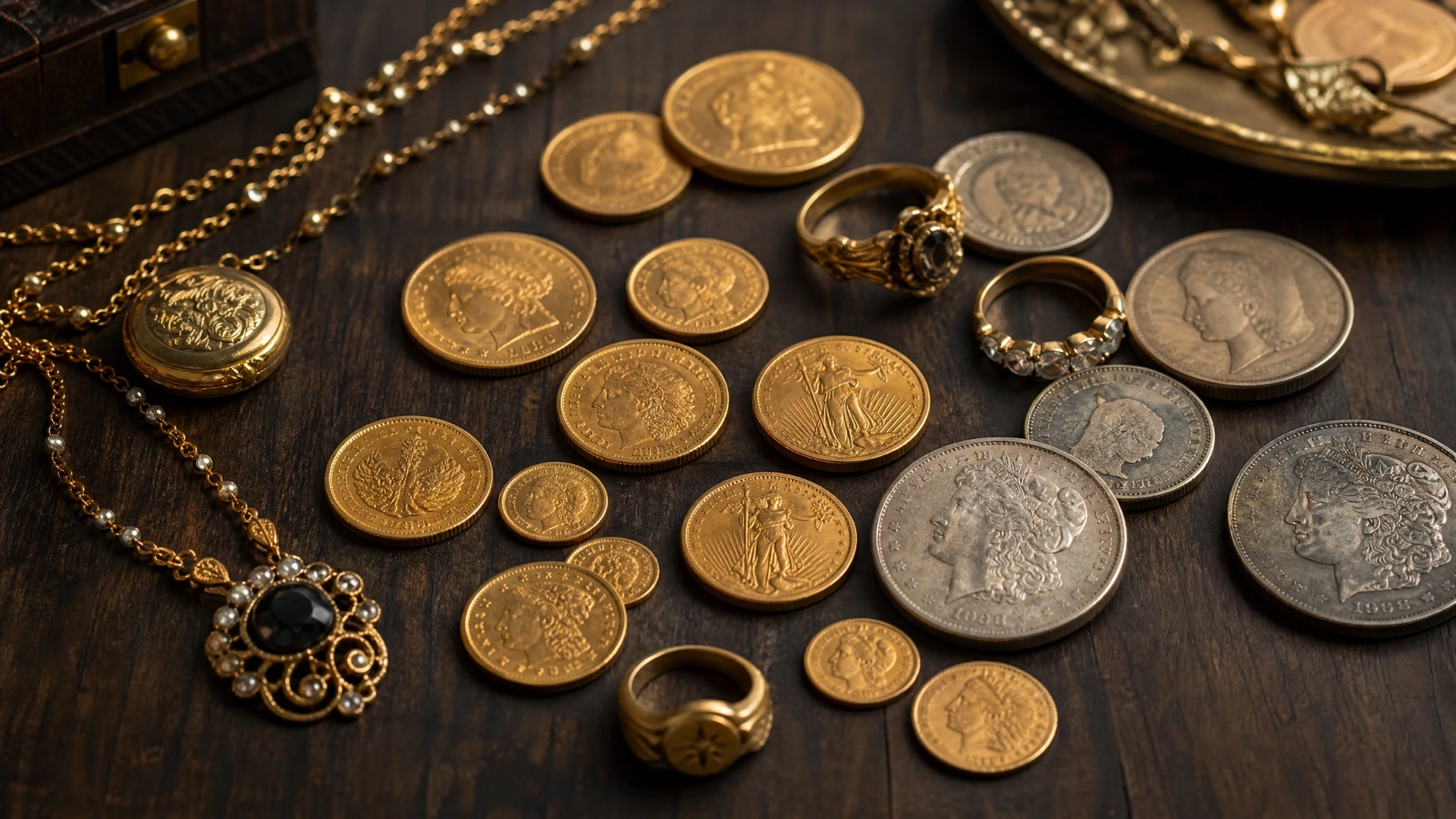
Inherited coins and jewelry may have emotional value and real cash value, so handling them carefully preserves both. Executors and heirs must balance speed, fair pricing, and proper documentation for probate and tax records.
Probate is the legal process for settling a deceased person's estate. Keep sale records to document the estate's proceeds and the tax basis.
How to prepare inherited items before you sell
Start by gathering everything that proves provenance and condition—receipts, certificates, photos, and original packaging. Clean items only if a qualified appraiser tells you to; improper cleaning can reduce value.
Provenance is the documented history of an item's ownership or origin. Photograph every piece from multiple angles and note any hallmarks, maker's marks, or serial numbers. For coins, keep any old grading reports or certificates; for jewelry, include gemstone certificates or appraisals.
How items are valued: coins vs. jewelry
Coins and jewelry are valued differently based on metal content, condition, and collectibility.
Spot price is the current market price for one troy ounce of a metal (for example, gold or silver). Melt value is the worth of an item based purely on its metal content if it were melted down. Numismatic means related to coins as collectibles—their grade, rarity, and demand can add value above melt.
For coins: appraisers look at metal content (gold, silver, platinum), weight, and numismatic grade (condition and rarity). Grading is how experts assess a coin's condition, often using a numeric scale; certified grading can dramatically affect value. The Professional Coin Grading Service (PCGS) and Numismatic Guaranty Company (NGC) are leading grading authorities and useful references.
For jewelry: buyers separate melt value from retail or collector value. Gemstones, designer marks, and historical significance can raise a piece's price above its metal content. A jeweler or qualified gemologist can confirm gemstone authenticity and quality.
Where to sell inherited coins and jewelry in the Texas Panhandle (local options and pros/cons)
You can sell locally to a family-owned coin and jewelry buyer, consign to an auction house, or list items on national marketplaces. Local dealers offer quick payment and personal service; auctions and online sales can return higher prices but take longer and may charge fees.
In-person local dealers: Best for speed, security, and hands-on appraisals. Family-owned dealers in Amarillo have experience with estate work and can often provide immediate offers. Look for credentials like PCGS, NGC, ANA, and BBB ratings.
Auction houses: Good for rare, high-value numismatic coins and designer jewelry where competitive bidding may increase returns. Expect longer timelines, seller's fees, and shipping/insurance requirements.
Online marketplaces and specialty buyers: Offer national reach and convenience. They may require detailed photos and pre-screening. Factor in shipping risks and listing fees; use insured, trackable shipping.
Why choose a trusted local buyer in Amarillo: Stout Gold & Silver
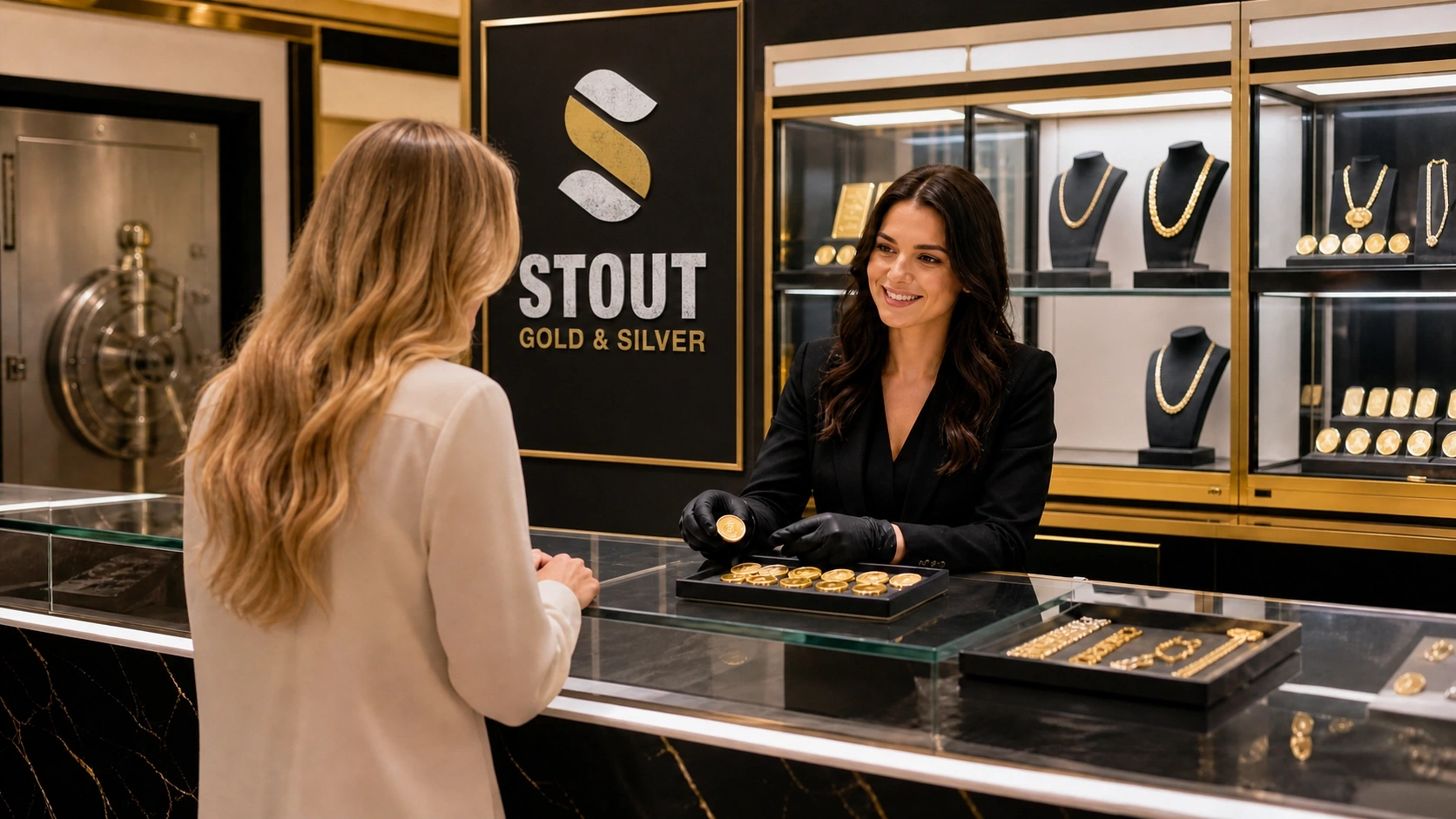
Choose Stout Gold & Silver for transparent offers, in-person appraisals, and immediate payment without long wait times. Family-owned since 1986, the Amarillo shop provides estate-friendly handling and can document proceeds for probate and tax records.
Compared with auctions and online buyers, Stout Gold & Silver offers same-day appraisals, written offers, and flexible payout options. Auctions can fetch higher prices for rare pieces but take weeks and charge seller's fees; online buyers are convenient but require shipping and may add fees. Stout Gold & Silver's credentials (PCGS, NGC, ANA, BBB) and secure on-site handling make it a reliable local choice.
What to expect during an in-store appraisal or offer
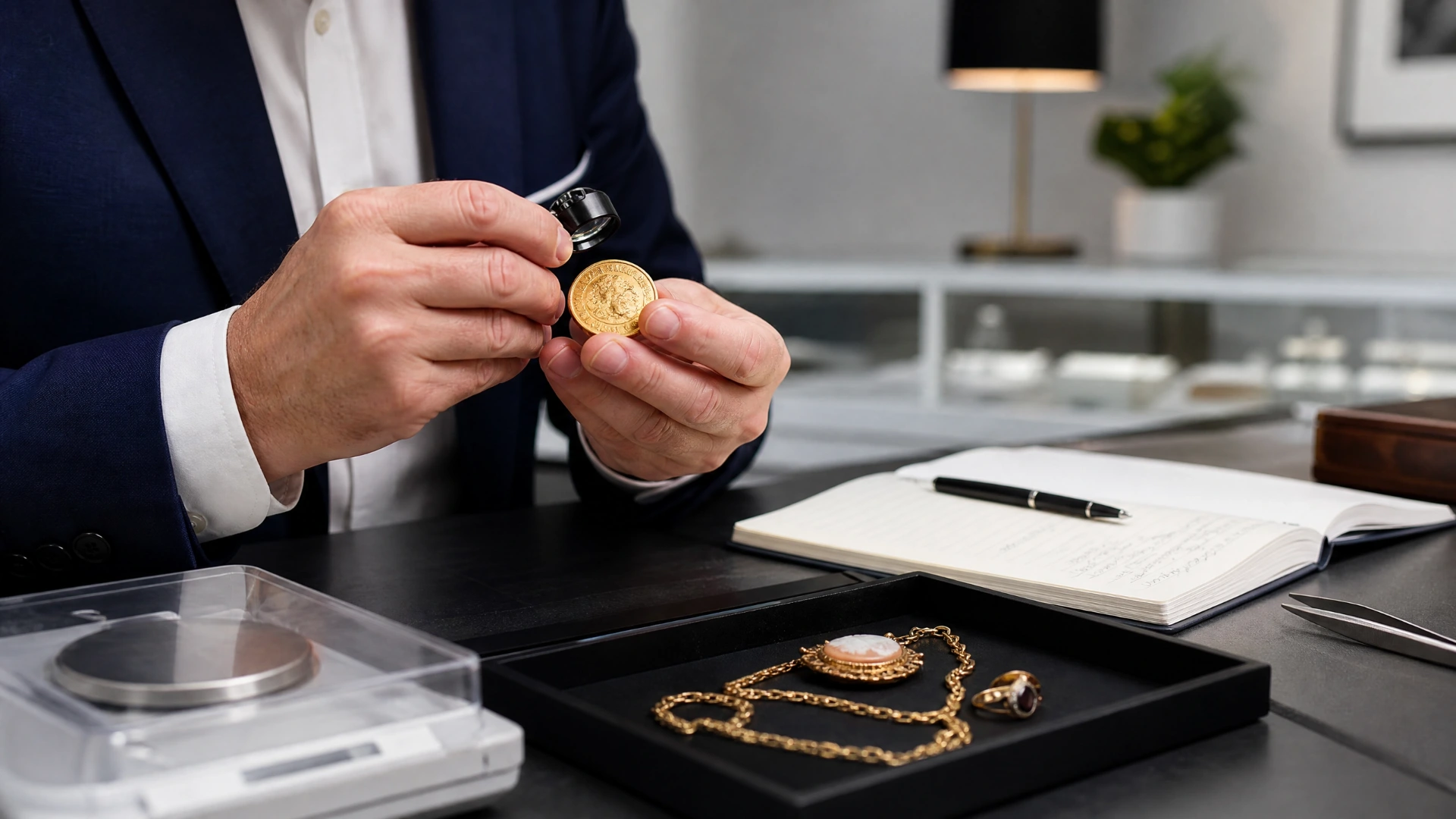
An in-store appraisal typically begins with an intake: staff inventory the items and verify ID if needed. Next comes examination: coins may be weighed and tested for metal content; jewelry gets an assessment of metal weight, gemstone quality, and maker's marks.
You will receive a written offer that spells out the basis (melt plus premium, or collectible premium), payout options, and any consignment terms. Typical turnaround for an appraisal and offer is same-day for most items; rare or high-value pieces may require external grading or research.
Typical documentation provided includes a written receipt, assay or grading notes when applicable, and a paid invoice after sale. When you're ready, you can start the process through our coin and bullion selling service.
Pricing expectations and how to get the best offer
Expect coin prices to track the spot price of the metal plus a numismatic premium for graded or rare pieces. Spot price is updated constantly—the World Gold Council tracks gold market data and pricing trends.
For jewelry, expect offers based on melt value unless the piece has designer provenance, certified gemstones, or historical significance. To maximize value:
- Provide certificates (gemstone or grading reports).
- Keep original packaging and receipts.
- Get multiple appraisals from reputable sources.
- Consider professional grading for rare coins (PCGS/NGC).
Red flags: how to avoid lowball offers and scams
Beware of buyers who pressure you to sell immediately, offer verbal-only quotes, or refuse written documentation. Avoid trades that require vague consignment terms or unusually high buyer "fees."
Ask direct questions: "Are you accredited with PCGS/NGC/ANA? Will you provide a written offer? What are your payout options?" Confirm buyer credentials and read online reviews from multiple sources.
Selling vs. consigning vs. auctioning: which is right for you?
For a quick sale, a local buyer offers immediate payment and simpler paperwork. Consignment or auction can yield higher prices for rare or collectible items but takes more time and may involve fees. Choose consignment when you suspect a coin or jewelry piece is especially desirable to collectors.
After the sale: records, taxes, and safe transfer
Keep all sale receipts and documentation. Proceeds from selling inherited property can have tax implications; the IRS estate tax guidance outlines how estate proceeds may affect your tax obligations—consult a tax advisor for capital gains or estate tax questions.
If you prefer to keep value in physical metal, many dealers offer secure bullion storage. Our on-site bullion storage service provides insured vaulting, peace of mind, and accessibility when you decide to sell or withdraw metal.

How Stout Gold & Silver's Amarillo team helps estates
Stout Gold & Silver offers discrete, estate-friendly appraisals and group appraisals for executors managing multiple items. The Amarillo shop provides on-site grading assessments, secure handling, and flexible payout methods. If you prefer an online start, submit photos through our online appraisal form; we also offer free shipping on eligible online orders over $199.99.
Testimonials & examples (optional)
Recent estate clients left pleased after fair, documented offers and quick payouts. One executor sold a mixed lot of pre-1933 gold coins and received a fair numismatic evaluation after independent grading, then accepted a transparent offer that honored both melt and collectible value.
FAQ (Q: / A:)
Q: Where can I sell inherited coins in the Texas Panhandle?
A: Sell inherited coins at Stout Gold & Silver in Amarillo for fast, written offers and estate-friendly handling. Local dealers, auction houses, and online buyers are options; Stout Gold & Silver offers same-day appraisals and secure payment.
Q: Where is the best place to sell old jewelry in Amarillo, TX?
A: The best place depends on where the value is: metal or designer/gemstone. For fast, documented offers, visit Stout Gold & Silver in Amarillo. Auction or jewelry consignment can yield more for designer pieces but take longer.
Q: How do I find a trustworthy estate gold buyer in Amarillo?
A: Choose a credentialed, family-owned dealer like Stout Gold & Silver. Look for PCGS/NGC/ANA memberships and BBB ratings, written offers, clear appraisal processes, and positive reviews. Stout Gold & Silver's Amarillo location provides on-site appraisals and secure handling.
Q: Do I need an appraisal before selling inherited coins or jewelry?
A: You don't always need one, but a professional appraisal helps set expectations, especially for rare coins or designer jewelry. Certified grading for coins (PCGS/NGC) can increase buyer confidence and final price.
Q: How much are inherited coins worth?
A: Coin value depends on metal content (spot price), weight, and numismatic premiums for rarity and grade. Check authoritative sources like the U.S. Mint and PCGS for current market and rarity guides.
Q: How are estate jewelry prices calculated?
A: Jewelry prices are calculated from melt value plus any added value for gemstones, maker's marks, or collectible demand. Melt value equals the metal's weight times the current spot price.
Q: What is coin grading and does it affect my sale?
A: Coin grading is the professional assessment of a coin's condition on a numeric scale; certified grades from services like NGC (Numismatic Guaranty Company) or PCGS often raise market value and buyer confidence.
Q: Can I sell items online instead of in-person? What are the pros and cons?
A: Yes. Online selling offers national reach and convenience but adds shipping, insurance, and potential listing fees. In-person sales offer immediacy and local trust.
Q: How long does an appraisal or sale usually take?
A: Basic in-store appraisals and offers can be same-day; complex or high-value items may require outside grading or research and take several weeks.
Q: Are there taxes when I sell inherited coins or jewelry?
A: Sales proceeds may have tax implications; consult a tax professional. Generally, the estate's basis and timing of sale affect taxable gains.
Q: Do you offer secure bullion storage after a sale or while deciding?
A: Yes, secure bullion storage options are available to hold metals safely and insured while you decide or to store proceeds for later sale.
Q: Do you buy pre-1933 gold and rare numismatic coins?
A: Many reputable dealers and numismatic buyers do purchase pre-1933 gold and rare coins; these often require extra research or grading to determine full value. Stout Gold & Silver buys pre-1933 gold coins and rare numismatic coins in Amarillo.
Visit Us or Shop Online
Schedule a free estate appraisal in Amarillo or start with our online appraisal form. Call (806) 374-8698 or bring items to Stout Gold & Silver at 2300 SW 7th Ave, Amarillo, TX 79106. Store hours: Mon–Fri 10:00 AM – 4:00 PM; Sat–Sun Closed. Our family-owned team has served the Texas Panhandle since 1986 and can help you through every step, from appraisal to sale or secure storage. Online shoppers: free shipping over $199.99 applies to qualifying orders.