On a licensed collectible bullion coin, "limited mintage" is almost never one number. It is usually three, they mean different things, and the one printed largest on the box is often the least meaningful of them. A maximum mintage is a production ceiling. A declared mintage is what was actually made when a series ends early. An issue limit is a packaging allocation inside the maximum, not a cap on the coin itself.
Knowing which figure you are looking at is the difference between buying a coin capped at 10,000 pieces and buying one where 10,000 is the ceiling, 7,500 is the case allocation, and the number ever struck may turn out to be lower than both. Here is how the terms are defined by the mints that use them, and how to read them on a certificate of authenticity before you pay a premium built on them.
The three numbers, as the mints define them
In its explanation of maximum mintage, declared mintage and issue limit, the Perth Mint sets the three out as separate things, in its own words.
| Term | What it means | What it does not tell you |
|---|---|---|
| Maximum mintage | The total the mint will produce — "The Perth Mint will issue no more than 10,000 of these coins." Production stops when it is reached. | Whether that number was ever actually struck. |
| Declared mintage | The final number made available for sale when a coin does not sell out — "the final number that will ever be made available for sale, even though the declared figure falls short of the original maximum mintage." | Nothing, once declared. This is the real figure, and it is usually published after the fact. |
| Issue limit | A packaging allocation inside the maximum. A coin with a maximum mintage of 10,000 may carry an issue limit of 7,500 in individual cases, with 2,500 held back for sets and other formats. | The total struck. Same coin, different box. |
The practical consequence: a coin advertised as "limited to 7,500" may be one of 10,000 identical pieces. And a coin with a maximum mintage of 10,000 may have a declared mintage well below it, which is a genuinely different — and lower — number than the one on the certificate.
How this compares with sovereign bullion
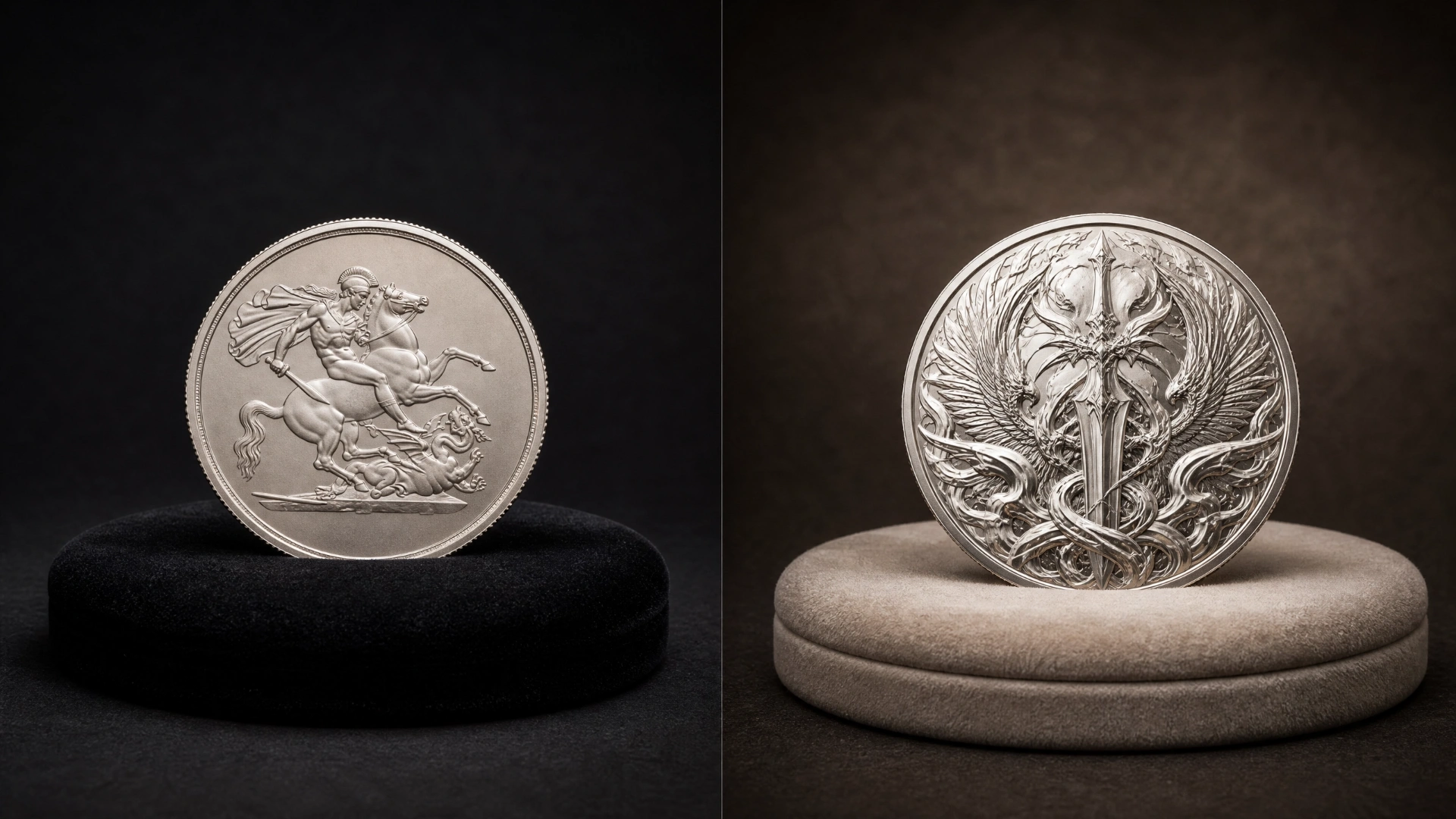
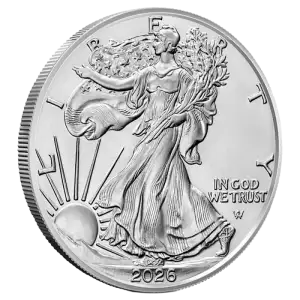
Sovereign mints publish the same distinction in plainer language. The US Mint's product page for the American Eagle 2026 One Ounce Silver Proof Coin lists three separate fields: a mintage limit of 500,000, a product limit of "None", and a household order limit of "None". Three numbers, one coin, and only the first is a cap on how many exist.
Bullion-finish American Eagles work differently again: they are struck to meet demand rather than to a pre-announced ceiling, and the quantities actually sold are published afterwards in the Mint's bullion sales figures. That is the cleanest way to see the difference in practice. On a sovereign bullion coin you find out the number after the year closes. On a licensed collectible you are told a number in advance, and that number is a commitment about production, not a report of it.
Mintage is not the same as surviving population
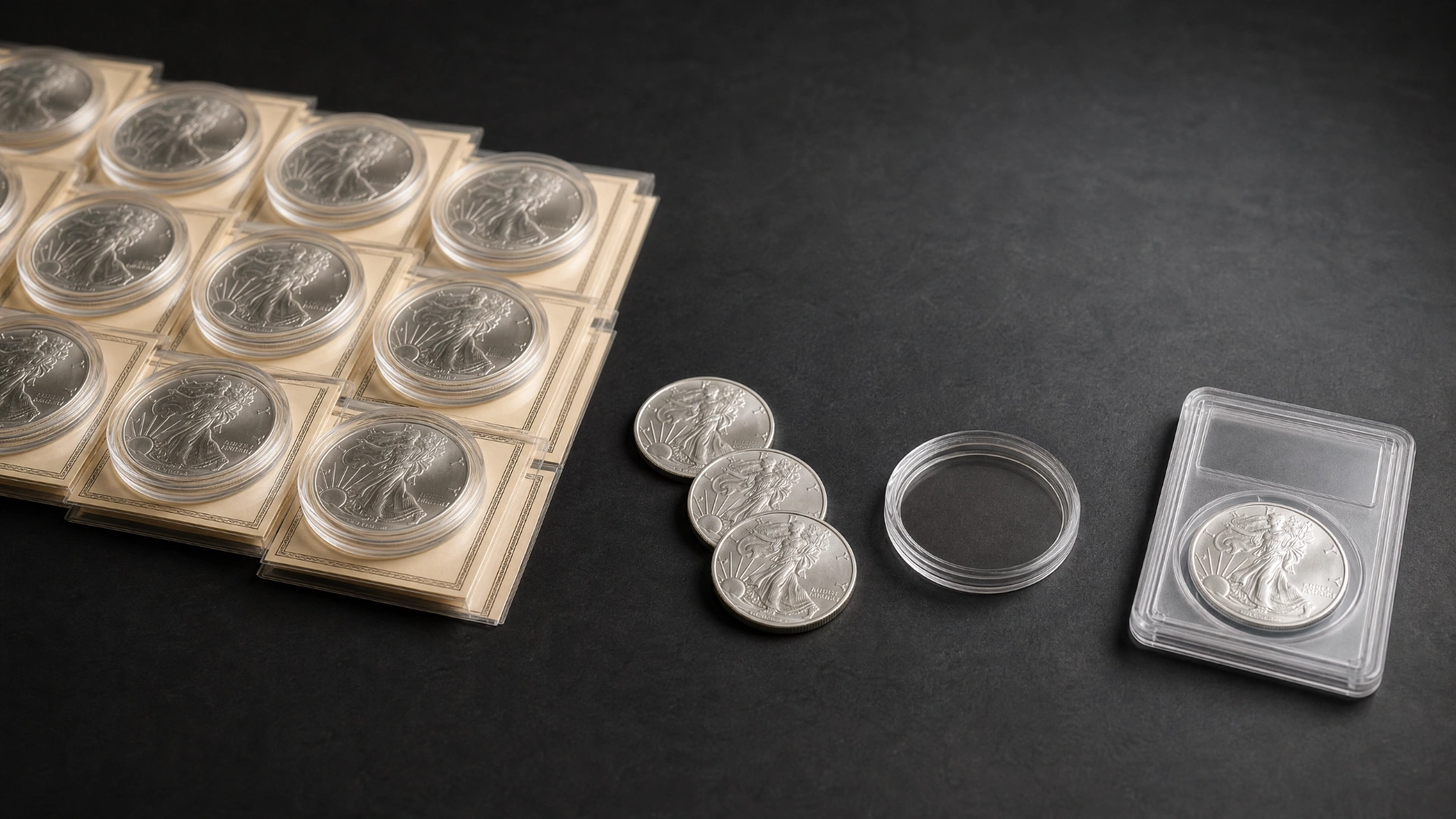
A mintage figure counts what left the mint. It does not count what still exists: coins get broken out of sealed packaging, certificates are separated from the coin they belong to, and pieces are damaged or eventually melted. A grading service's population report counts something narrower still — only the coins submitted for certification. Read the mintage and the census as two different figures, and note the date on the census.
Where "limited edition" is a marketing term, not a mintage
Several phrases on collectible bullion packaging carry no numerical commitment at all. "Limited edition" on a box, without a number attached, states nothing checkable. "Limited release", "first releases" and "exclusive" describe distribution or labeling rather than production. A retailer allocation — the quantity one seller received — is not a mintage. And a mintage stated for a series is not a mintage per design: a four-coin Star Wars set capped at 10,000 sets is a different thing from four separate coins capped at 10,000 each.
The figure worth relying on is the one the issuing mint states for the specific coin, on the certificate of authenticity or the mint's own product page, described in the mint's own terms. Everything downstream of that is a description of it.
Where the premium on a licensed coin actually comes from
Licensed collectible bullion — the Star Wars, Marvel, DC Comics and Disney silver we carry alongside our sovereign bullion — trades at premiums well above metal content. That premium is not a hidden claim about the silver. It is made up of things you can name:
- The license. A franchise license is a real cost paid to the rights holder, and it is built into the coin before a blank is struck.
- Tooling and finish. Colored, shaped and high-relief pieces need dies and processes that a plain round does not.
- Packaging and certification. Themed cases, numbered certificates and display pieces are part of what is being sold.
- Production run. A short run carries its fixed costs across fewer coins.
- Demand for the subject. The collector base for a character is not the collector base for an ounce of silver.
Two things follow honestly from that. First, both comparisons are worth making: against other collectibles, which is where the license, tooling and packaging sit, and against the metal price, which is what the silver alone would fetch. The gap between the two is the premium, and you should be able to see it before you decide. Second, the secondary market for licensed series has historically been more variable than the secondary market for sovereign bullion coins, because it depends on continuing interest in the franchise as well as on the metal. Anyone selling you one of these should say so plainly.
This article is educational and reflects general information about precious metals and collectible coins. It is not investment, tax or legal advice, and Stout Gold & Silver is not a registered investment adviser, broker-dealer or tax professional. Metal prices fluctuate and past performance does not indicate future results. Consult a qualified professional about your own situation.
Five questions to ask before paying a mintage premium
- Which number is this? Maximum mintage, declared mintage, or issue limit. If the seller cannot say, the figure is not doing the work you think it is.
- Who states it? The issuing mint, on the certificate or its own product listing — not a listing description.
- Is it per coin or per set? Series-wide caps and per-design caps are commonly confused, in both directions.
- Has a final figure been declared? If the series has closed, the declared mintage supersedes the maximum, and it may be materially lower.
- What is the premium over melt, in cash? Ask for the metal value and the price side by side. A premium you can see is a premium you can decide about.
What we do at the counter
Stout Gold & Silver has been family-owned in the Texas Panhandle since 1986, and we carry both sides of this market: sovereign and generic bullion in gold, silver, platinum and palladium, and a collectible and numismatic line that includes the licensed franchise series.
We evaluate bullion and numismatic coins for walk-ins and by appointment, and that includes reading the certificate with you and telling you which of the three figures it is quoting. If you are weighing a themed piece against a plain ounce, we have written separately about numismatic value versus bullion value.
We are also buyers — if you are on the other side of the transaction, that starts on our sell to us page.
Frequently asked questions
Does a lower mintage make a coin worth more?
Not on its own. Mintage is one input among several — demand for the subject, condition, whether the packaging and certificate are intact, and how many pieces the market can actually find. A coin with a low mintage and no collector base behind it is a low-mintage coin that is hard to sell. Rarity only carries a premium where someone is looking for the thing that is rare.
Where do I find the mintage of a Star Wars silver coin?
On the certificate of authenticity that came with it, and on the issuing mint's own product page for that specific coin and year — our guide to the Star Wars silver series covers the individual issues. Check whether the figure is described as a maximum mintage, a declared mintage or an issue limit, and whether it applies to the single coin or to a set. A listing that repeats one of these numbers without saying which it is has not told you what you need to know.
What is the difference between mintage and population?
Mintage is how many the mint produced. Population is how many a grading service has certified, published as a running census. Population is always a subset of mintage, often a small one, and it changes as more coins are submitted. Both are useful; they answer different questions and should never be quoted interchangeably.
Do licensed collectible coins contain real silver?
Bullion-grade licensed coins state their weight and fineness on the coin, the packaging and the certificate — commonly .999 silver, though read the figure on the specific piece rather than assuming it from the series. What differs from a plain round is the premium above that metal, which pays for the license, the tooling, the packaging and the short run. Check the stated weight and fineness rather than assuming either from the size of the case.
Are these coins legal tender?
Many licensed collectible bullion coins carry a face value and are legal tender in the country that issues them, which is why they are called coins rather than rounds. That face value is nominal and unrelated to what the coin costs or what its metal is worth. It tells you the issuing authority, not the value.
Come and look at one
The fastest way to understand a mintage figure is to hold the coin and read the certificate next to it. We are on SW 7th, and walk-ins and appointments are both fine.
Stout Gold & Silver
2300 SW 7th Ave Ste 105
Amarillo, TX 79106
(806) 374-8698
Monday–Friday 10:00 a.m. – 4:00 p.m. · Saturday and Sunday closed
stoutgold.co